
For years I’d been planning a trip to Banda Aceh, Indonesia for other reasons, but when I learned about the Aceh Tsunami Museum, that’s when I moved things from the backburner to the front. The Banda Aceh museum was something I just personally needed to see. Sooner rather than later.
Long story long, back in 2004, I was living in San Francisco when the 2004 Indian Ocean (AKA Boxing Day) tsunami hit. And like most people in the US, I saw it through media coverage coming mainly out of Phuket, Thailand. A lot of us also had friends traveling in Thailand at the time, so it felt more personal. Once we heard from our various friends traveling in Thailand that they were safe and the news cycles eventually faded, life went on.
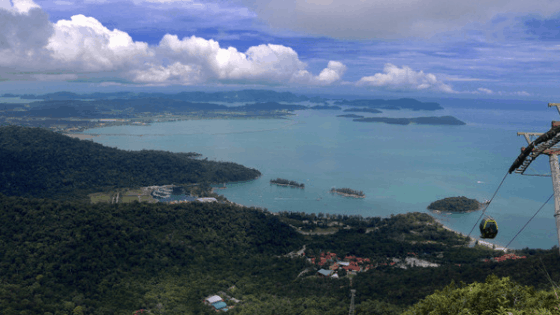
A year later, my husband and I just happened to stop by Langkawi, Malaysia, on our way to Vietnam. Ironically, we ended up staying with friends in a fishing village that had been directly affected by that tsunami. Talking with locals and expats there, it was clear the tsunami’s impact hadn’t faded at all. I could also see for myself some remaining rubble and the strange mishmash of new construction where old houses once stood.
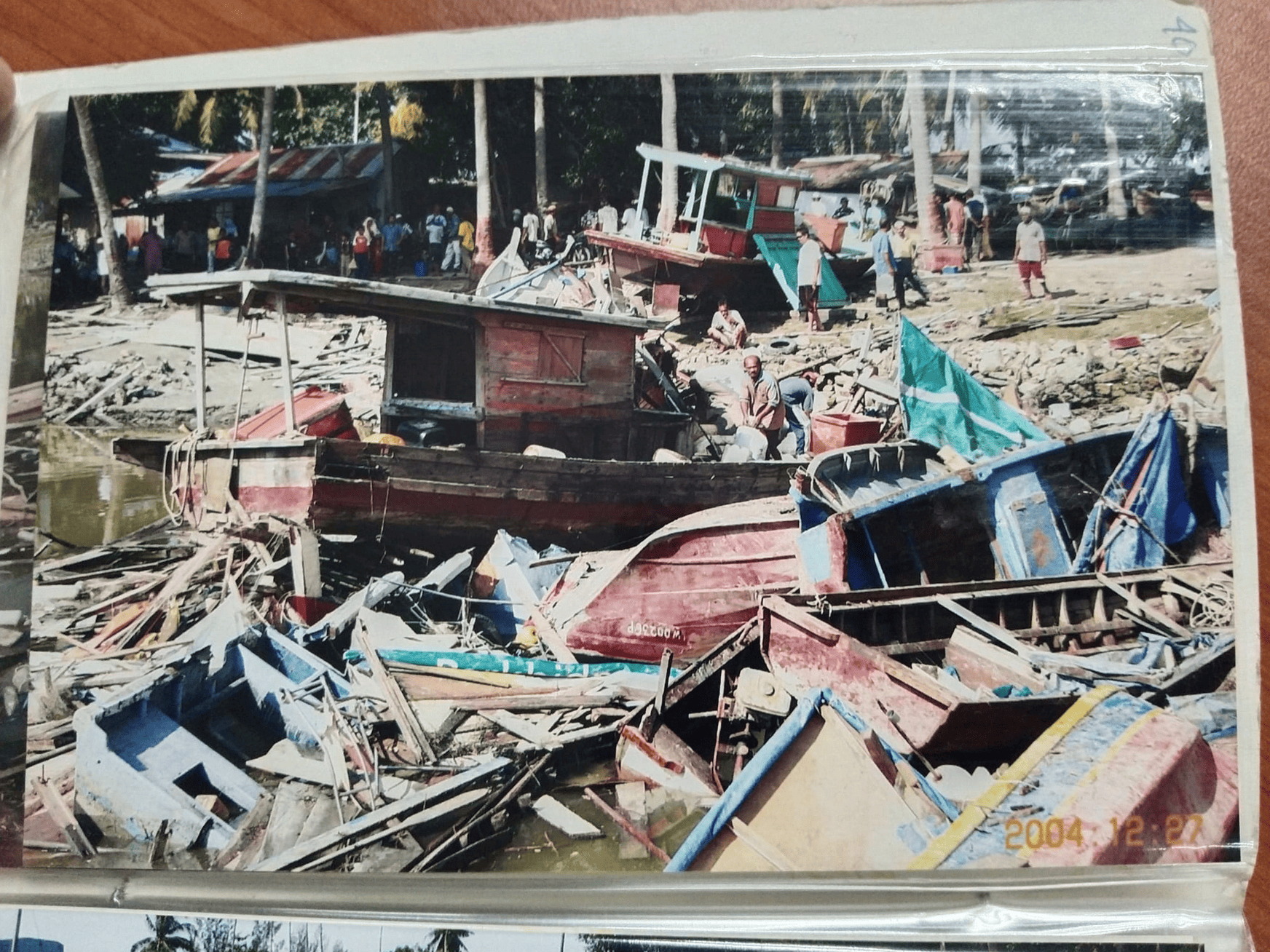
And just down the road in nearby Telaga Harbor was a sailboat still perched on a grassy knoll where it had previously landed.
Being from the US, I wasn’t familiar with tsunamis. I was personally more familiar with hurricanes and earthquakes. This was something else entirely. But now I often look out to sea and do a little mental escape plan just in case it happens again, because I eventually moved to that same area of Langkawi.
Strangely enough, I now live in that same fishing village, in an 80-year-old house that was nearly destroyed by the tsunami. So yeah, this isn’t just abstract history to me anymore, as I still see the reminders of it every day.
This is why the museum mattered to me.
Aceh Tsunami Museum Expectations vs Reality
My Banda Aceh arrival fell on a weekend, which put my visit to the Aceh Tsunami Museum on Sunday. I don’t know if it was a school holiday or an average Sunday, but the museum was packed. This I hadn’t anticipated at all. In fact, I hadn’t expected much of anything happening in Banda Aceh. But apparently, Banda Aceh is quite popular with domestic tourists.
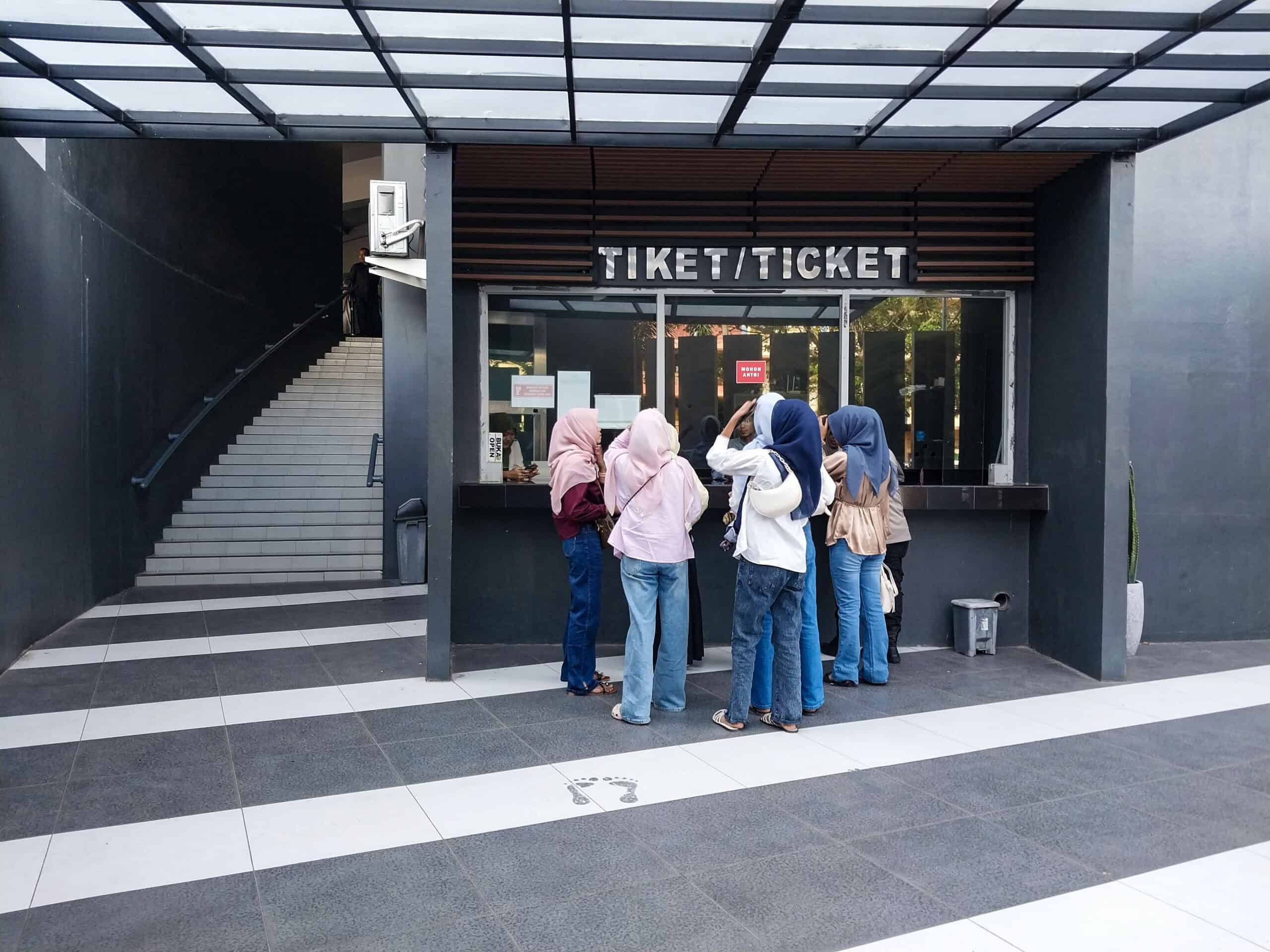
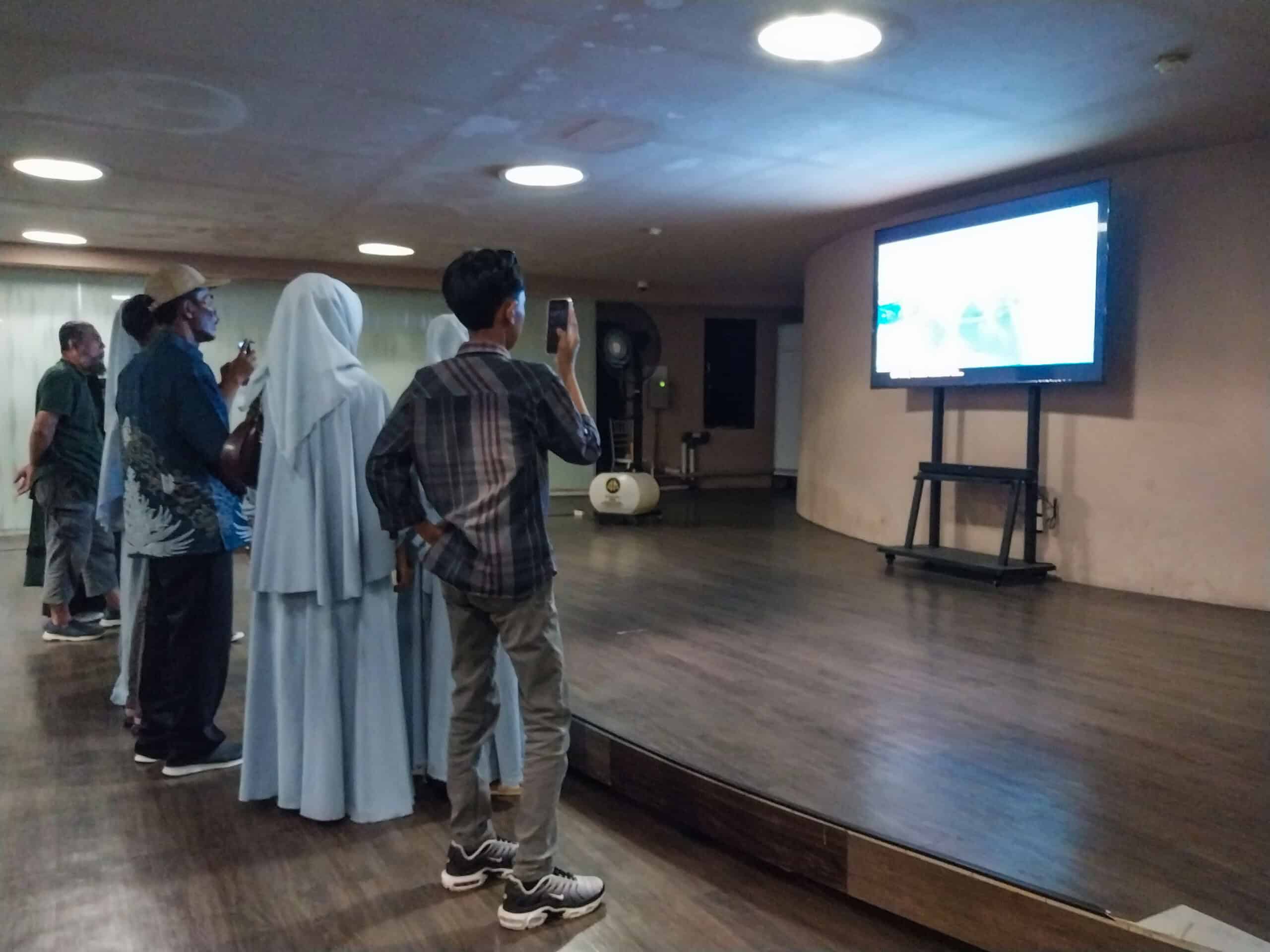
Going into the museum, I expected more archival material, especially photos and video footage from the aftermath. Instead, although the museum focuses specifically on Banda Aceh, which was one of the hardest-hit areas, the presentation felt… controlled. Almost sanitized. I assume that’s intentional, out of respect for the people who lived through it.
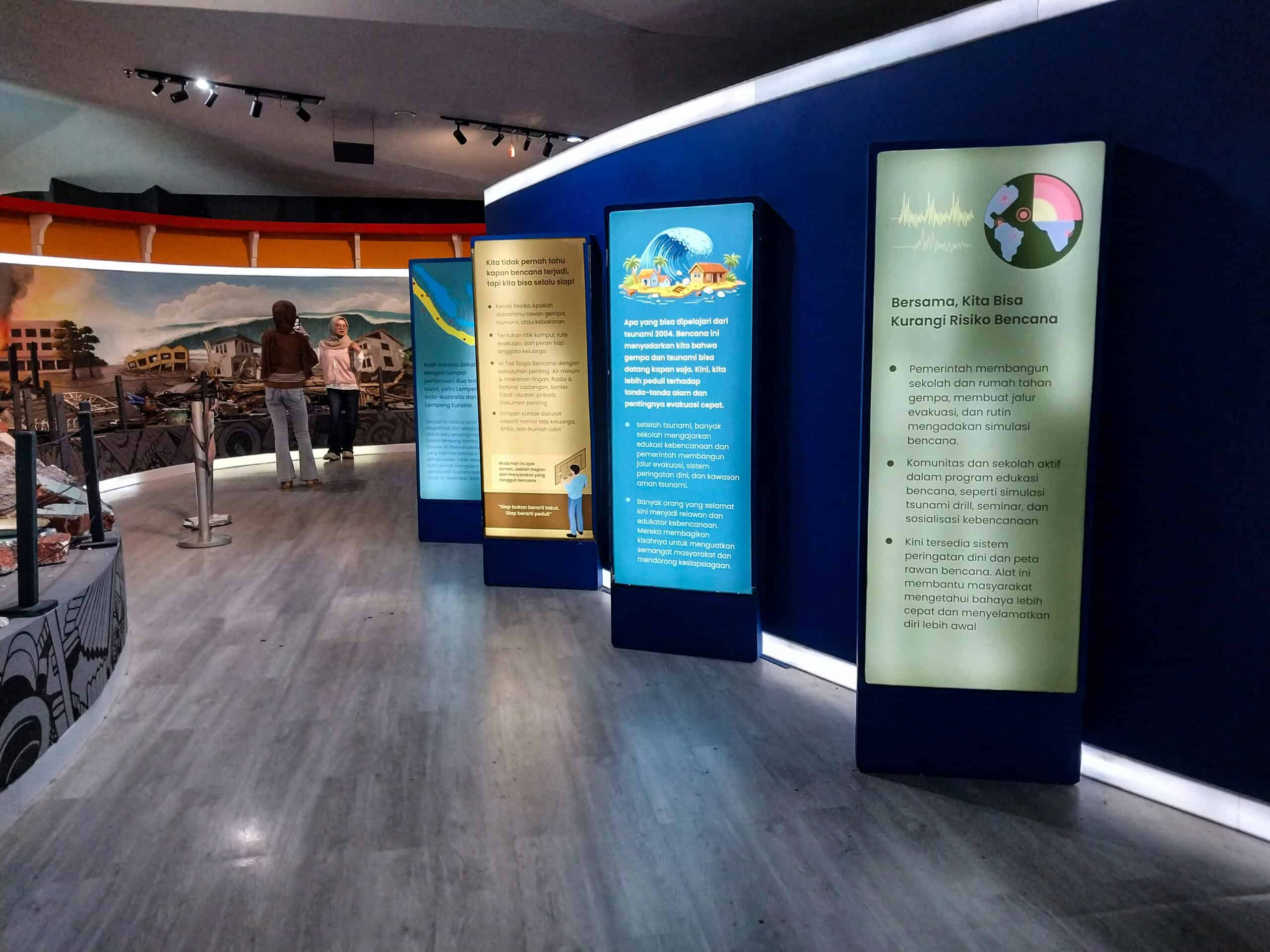
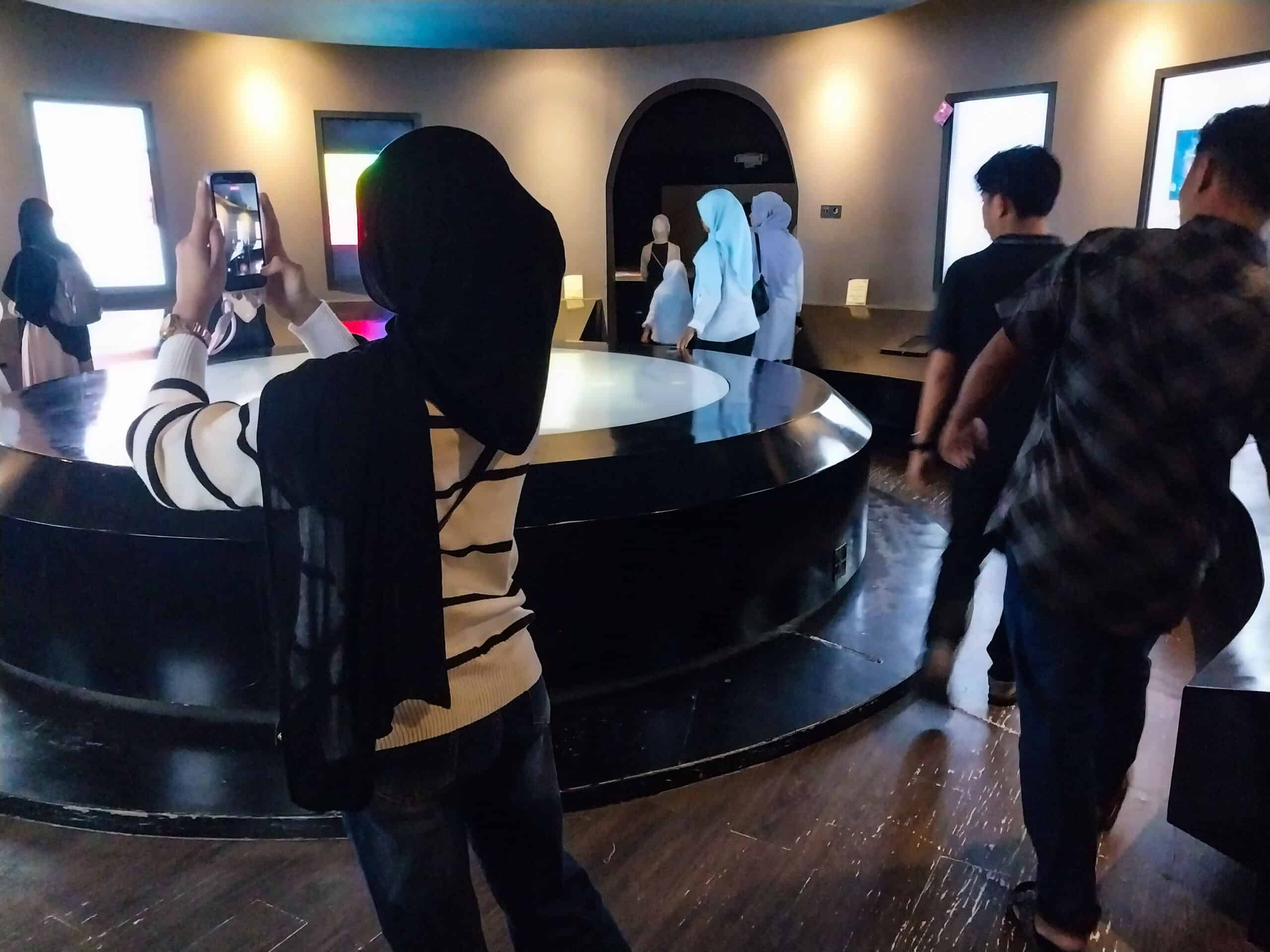
There’s also a lot of digital reconstruction and visual storytelling. Unlike Phuket, Banda Aceh’s tsunami experience wasn’t extensively documented in real time, so that might explain some of its absence as well.
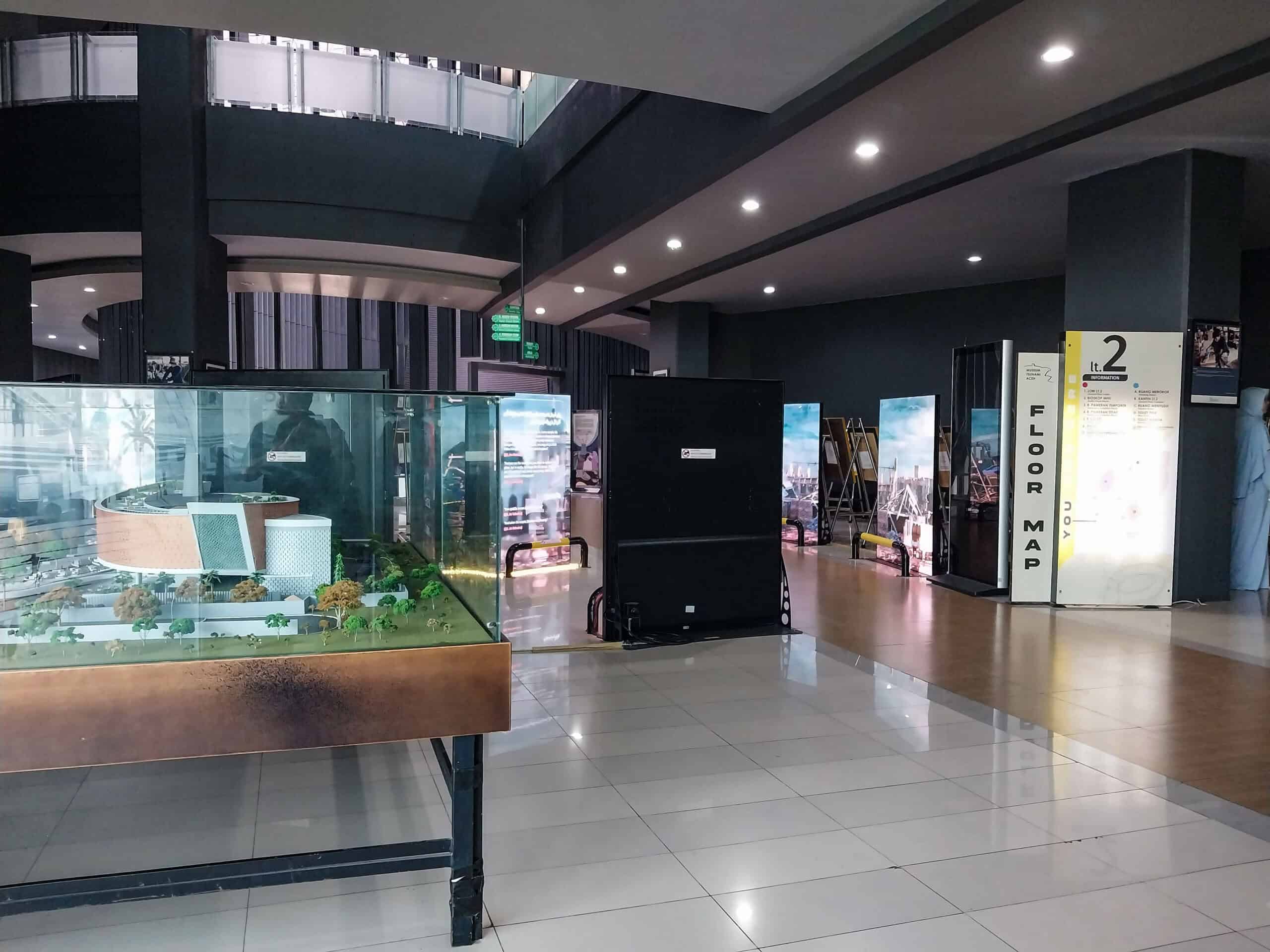
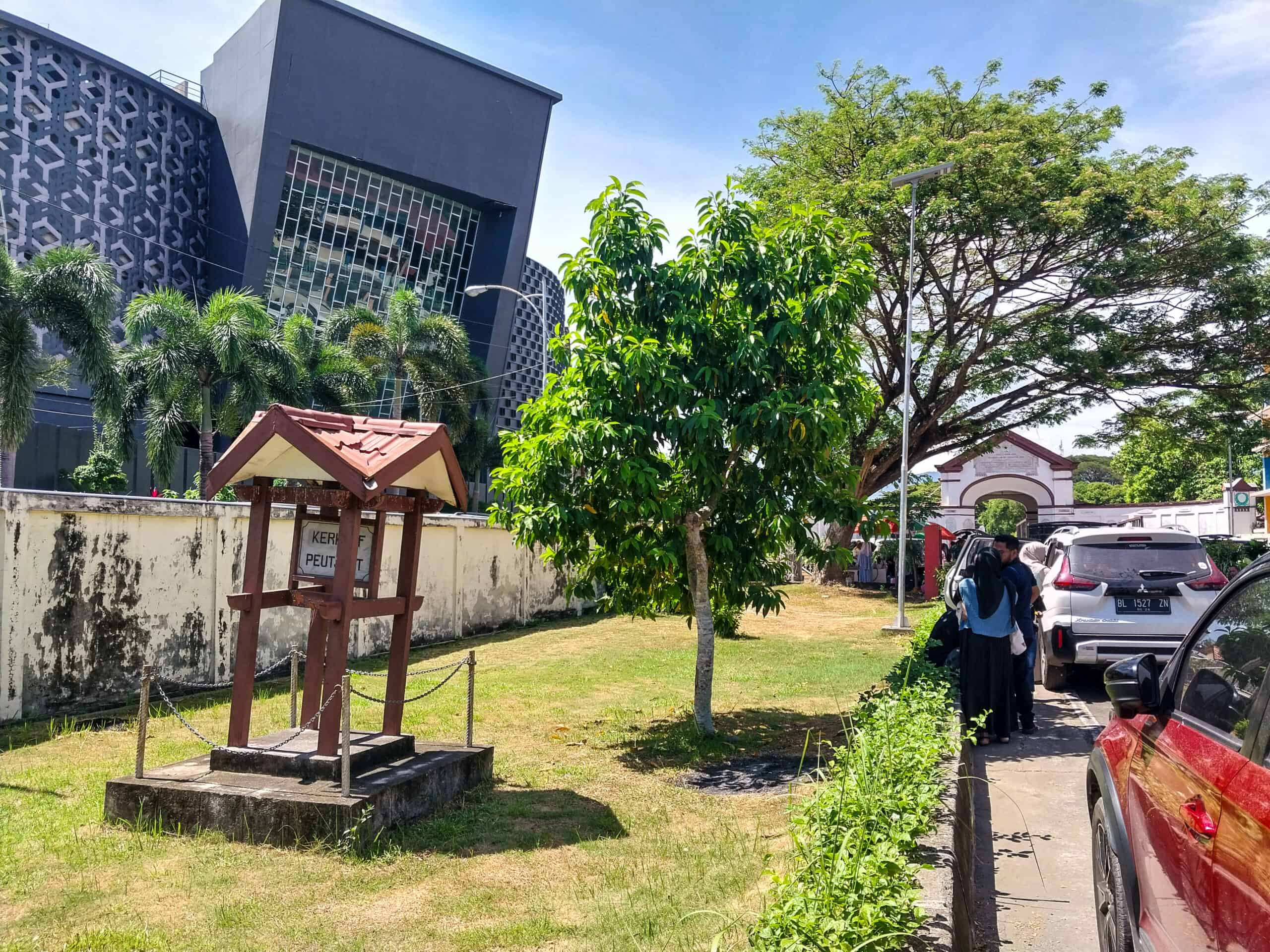
What stood out just as much as the exhibits, though, was the building itself. Especially in contrast to the neighborhood. It clearly cost a massive amount to construct, with layers of design symbolism built in. Whether all of that symbolic meaning was intentional from the start or verbally added later is hard to say.
Seeing it in person, though, was something else entirely.
Walking Through the Aceh Tsunami Museum
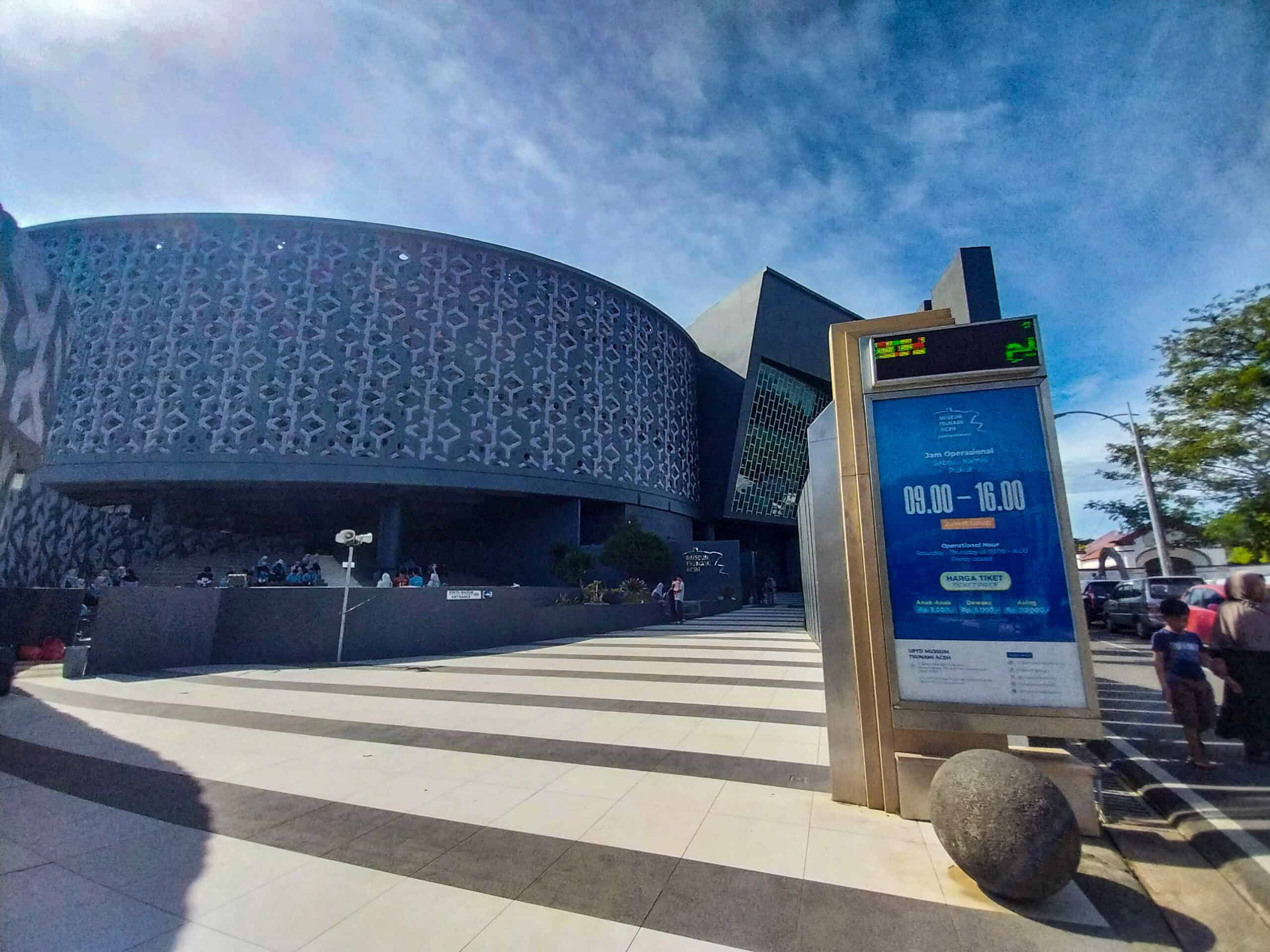
The building is a major part of the museum experience. It was designed by Ridwan Kamil and completed (and opened to the public) five years after the tsunami, in 2009. The multi-level building is massive at 2,500 square meters, and visible above surrounding city structures, making it a useful landmark for visitors.
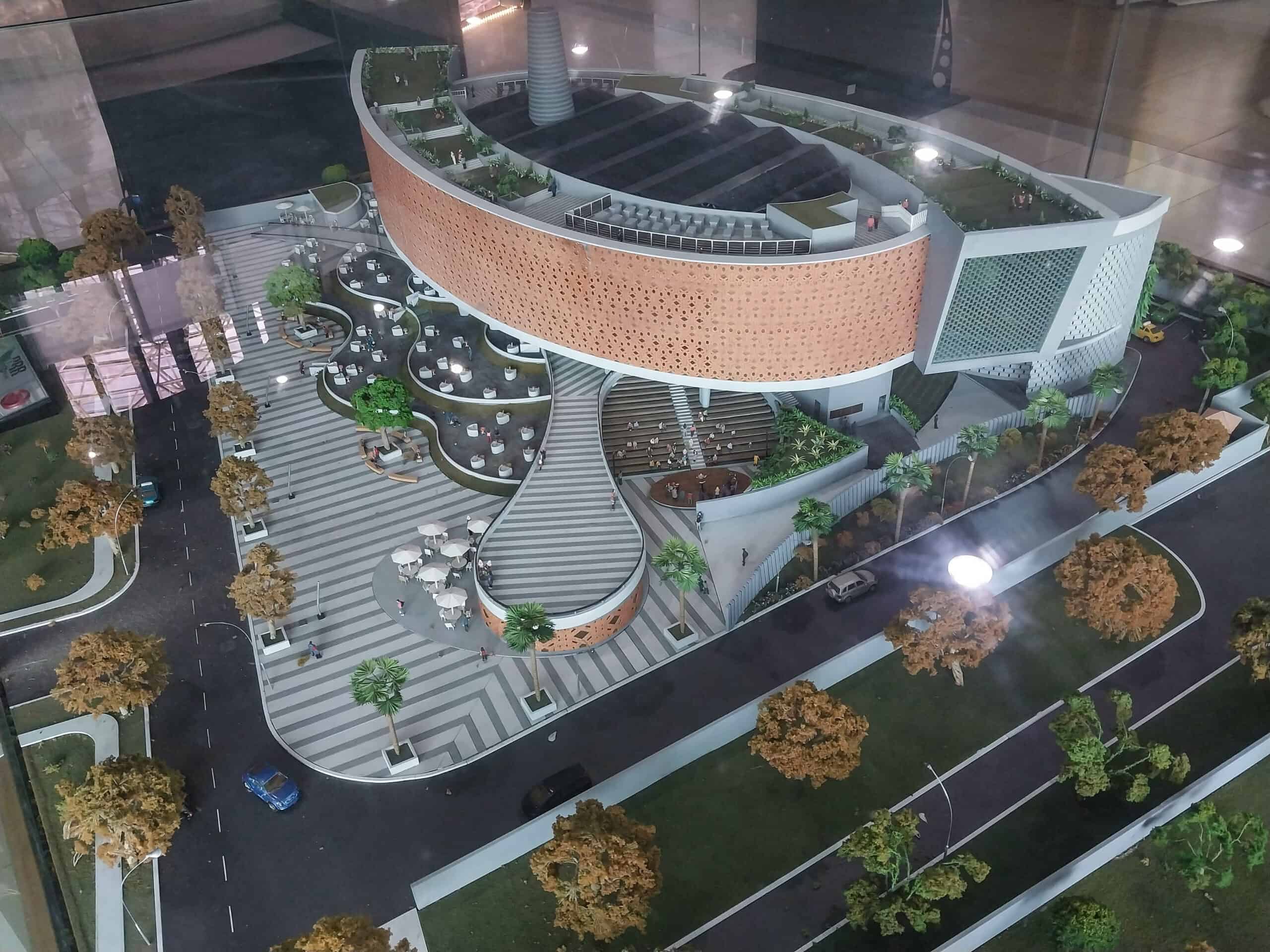
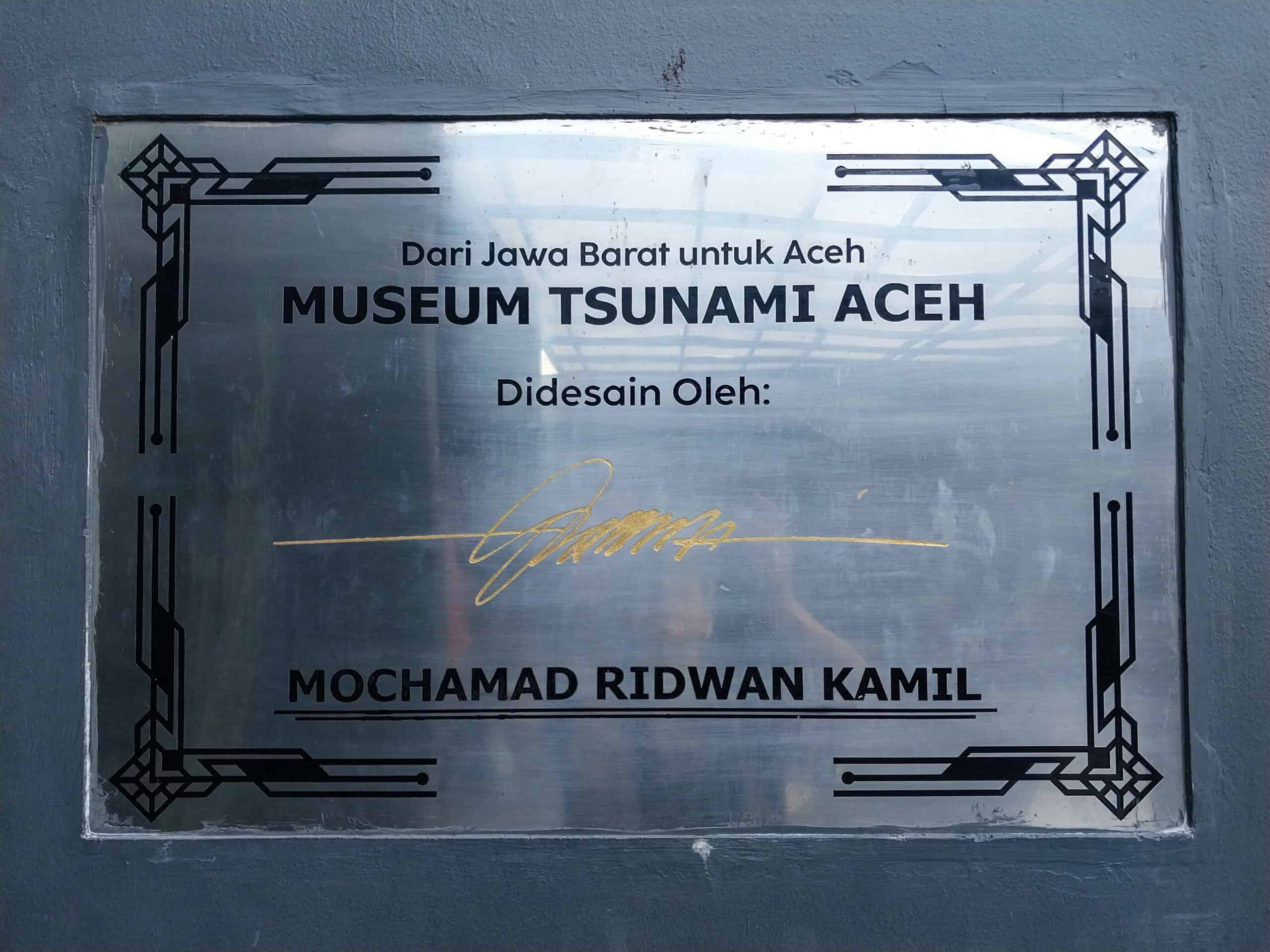
From the outside, the overall design of the building has curved, wave-like walls and a roof that resembles a rising wave. It’s also been described by some as a ship representing survival and refuge, akin to Noah’s Ark. The exterior also features patterns inspired by traditional Acehnese culture, including elements linked to the Saman dance.
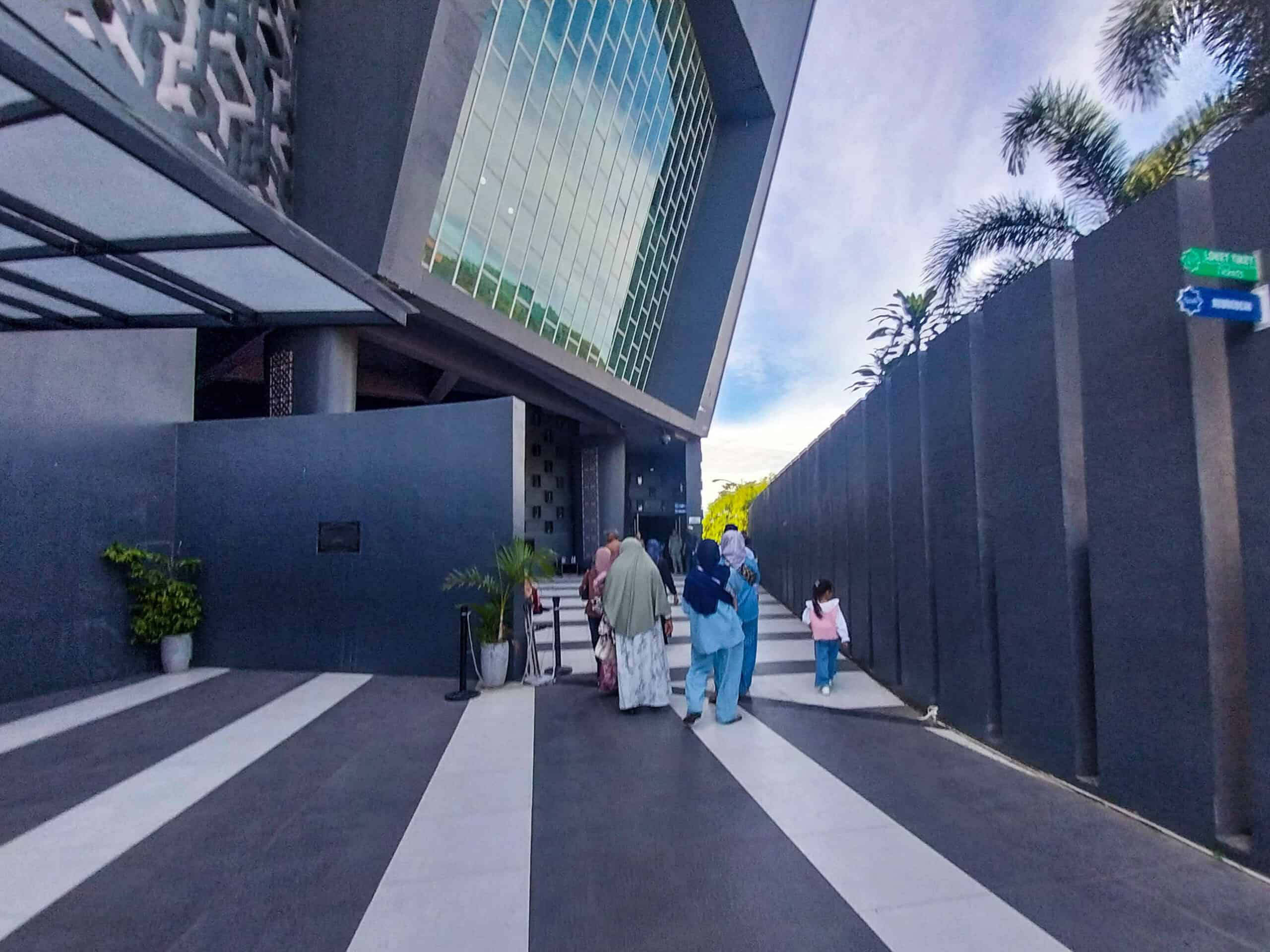
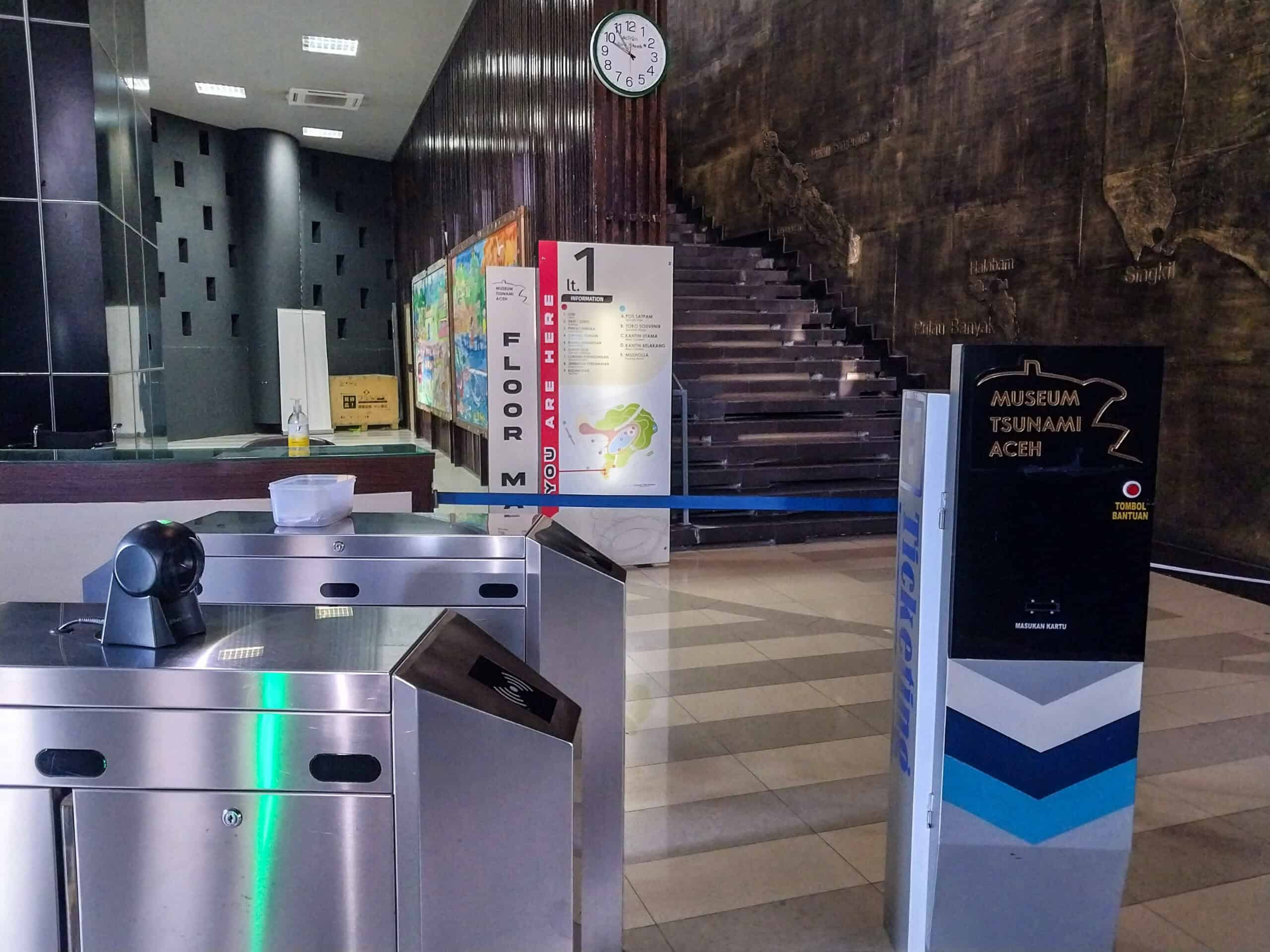
There’s also a practical side to the museum’s unique design. The ground level is based on traditional Acehnese stilt housing (Rumah Aceh), which is raised and open, allowing water to pass through should future flooding occur. The building is also intended to function as a tsunami evacuation shelter should the unthinkable happen again.
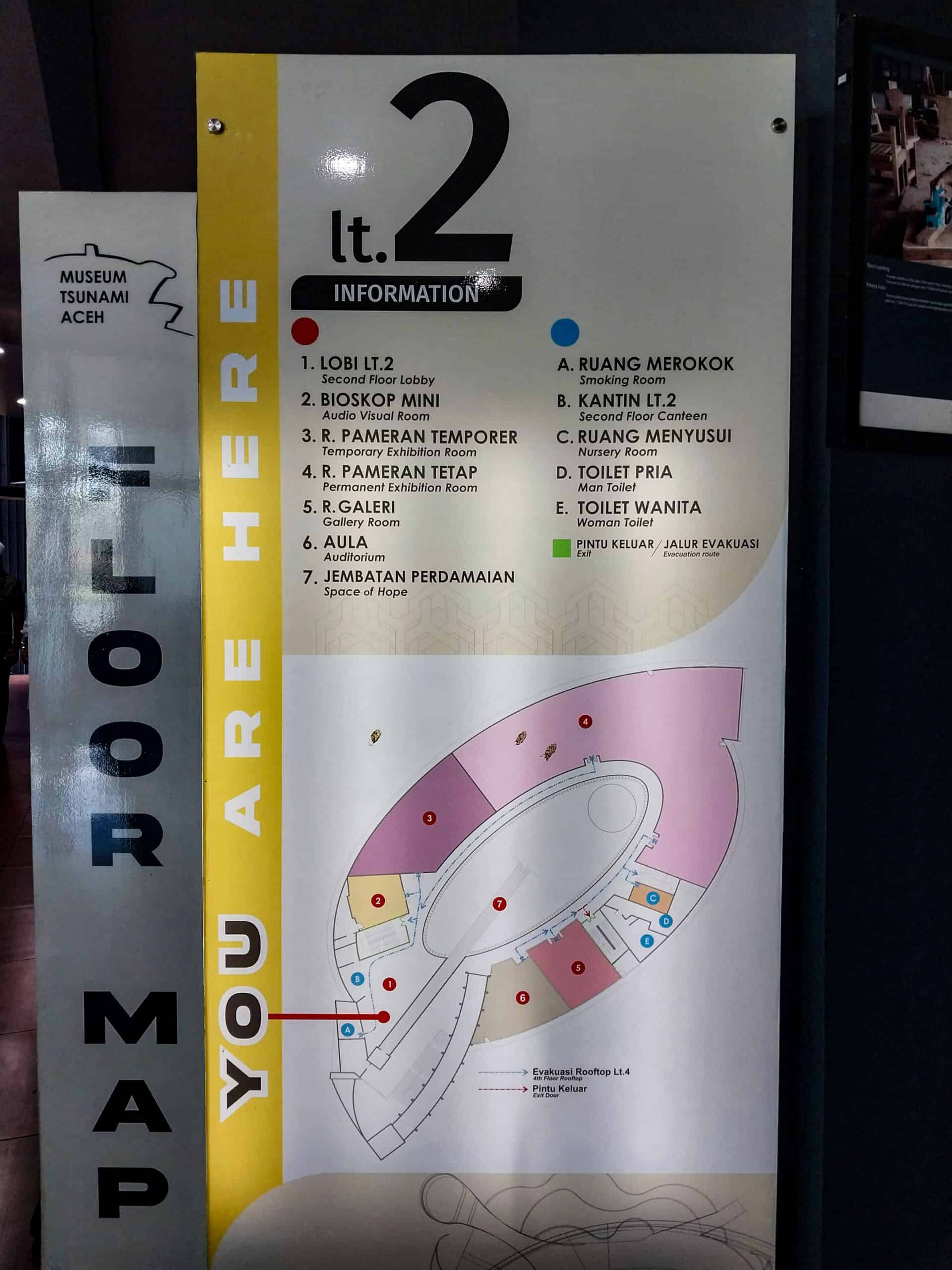
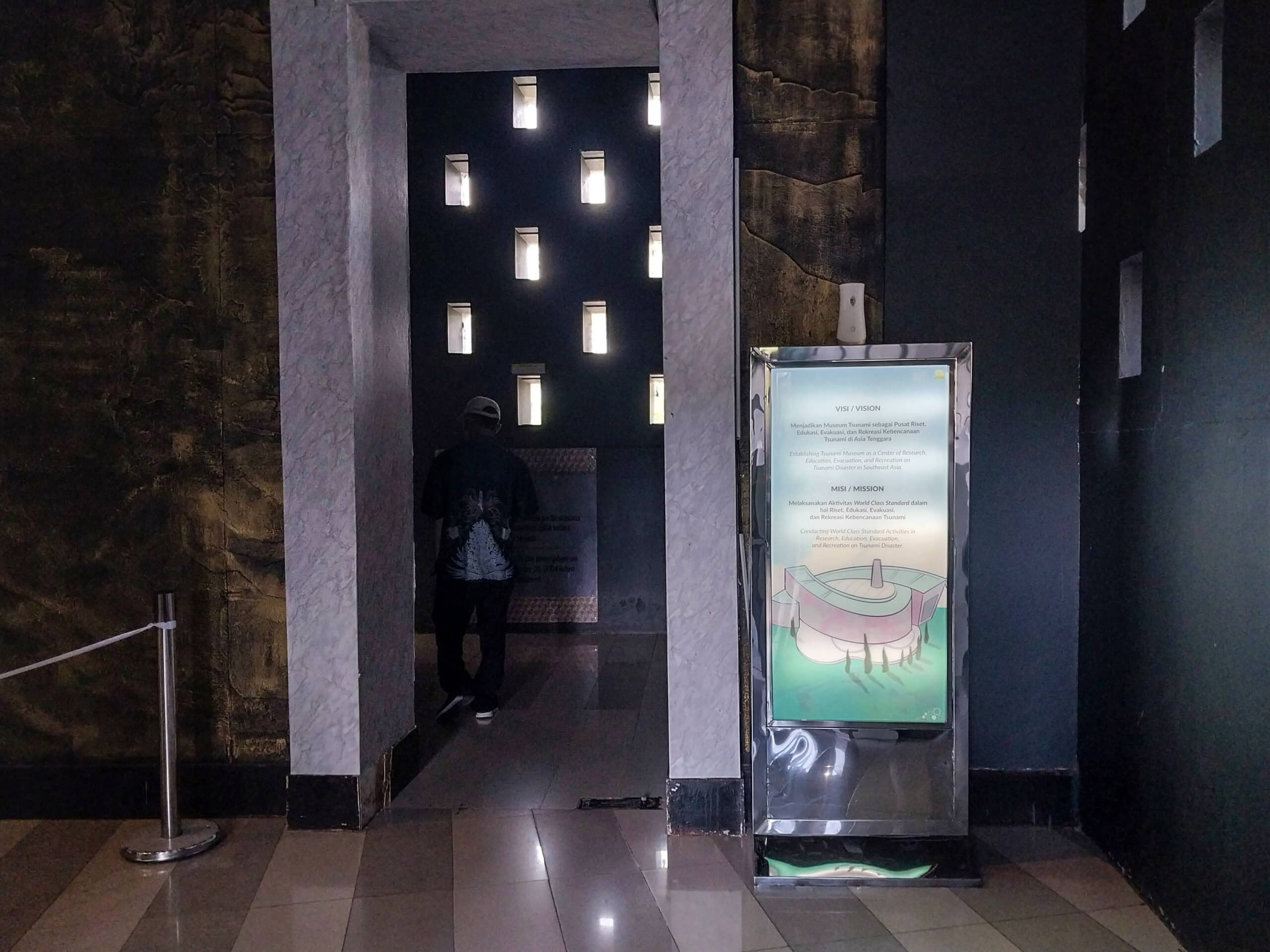
Inside the Aceh Tsunami Museum, the entrance starts in a narrow, dim corridor known as the tsunami simulation passage, where water flows down the walls on both sides. The sound of the water and the tight space make it feel a bit intense, but set the pace for what’s to come.
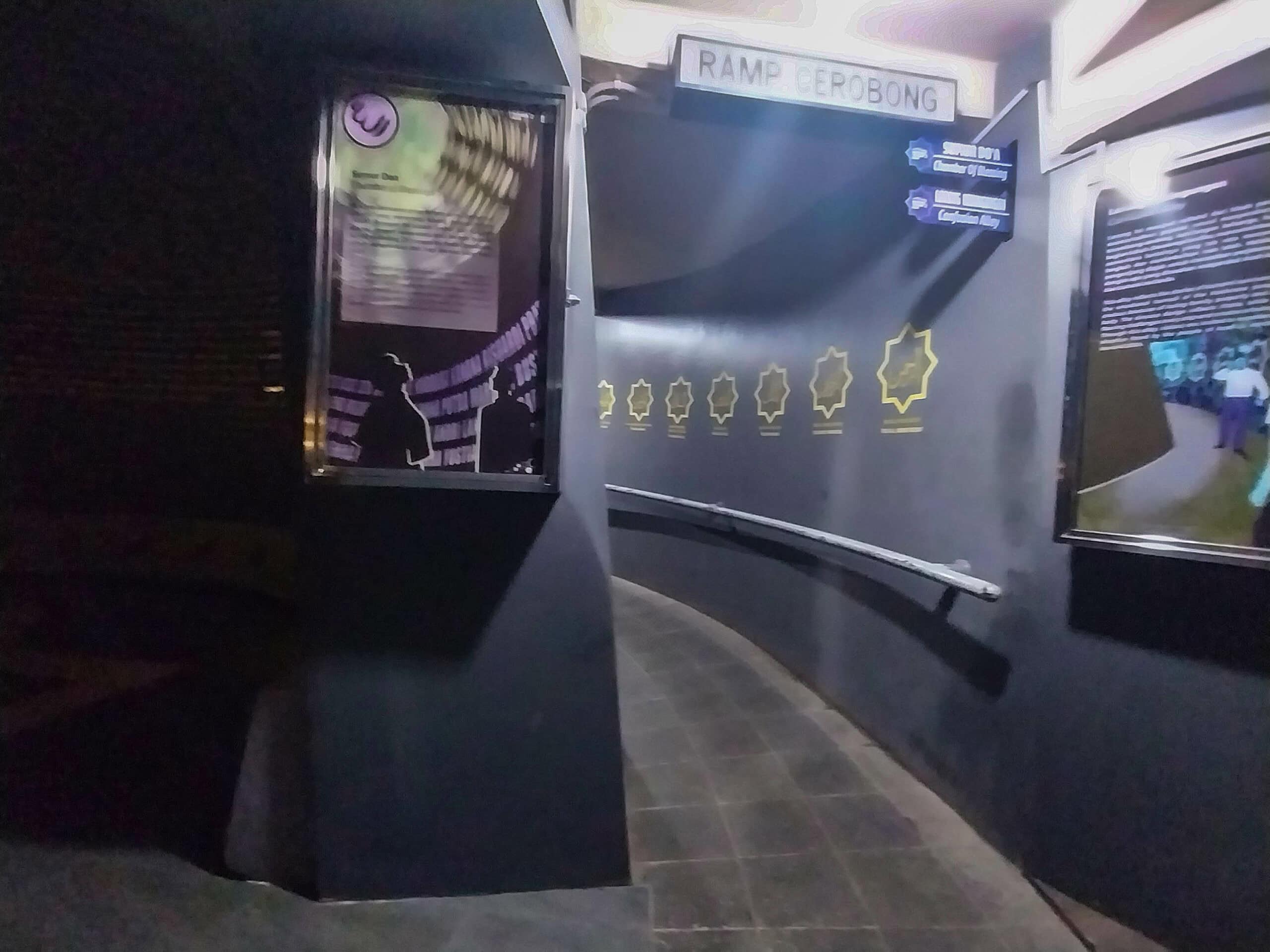
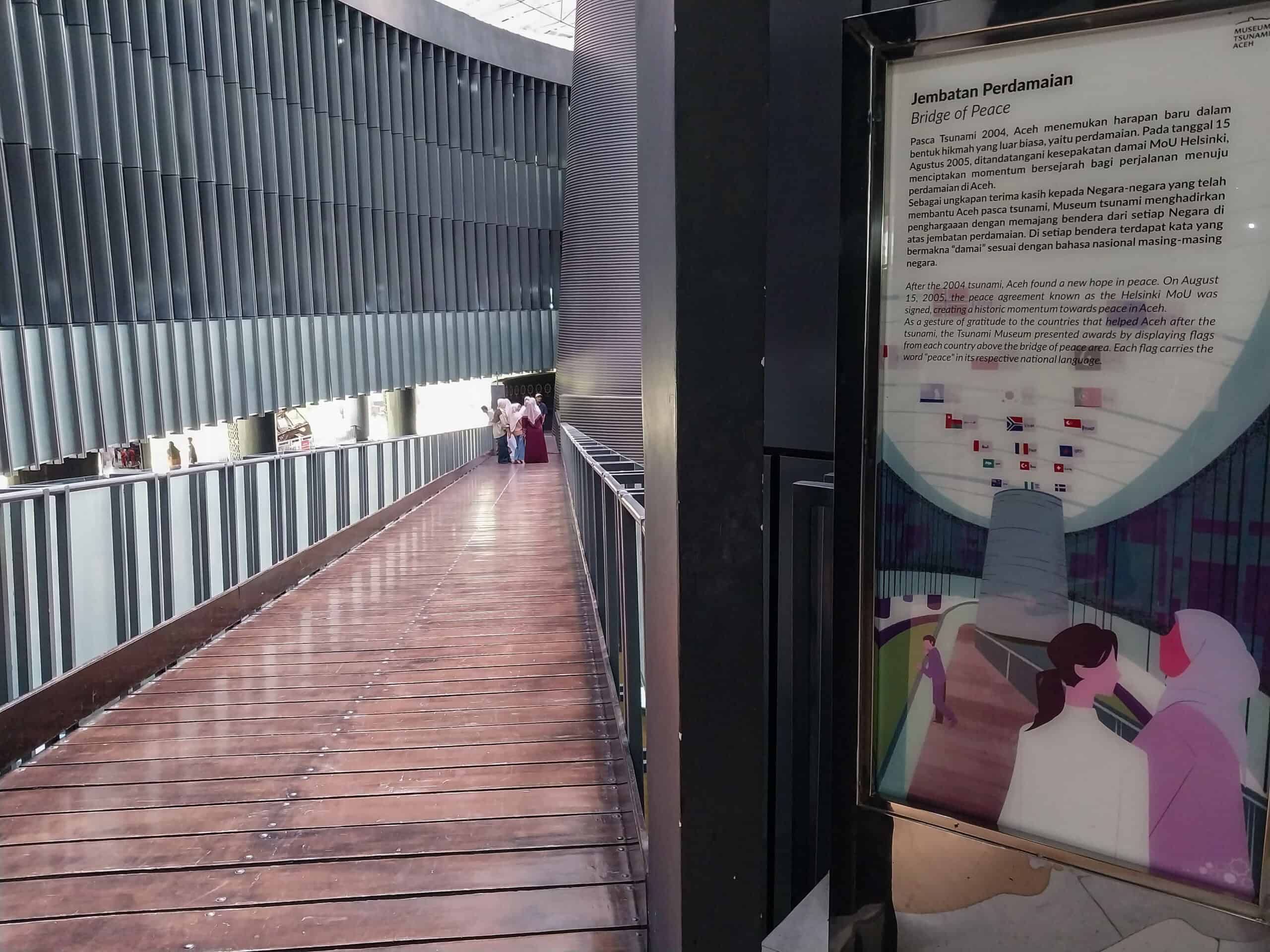
The walkway then opens up into the Memorial Hall, known as the Sumur Doa (Well of Prayers), a tall space where the names of victims are inscribed. From here, visitors continue along the Peace Bridge, a passage where the names of victims are displayed on the ceiling, along with various country flags.
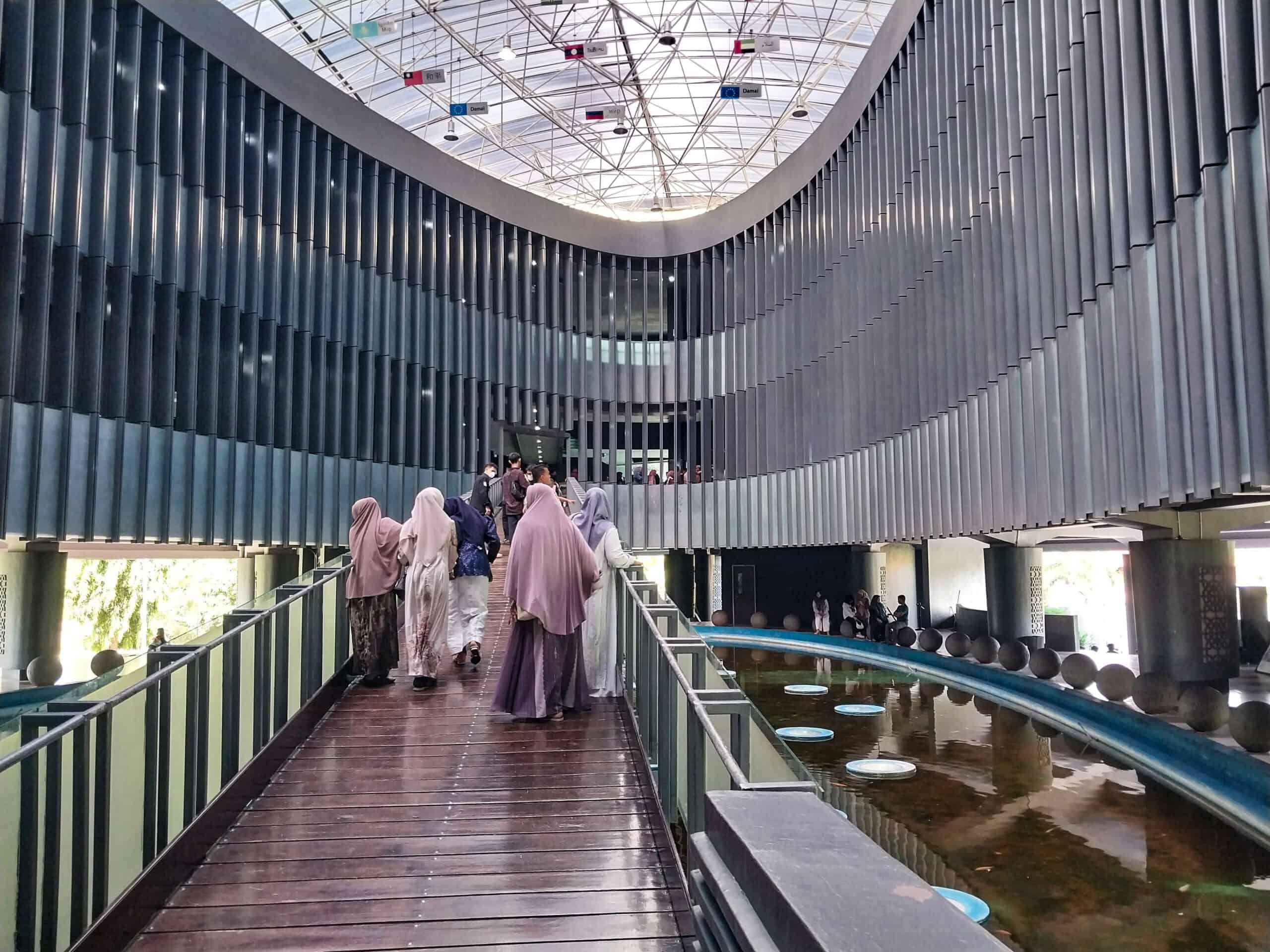
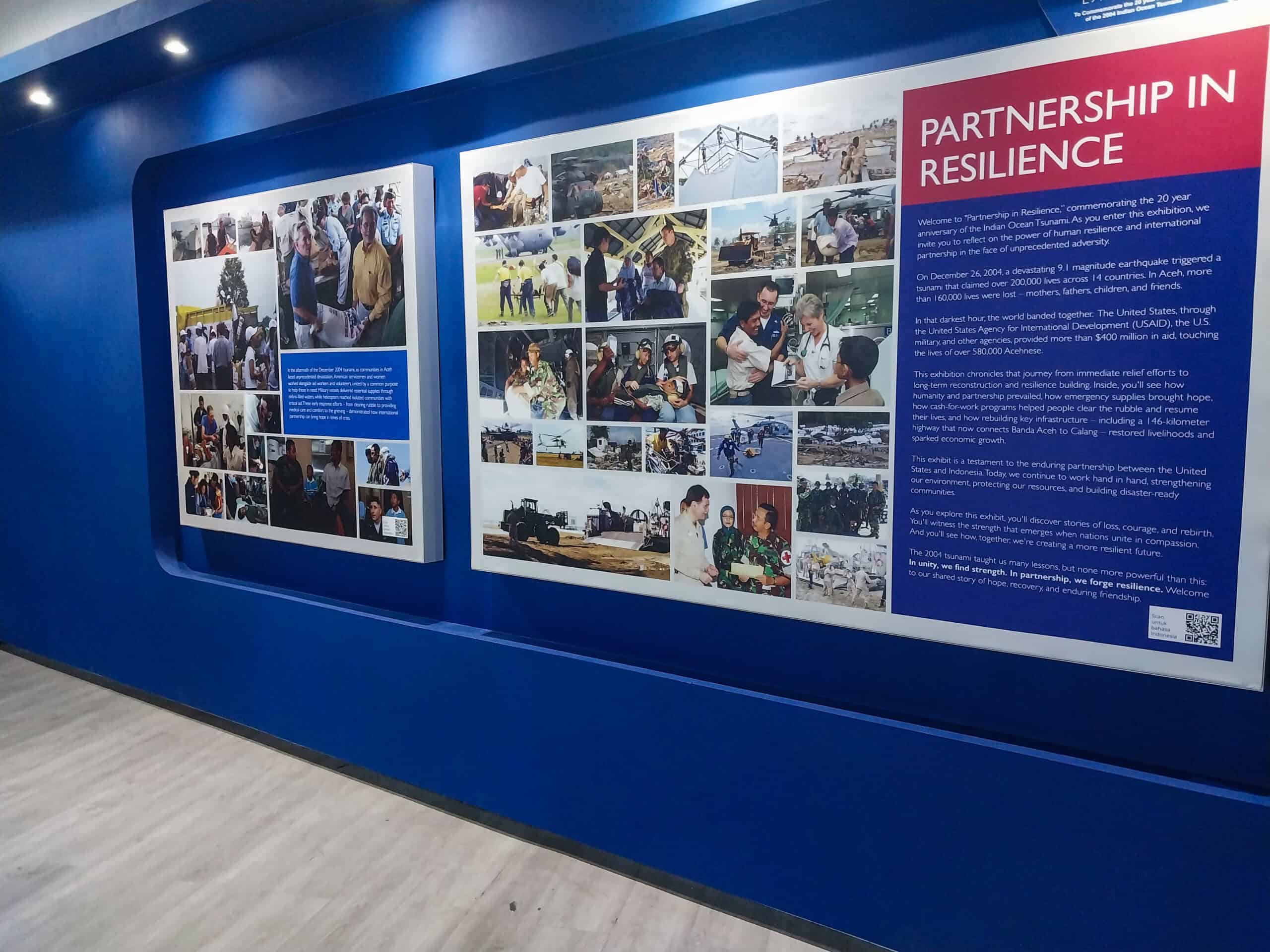
As you move further in, the museum opens into larger exhibition areas. These sections explain what happened in Aceh, how the tsunami unfolded, and how the region rebuilt afterwards.
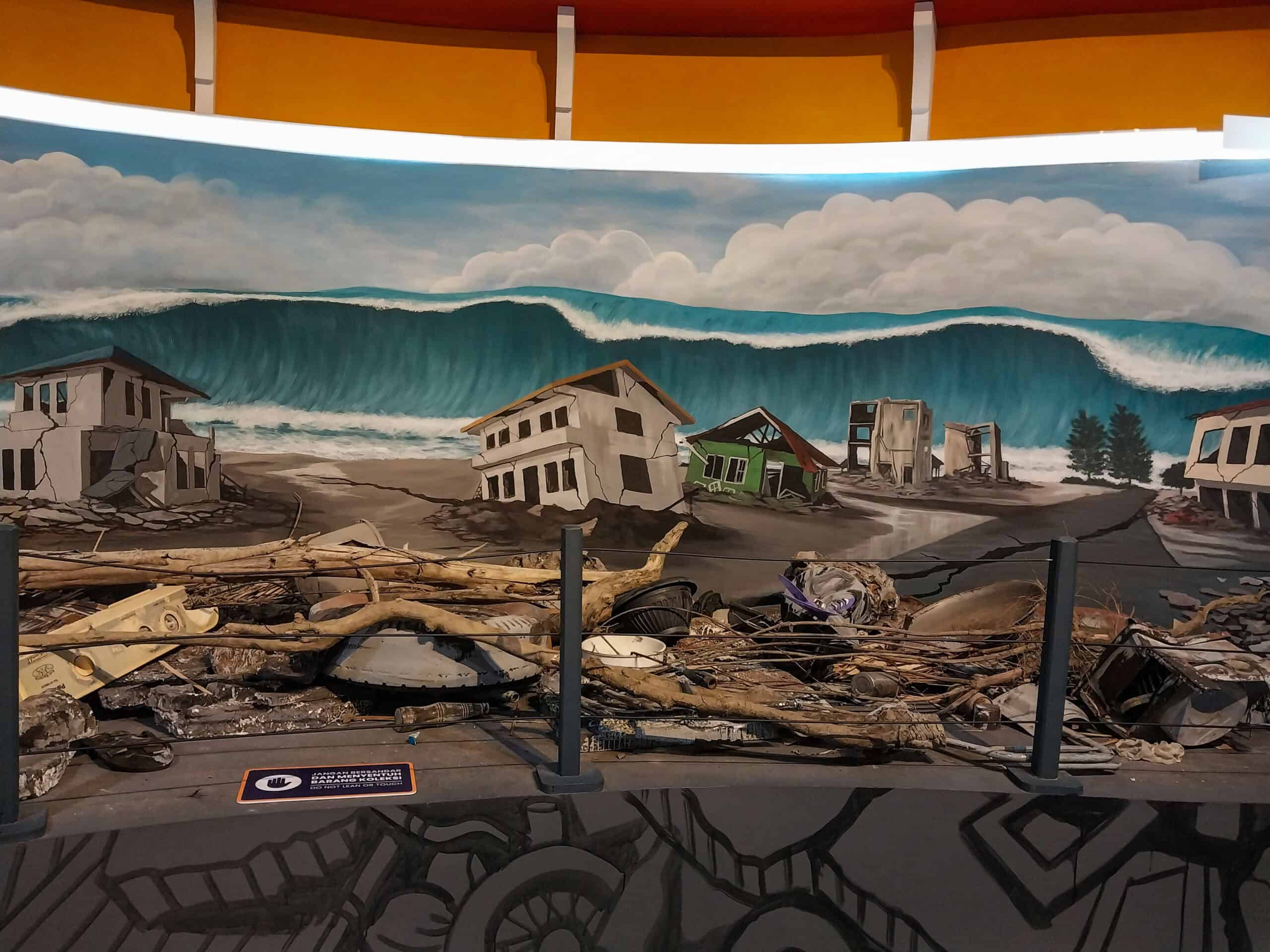
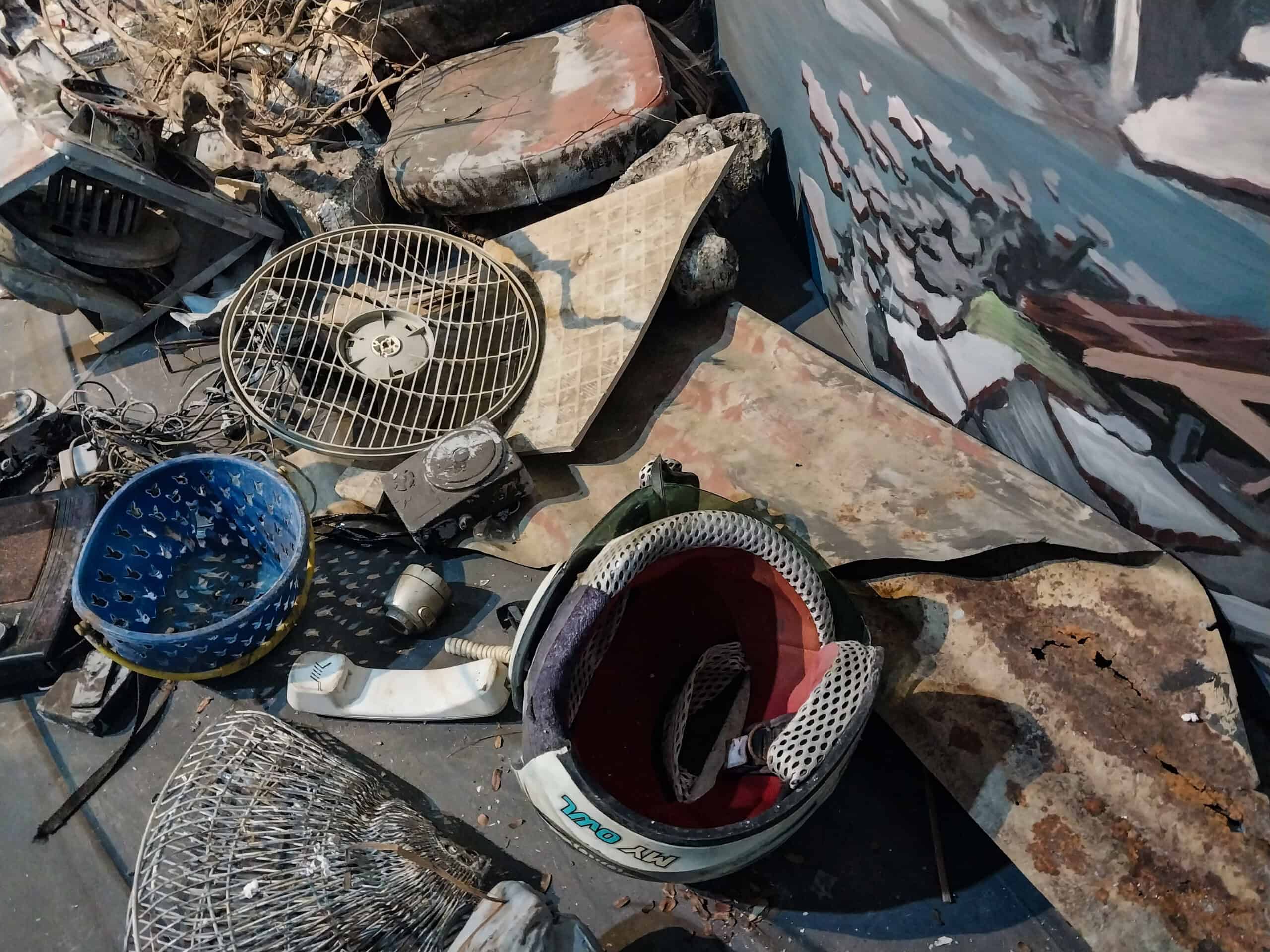
There are photos, survivor stories, and multimedia displays that help put the scale of the 2004 Indian Ocean earthquake and tsunami into perspective. It killed an estimated 230,000 to 280,000 people across several countries, with the highest number of casualties in Aceh.
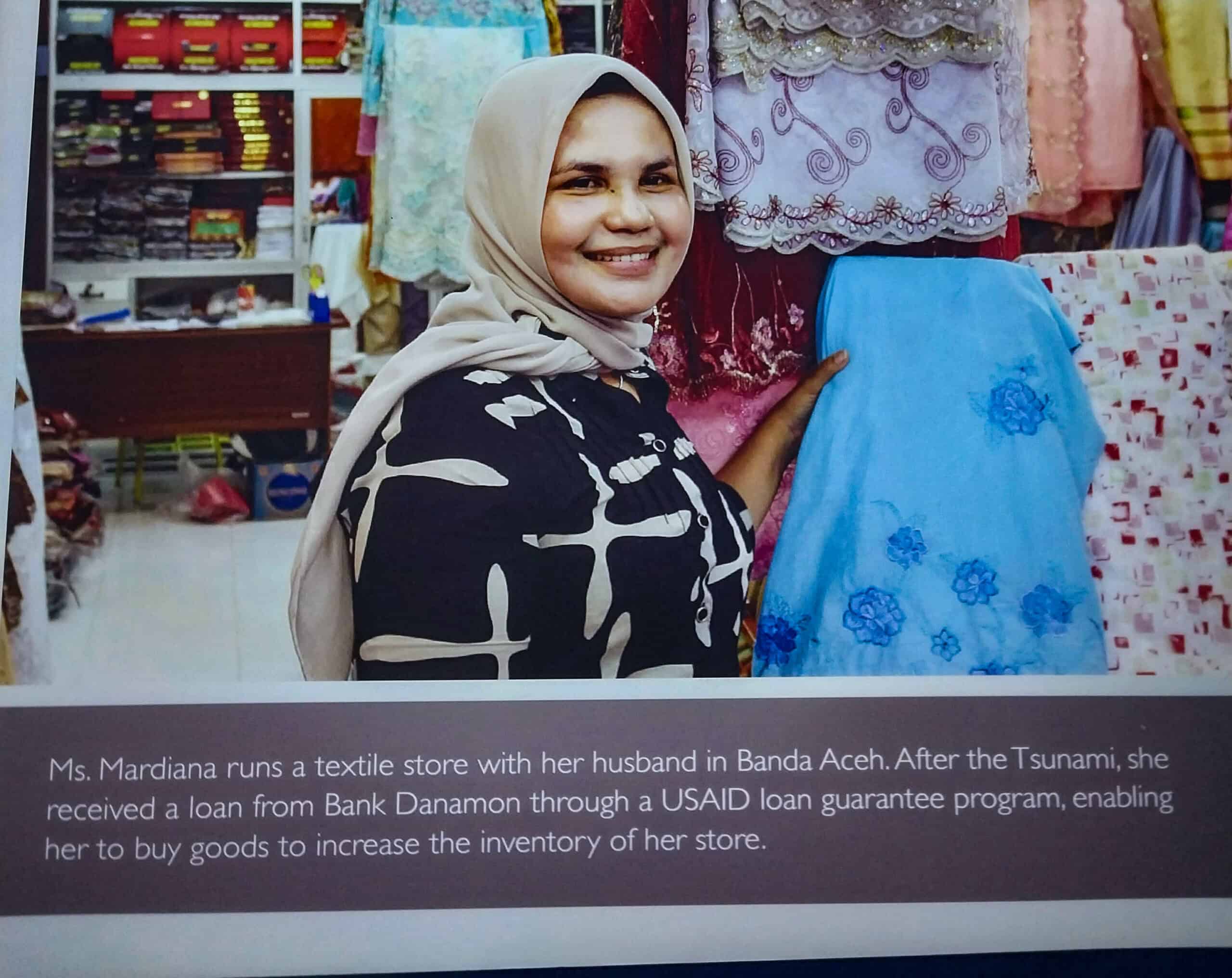
A subtle change that many people might not even notice is how the lighting gradually shifts as you walk through, from dark and enclosed to more open and brighter areas. The lighting seems intentional, acting as a subtle reminder of the journey from tragedy towards recovery.
My Museum Visit Hindsight
The museum is a lot to take in. For me, the combination of the distracting weekend crowd, the layout, and the way the information was presented made it a bit challenging to process so much at once. After returning home and doing some research, my understanding of what I had seen became clearer.
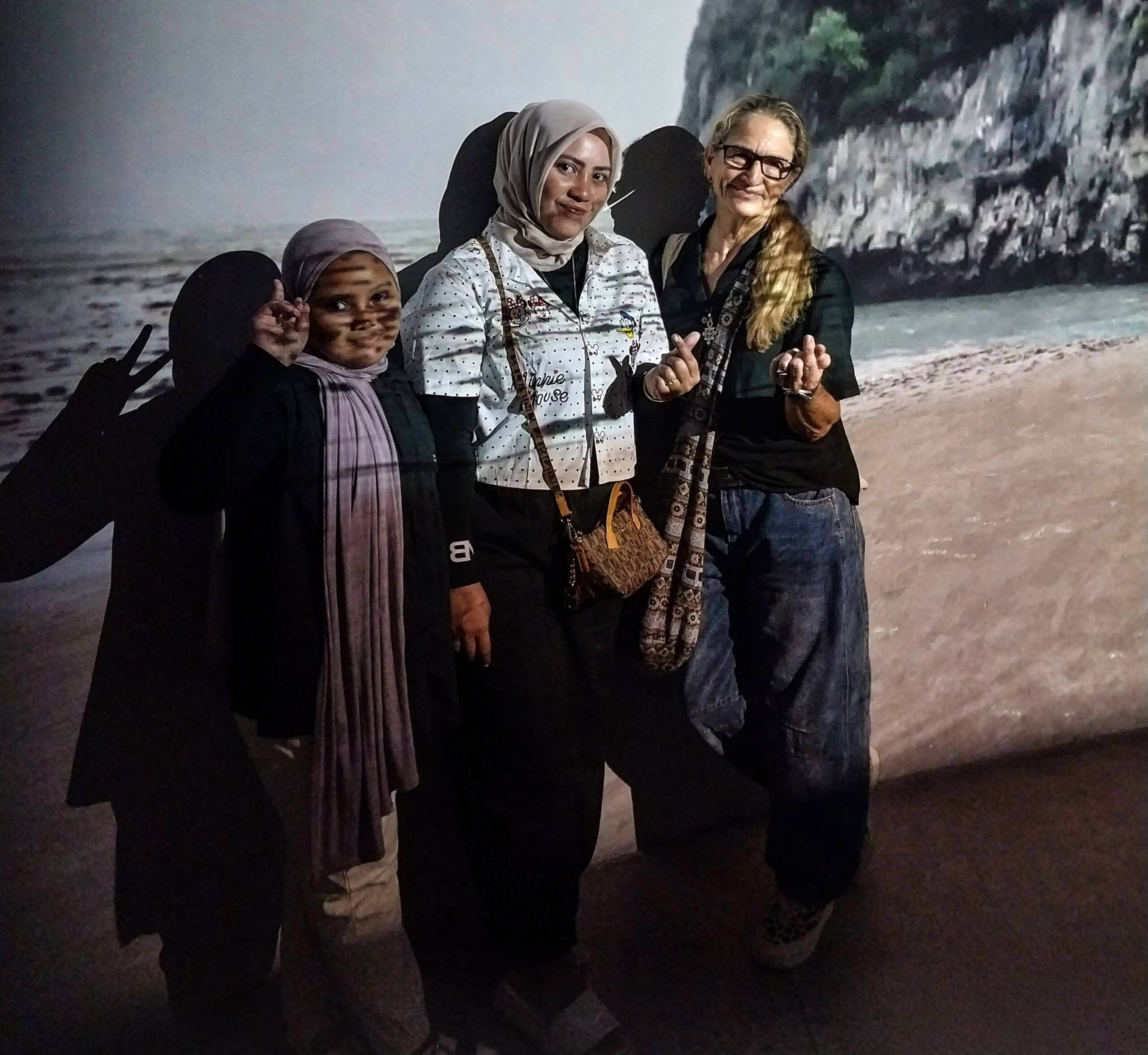
In hindsight, I would have benefited from a second visit, to have more time to absorb the details and context.
Is it Worth Visiting?
The Aceh Tsunami Museum was the main reason for my visit to Banda Aceh, and I highly recommend it to others visiting Banda Aceh, or those who are interested in learning more about the 2004 Indian Ocean tsunami. Not because it’s a “fun” place, but because of what it represents and the history it documents.
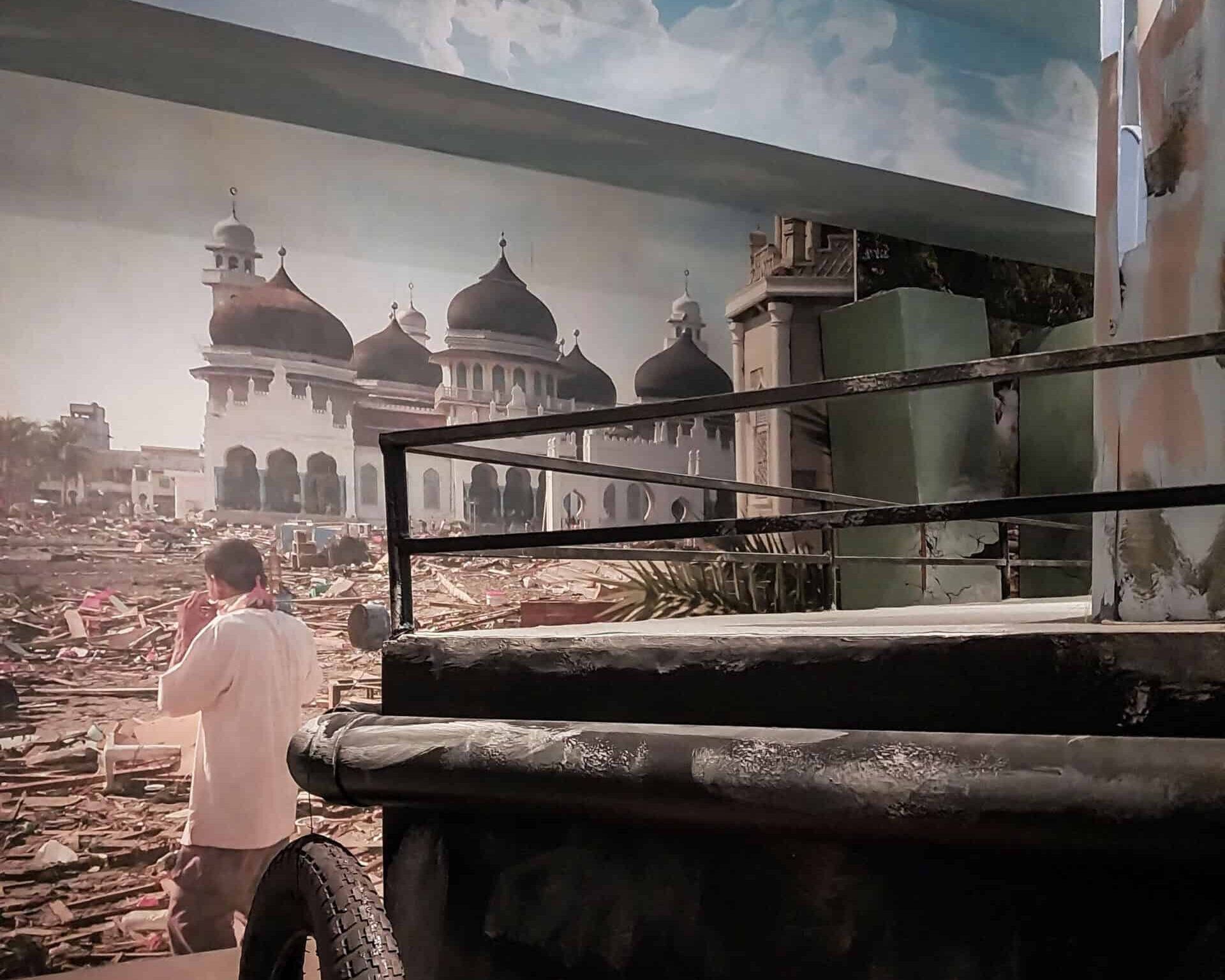
It also shows the contrast of then and now, and the resilience of the local people. That alone is uplifting. So yeah, this isn’t abstract history to me anymore, I still see reminders of it every day.
Museum Tsunami Aceh
Jalan Sultan Iskandar Muda No. 3, Banda Aceh, Indonesia
Open daily: 09:00–12:00 and 14:00–16:00
Closed on Fridays (for prayers)
Entry: Indonesian adults: ~Rp 5,000, Students: ~Rp 3,000, Foreign visitors: ~Rp 15,000
+62 651 40774
**The museum can get very busy on weekends and local holidays. It also closes from 12:00 until 14:00, whether visitors are inside or not.
Leave a Reply