
There’s a lot more to Kuching, Sarawak, than first meets the eye. Within a few streets of the Sarawak River, you can move from grand colonial buildings to incense-filled temples, historic shophouses, colorful markets and museums that show the many cultures that have shaped this corner of Malaysian Borneo. It’s a great deal to take in and deserves more than a quick 1- to 2-hour walking tour. So, if you’re keen to learn as much as you can about Kuching, and perhaps have limited time, then planning ahead a bit is in your best interest.
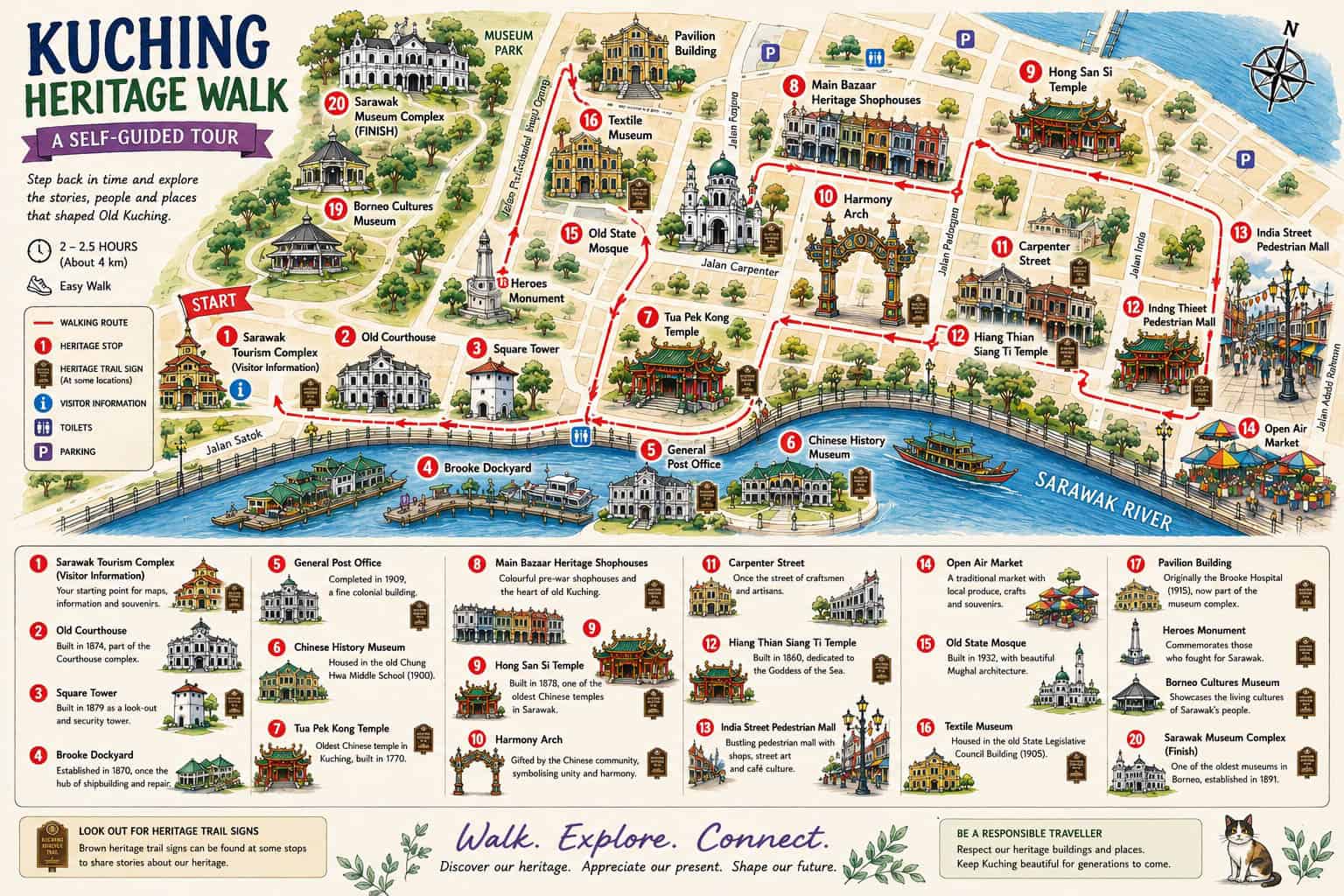
The Kuching Heritage Trail can be a little confusing at first. Different maps and guides do not always present the route in the same way, making it difficult for first-time visitors to know where to begin and what to include.
Planning Your Kuching Heritage Trail Walk
I initially set out to write about ‘The Old Kuching Heritage Trail’. Yet, on closer inspection, I realized that according to the latest official trail map, there are closer to 37 highlighted locations that are broken up into Historic Business Heritage, Kampung Heritage, Historical Building Heritage, and River Heritage. That’s much more than the 20 to 25 highlights I may have personally seen during my various visits to the city over the years. This guide breaks it down into sections to help you organize your own walk and decide which areas you want to explore.
Kuching, the capital of Sarawak, is a city full of stories. Even its name has a story or two. While many associate the name with the Malay word kucing (cat), giving rise to its famous “Cat City” nickname and multiple feline landmarks, the true origins are less certain.
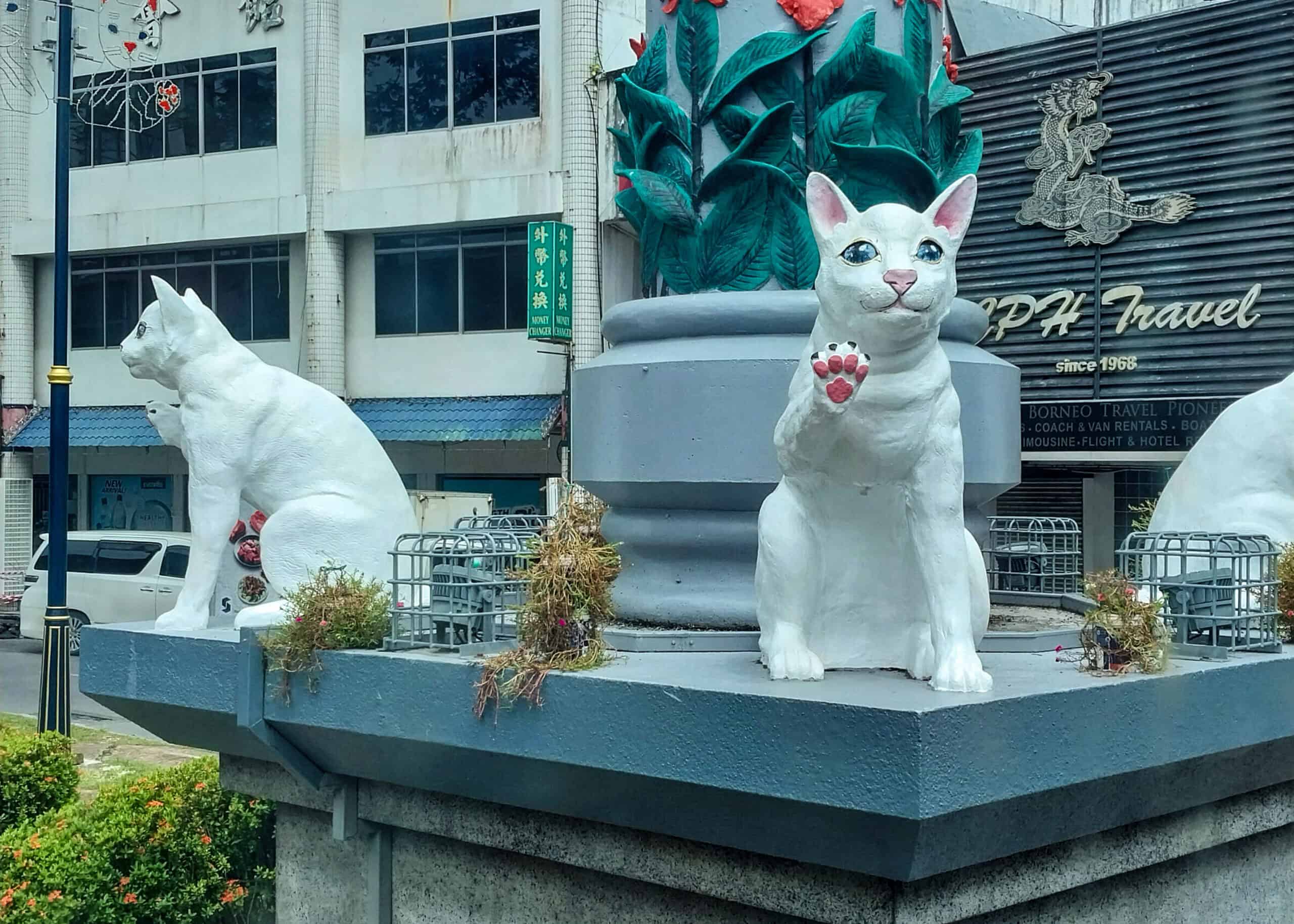
Some historians link the name to places such as Bukit Mata Kucing (Cat’s Eye Hill) or the former Sungai Kuching (Kuching River), while others suggest links to old trade names such as “Cochin” used by early merchants. Whatever the origin, the name itself reflects the many layers of history that make Kuching such an interesting city to explore.
The heritage trail shows how Kuching grew from a small trading settlement into the multicultural capital of Sarawak, shaped by colonial history, indigenous heritage and generations of migration. It’s an easy, mostly flat walk through the historic city center, making it a great option for first-time visitors and anyone wanting to experience Kuching beyond the waterfront.
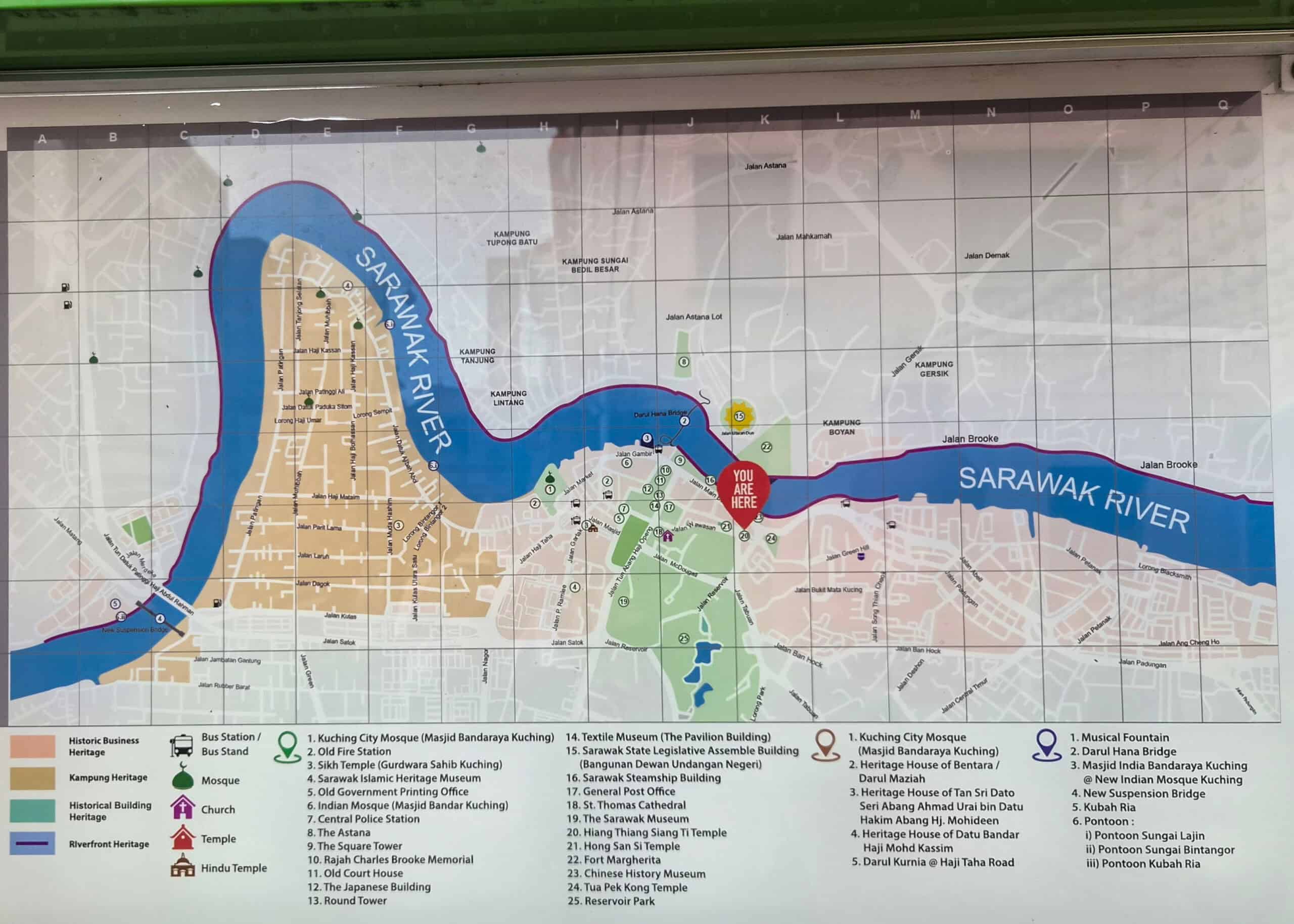
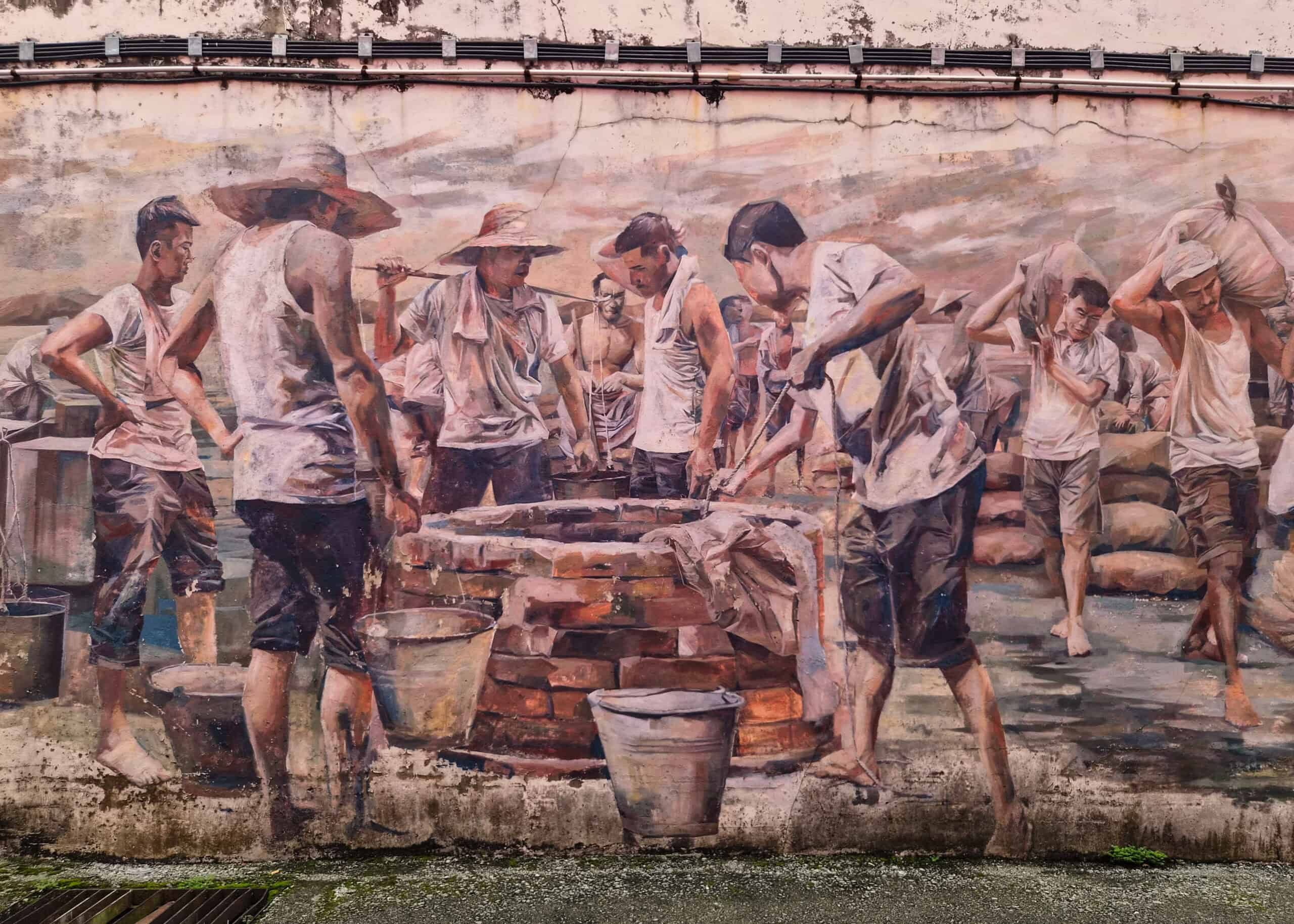
The official trail map is well-marked, but it’s worth taking a few detours along the way. Colorful street art appears around unexpected corners, faded Chinese characters and old advertisements still cling to weathered walls, and tucked between heritage shophouses are family-run cafés, traditional businesses and small vendors that continue to give the city its character.
Covering approximately 4 to 5 km, the walk usually takes around 2 to 3 hours if you follow the route without many stops. If you enjoy wandering down side streets, exploring shops or taking time to notice the smaller details, it is easy to spend half a day (or more) discovering Kuching at a slower pace.
Before You Set Off
If you’ve already explored Peninsular Malaysia, Kuching may feel significantly different. That’s because Sarawak followed a different path through history. In 1841, English adventurer James Brooke was granted the title of Rajah of Sarawak by the Sultan of Brunei after helping to suppress a local rebellion.
While the peninsula was shaped by British colonial rule, Sarawak was governed for more than a century by the Brooke family, beginning with James Brooke (1841–1868), followed by Charles Brooke (1868–1917) and Charles Vyner Brooke (1917–1946), collectively known as the White Rajahs.
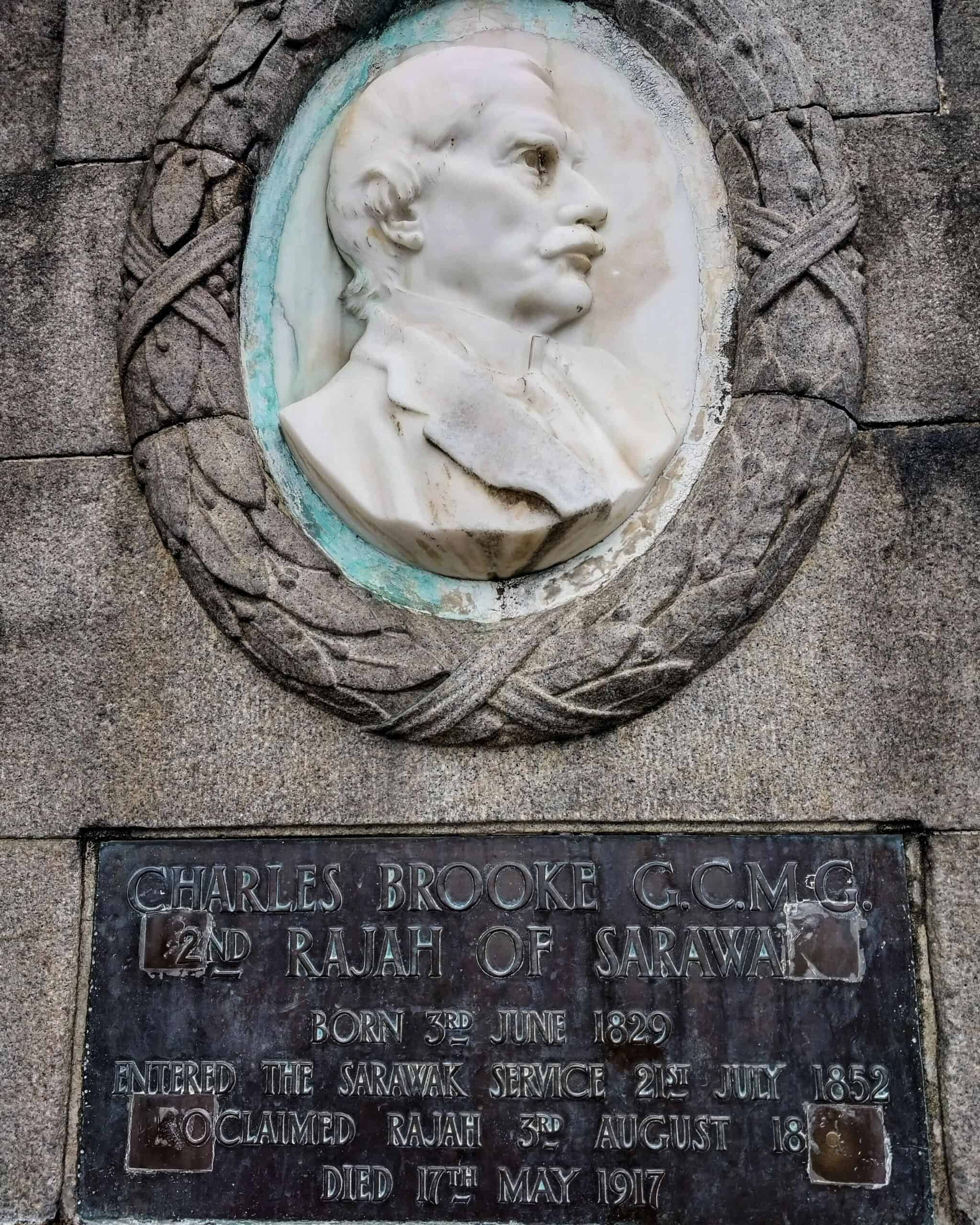
They ruled Sarawak independently under British protection, leaving behind a distinct architectural and cultural legacy that’s still visible throughout the city today.
The Brooke era remains one of the most defining and debated periods in Sarawak’s history. While the Rajahs left behind many of the buildings and institutions that shape Kuching’s heritage today, their rule also brought major political and social changes for the communities they governed. Understanding that history makes the Heritage Trail even more interesting.
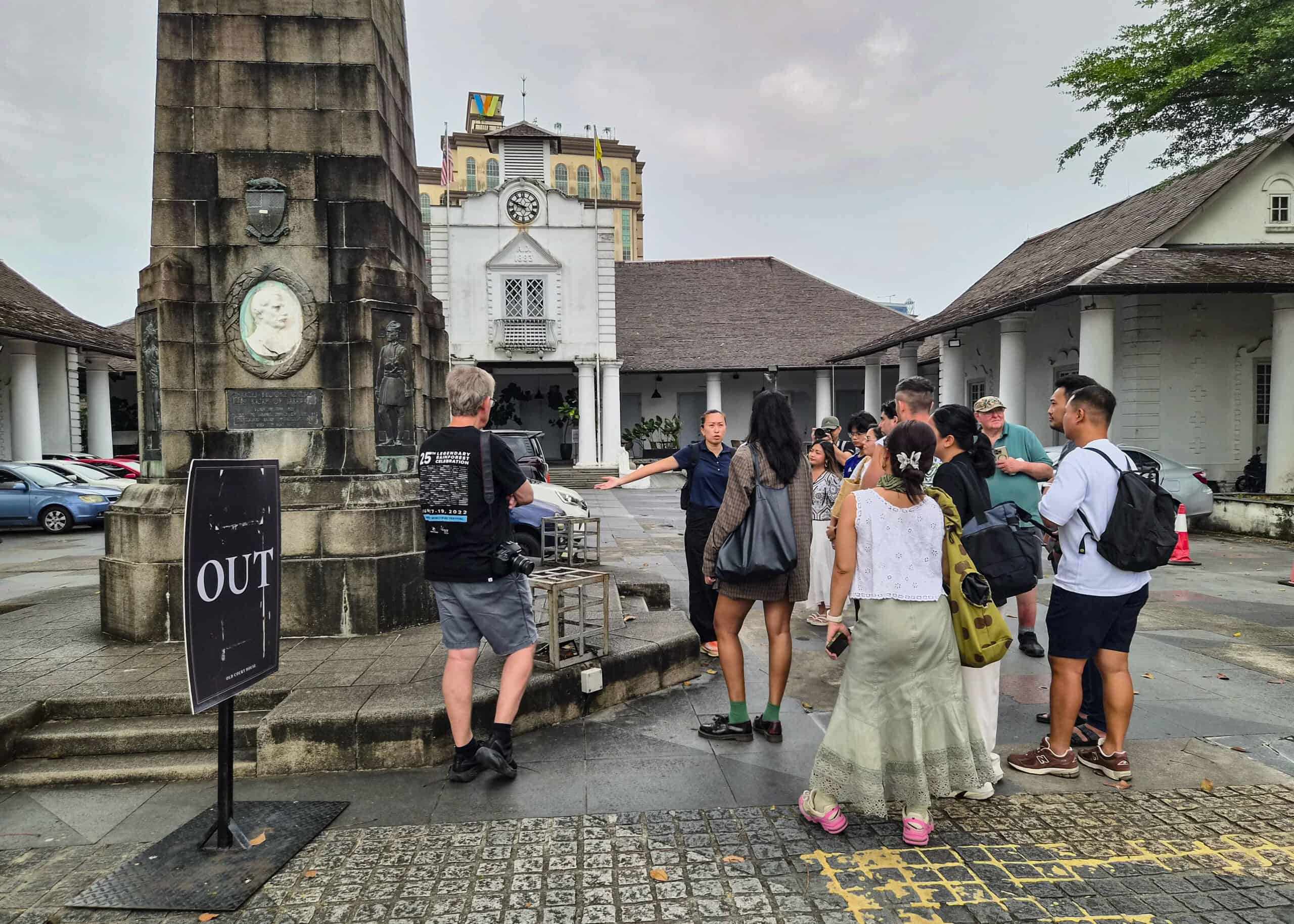
I’ve explored the city both on guided walking tours and on my own, and each experience offers something different. A guide can add interesting stories and fun facts, as well as answer questions you might have, while a self-guided walk gives you the freedom to slow down, linger at places that catch your eye and wander into side streets without worrying about keeping up with a group.
If you’re the type of person who enjoys reading plaques, photographing street art or chatting with local shop owners, setting your own pace can be one of the best ways to experience Kuching’s historic center.
Kuching Under the White Rajahs
The legacy of the Brooke era
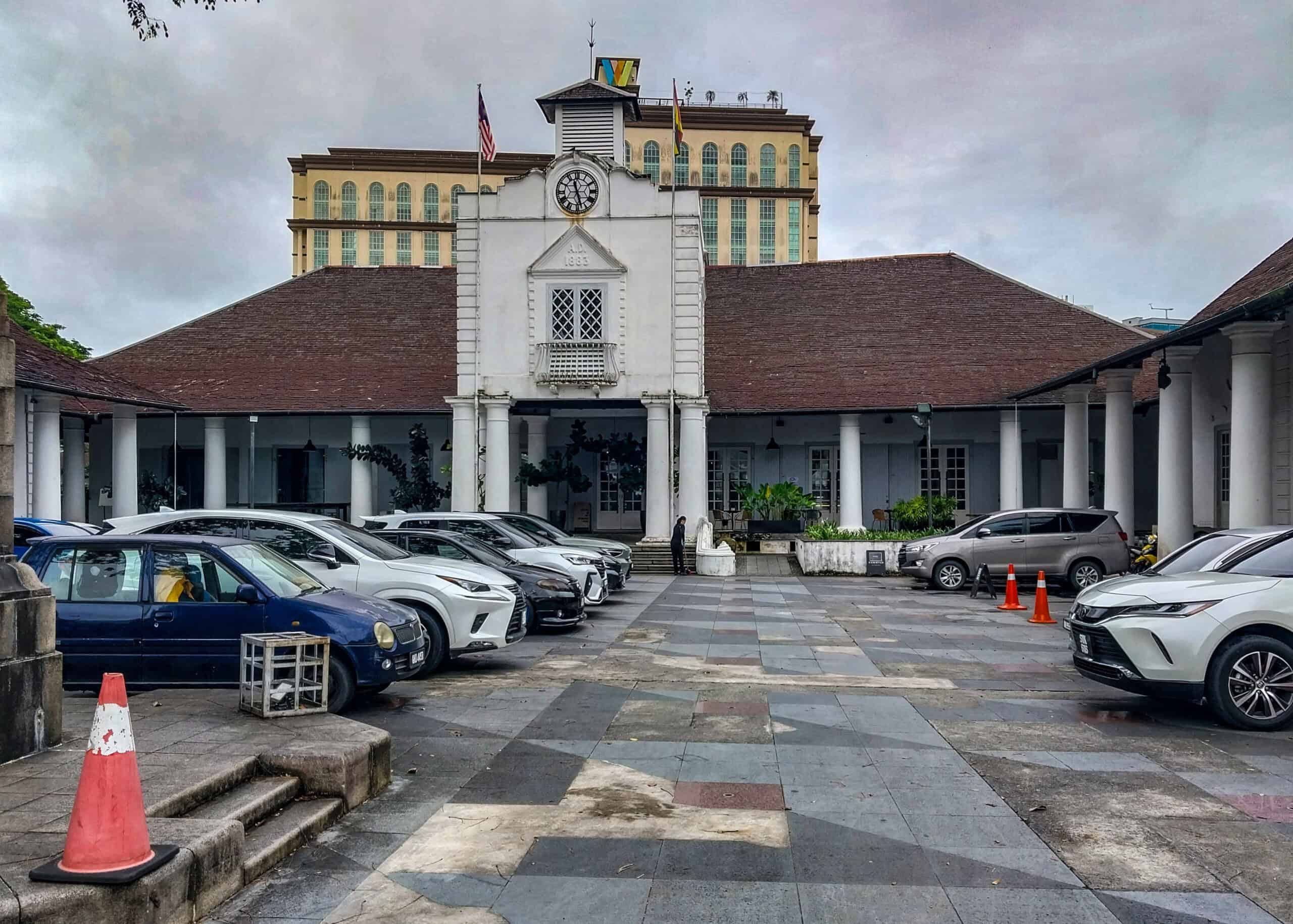
The trail begins in Kuching’s former administrative quarter, where many of the city’s important Brooke-era buildings are located. The Old Courthouse, Square Tower, Brooke Dockyard and General Post Office tell the story of a city that grew alongside the Sarawak River, where government, trade and daily life were closely connected.
What to look for along the way:
Sarawak Tourism Complex
A good starting point for the trail and a useful place to pick up maps, information and a little background on Kuching’s heritage sites before setting off. From here, you’re already in Kuching’s historic administrative district, so the walk begins before you even reach the first landmark.
Old Courthouse
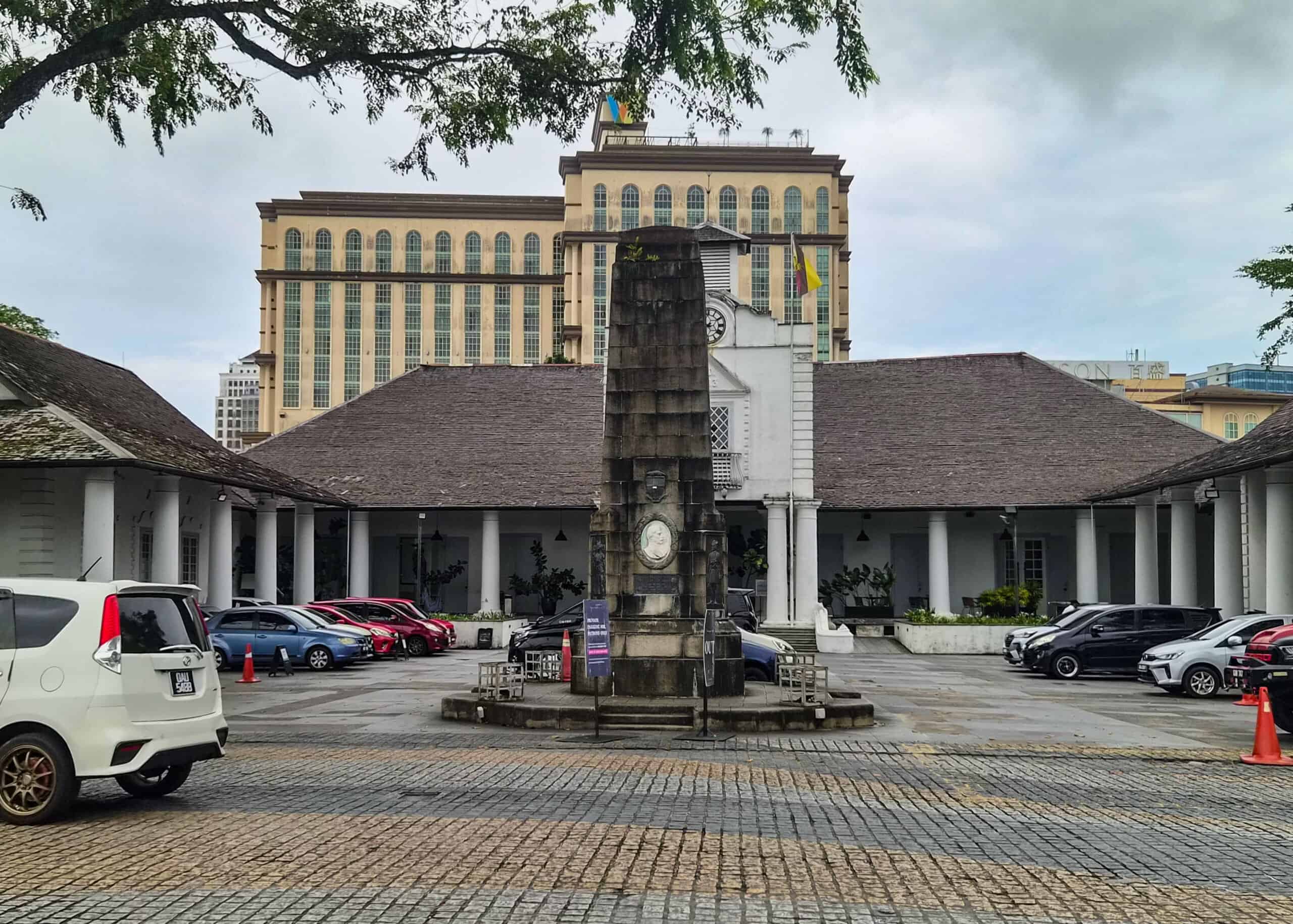
One of Kuching’s most significant colonial buildings, this former center of administration once housed government offices and courtrooms during the Brooke era. Today, visitors can wander through its restored courtyards, galleries and cafés, making it one of the easiest heritage buildings on the trail to explore from the inside.
Square Tower
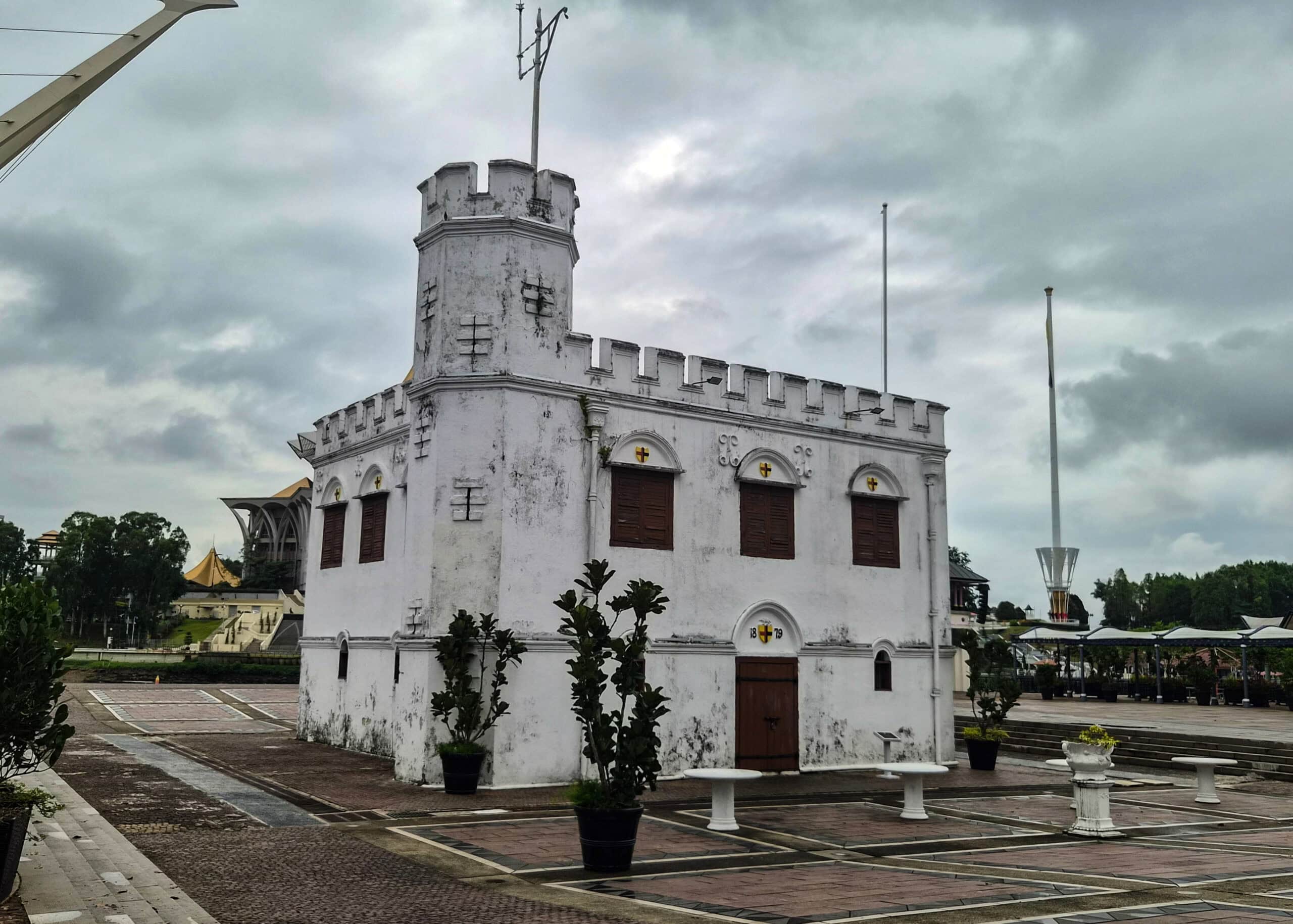
Built in 1879, the Square Tower was originally constructed as a fort and prison before later becoming part of the city’s river defenses. Standing beside the Sarawak River, it offers an easy reminder of how closely Kuching depended on the waterfront for transport, trade and security.
Brooke Dockyard
Before roads connected much of Sarawak, the river was the state’s main highway. The Brooke Dockyard helped keep government launches and trading vessels operating, making it an important part of daily life during the Brooke administration.
General Post Office
Completed in 1932, the General Post Office reflected Kuching’s growing role as Sarawak’s administrative and commercial center. Its neoclassical design still makes it one of the most recognizable colonial buildings along the riverfront.
Look beyond the buildings
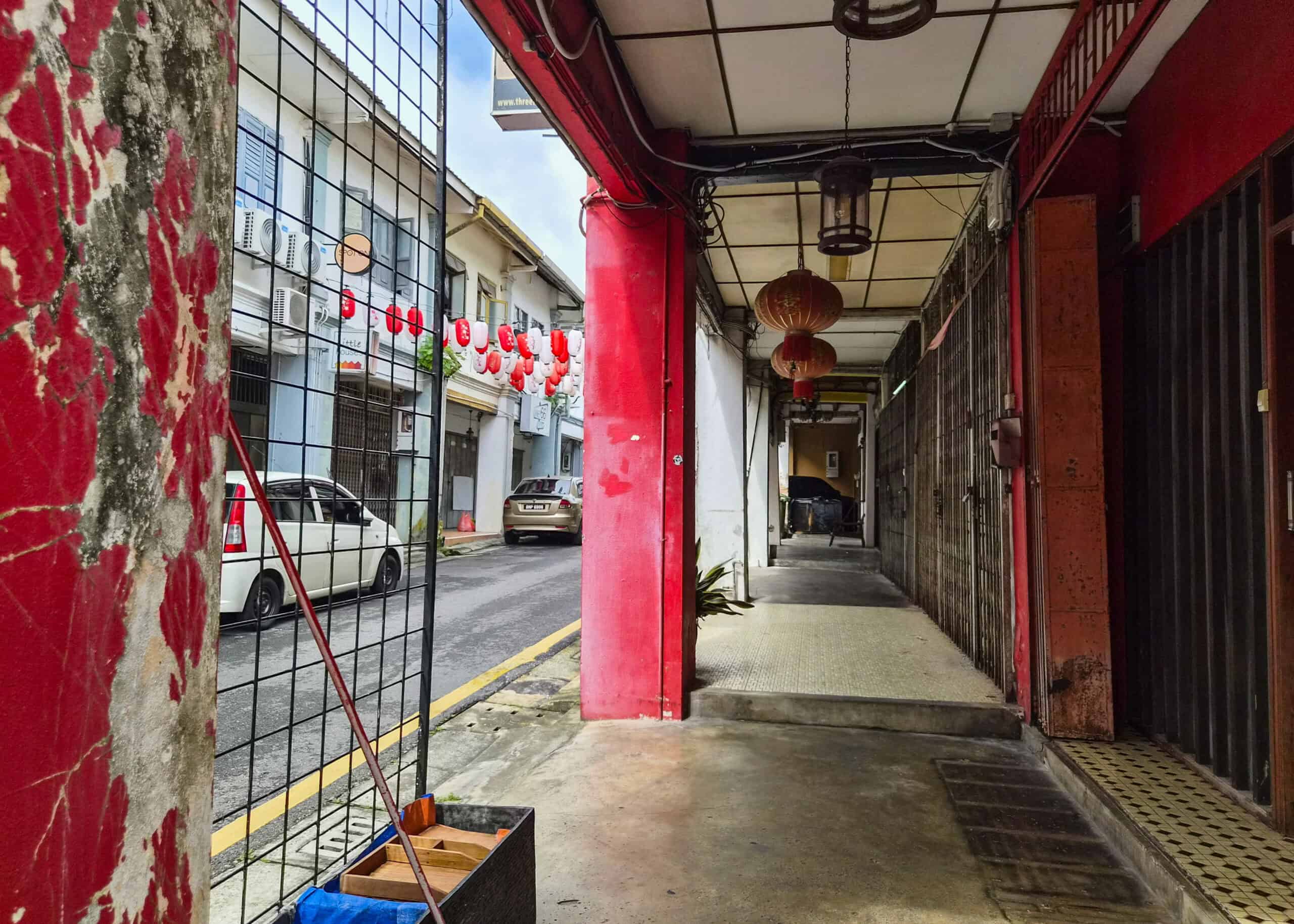
This section of the trail is worth slowing down for. Notice the old street layout, stairways leading to the river and small architectural details that are easy to overlook. They help explain why this part of Kuching became the center of government and commerce.
Where Cultures Meet
Temples, traditions and a multicultural city
As you continue toward the riverfront and into the old town, the character of Kuching begins to change. The government buildings of the Brooke era give way to streets shaped by merchants, religious communities and generations of families who built their lives here. The Chinese History Museum, Tua Pek Kong Temple, Hiang Thian Siang Ti Temple and the Old State Mosque sit close together, showing how different communities developed side by side within the old city.
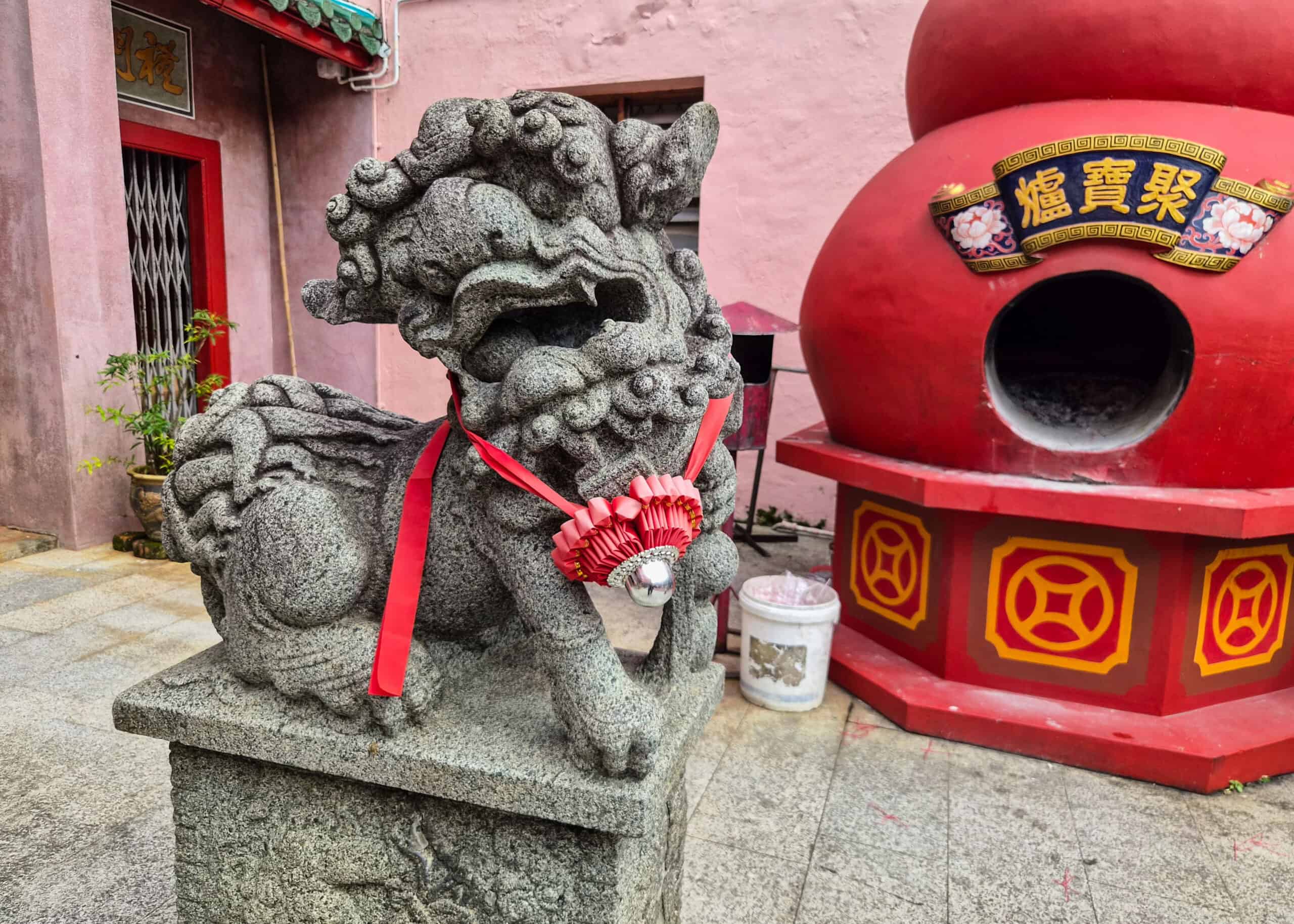
This section of the trail is less about grand buildings and more about the everyday life that grew around them. Look above the shopfronts and down the smaller streets, because many of the details that tell Kuching’s story are easy to miss.
Along this stretch you’ll find:
Chinese History Museum
Located in the former Chinese Chamber of Commerce building, this small museum provides an introduction to the history of the Chinese community in Sarawak. Inside, exhibits explore migration, trade, clan associations and the role Chinese settlers played in the growth of Kuching’s business community.
Tua Pek Kong Temple
Dating back to the 19th century, Tua Pek Kong Temple is one of Kuching’s oldest Chinese temples and one of the city’s most recognizable landmarks. Sitting on elevated ground near the Sarawak River, the temple has long been closely connected with the life of the old town and remains an active place of worship today.
Hiang Thian Siang Ti Temple
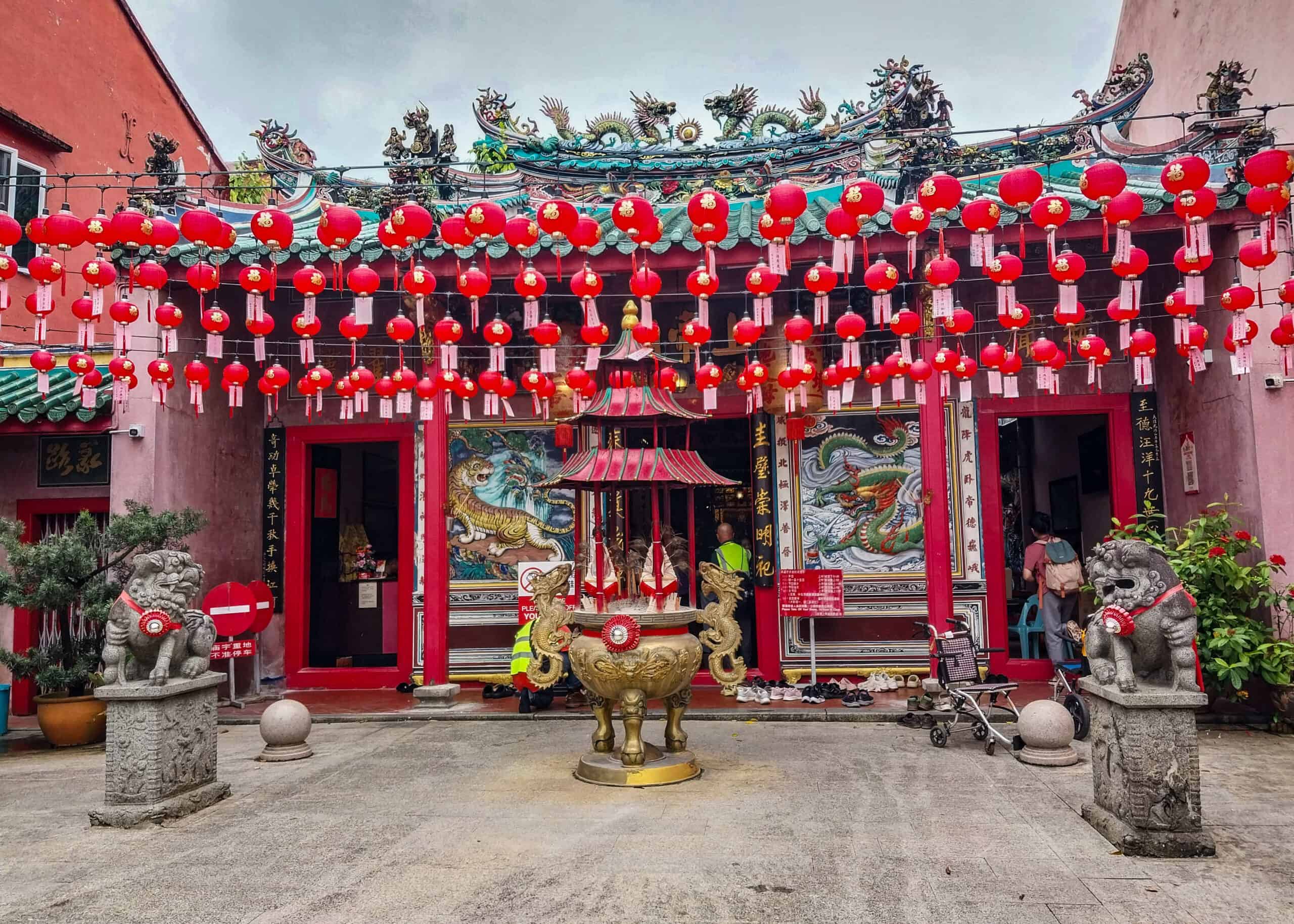
Located among the heritage shophouses of Carpenter Street, Hiang Thian Siang Ti Temple dates back to 1863 and was built by Kuching’s Teochew community. After the original structure was destroyed by fire in 1884, the temple was rebuilt and remains an active place of worship today. Its location among busy commercial streets reflects how temples and businesses developed alongside each other in old Kuching
Old State Mosque (Masjid Lama)
The Old State Mosque represents another important part of Kuching’s history and the long-standing presence of the Muslim community in the city. Its location near the riverfront places it within walking distance of Chinese temples and other historic sites, reflecting how different communities shared this part of old Kuching.
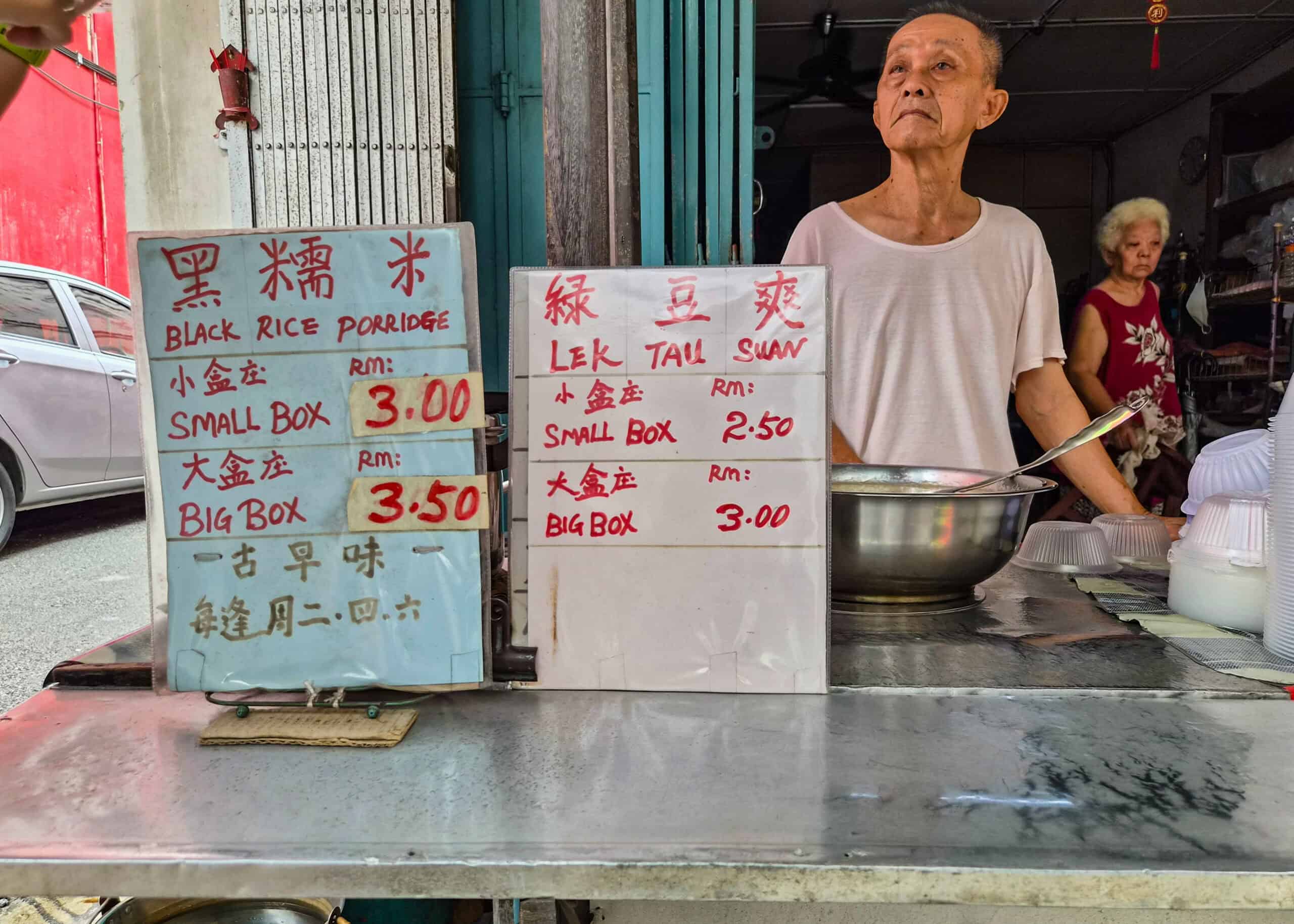
Hidden details along the way
Some of the most interesting details are easy to miss. Look for Chinese characters painted on old shopfronts, faded business signs, traditional architectural details and small religious features between the buildings. These details show how the old town continues to function as part of everyday Kuching life and not just a tourist hot spot.
Streets Built on Trade
Markets, merchants and everyday life
Leaving the waterfront behind, the trail continues through streets that once formed the center of Kuching’s commercial activity. Main Bazaar, Carpenter Street, India Street and the Open Air Market were shaped by merchants, craftsmen and traders who helped build the city.
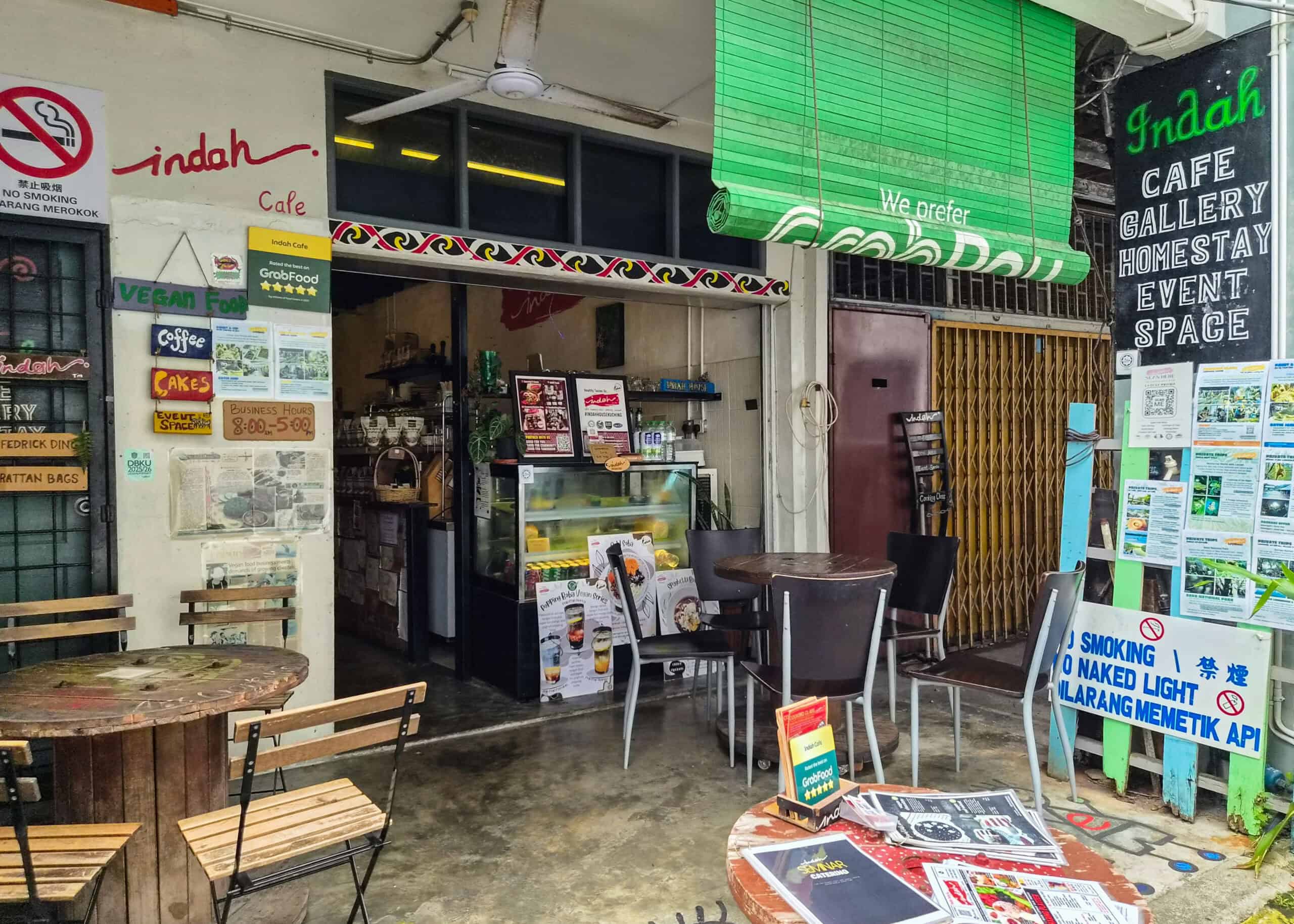
Today, these streets still combine heritage buildings with everyday businesses. Old shophouses sit alongside cafés, bakeries, shops and local businesses, showing how Kuching’s historic center continues to function as part of the city.
Highlights along this stretch:
Main Bazaar
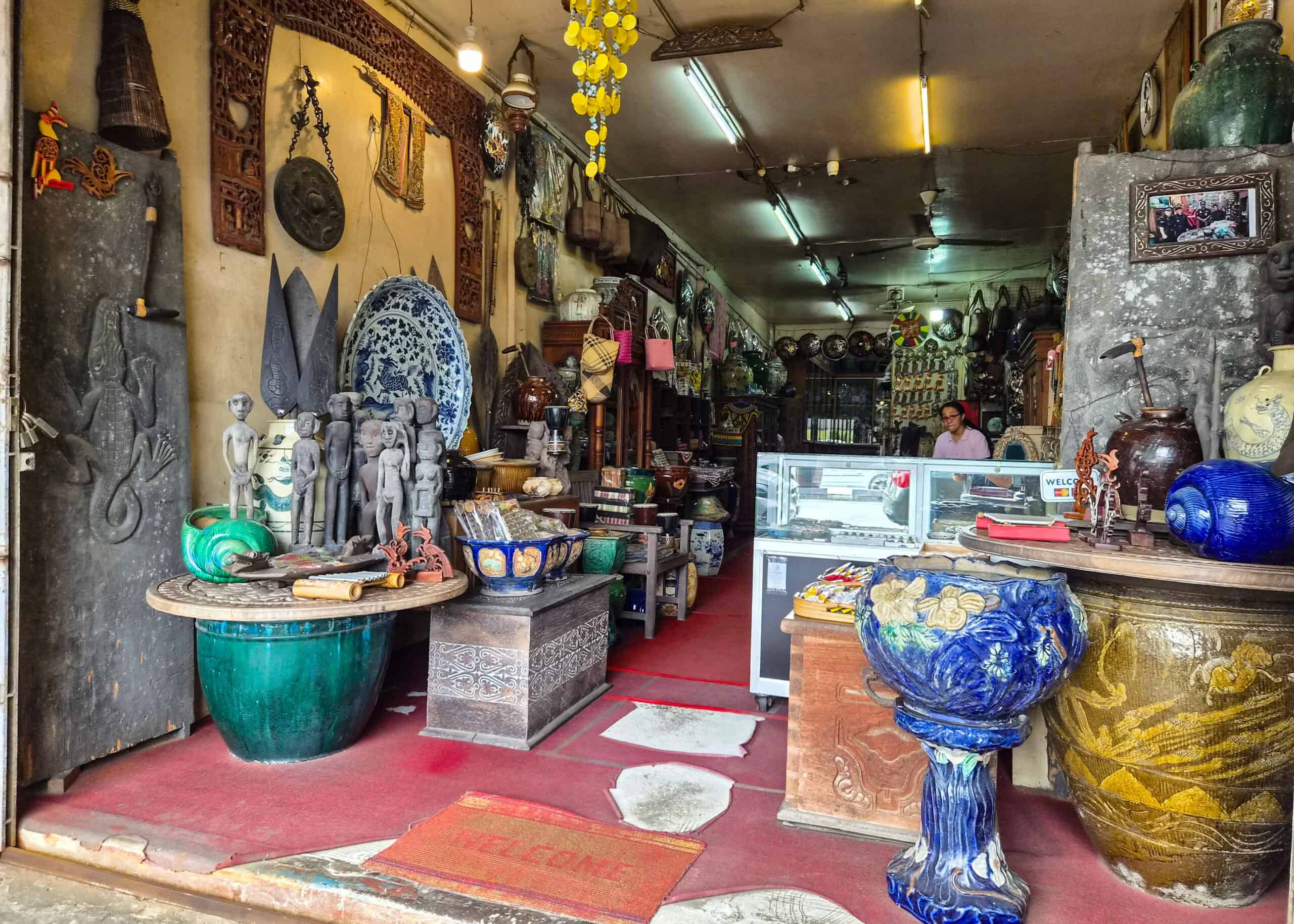
One of Kuching’s oldest trading areas, Main Bazaar runs along the Sarawak River and was once an important place for merchants and traders. Today, many of its traditional shophouses continue to operate as shops selling local crafts, antiques, souvenirs and Sarawak specialties. Look up at the buildings themselves, as many still retain the narrow fronts and traditional design of old trading houses.
Carpenter Street
Carpenter Street was historically associated with craftsmen and tradespeople, giving the street its name. While its businesses have changed over time, many older shophouses remain alongside cafés, bakeries and family-run businesses, making it one of the best places to see Kuching’s past and present side by side.
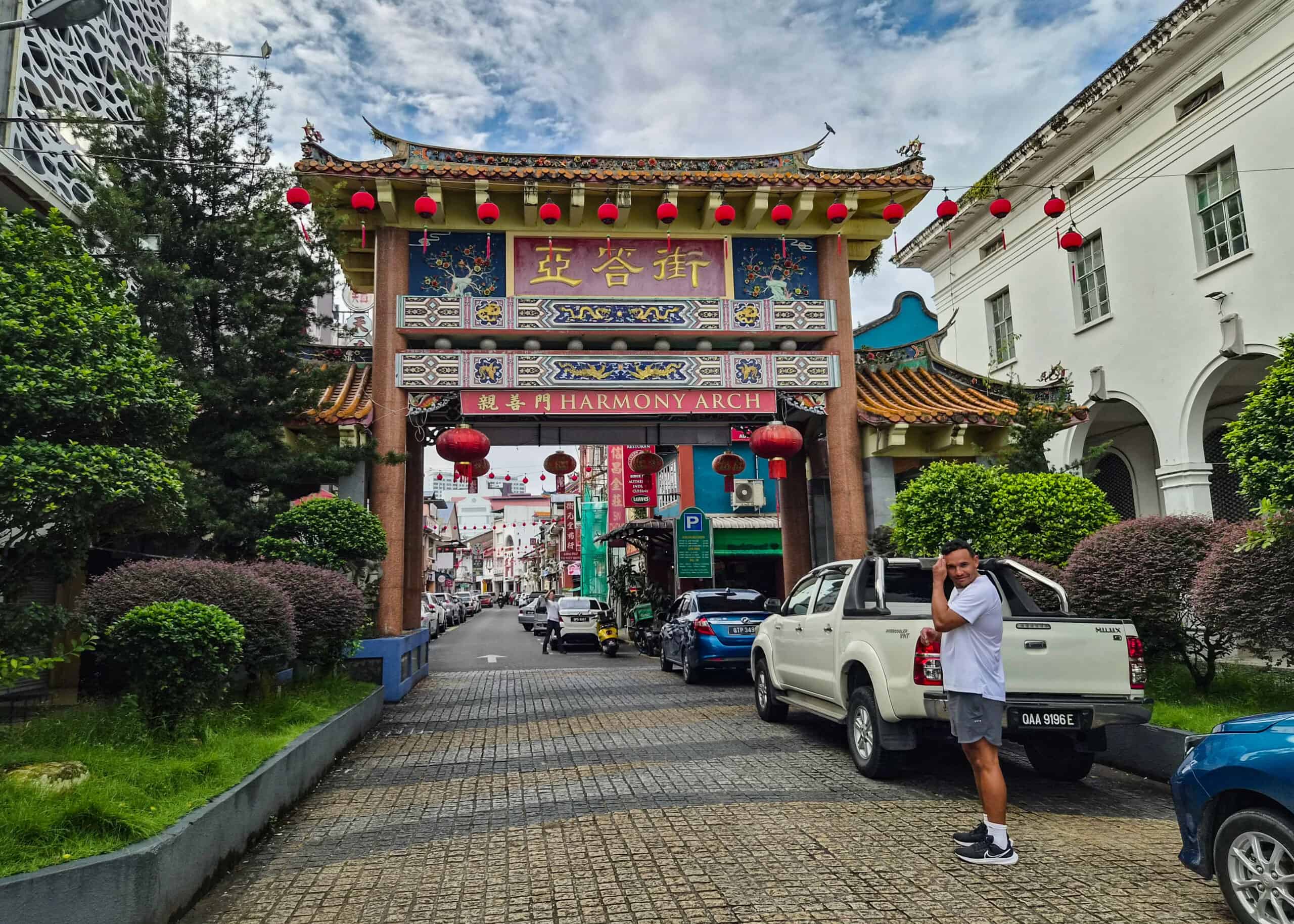
Harmony Arch
Located at the entrance to Carpenter Street, Harmony Arch marks the gateway into one of Kuching’s oldest streets. The surrounding area has long been home to different communities, businesses and places of worship, with several important heritage sites found within walking distance.
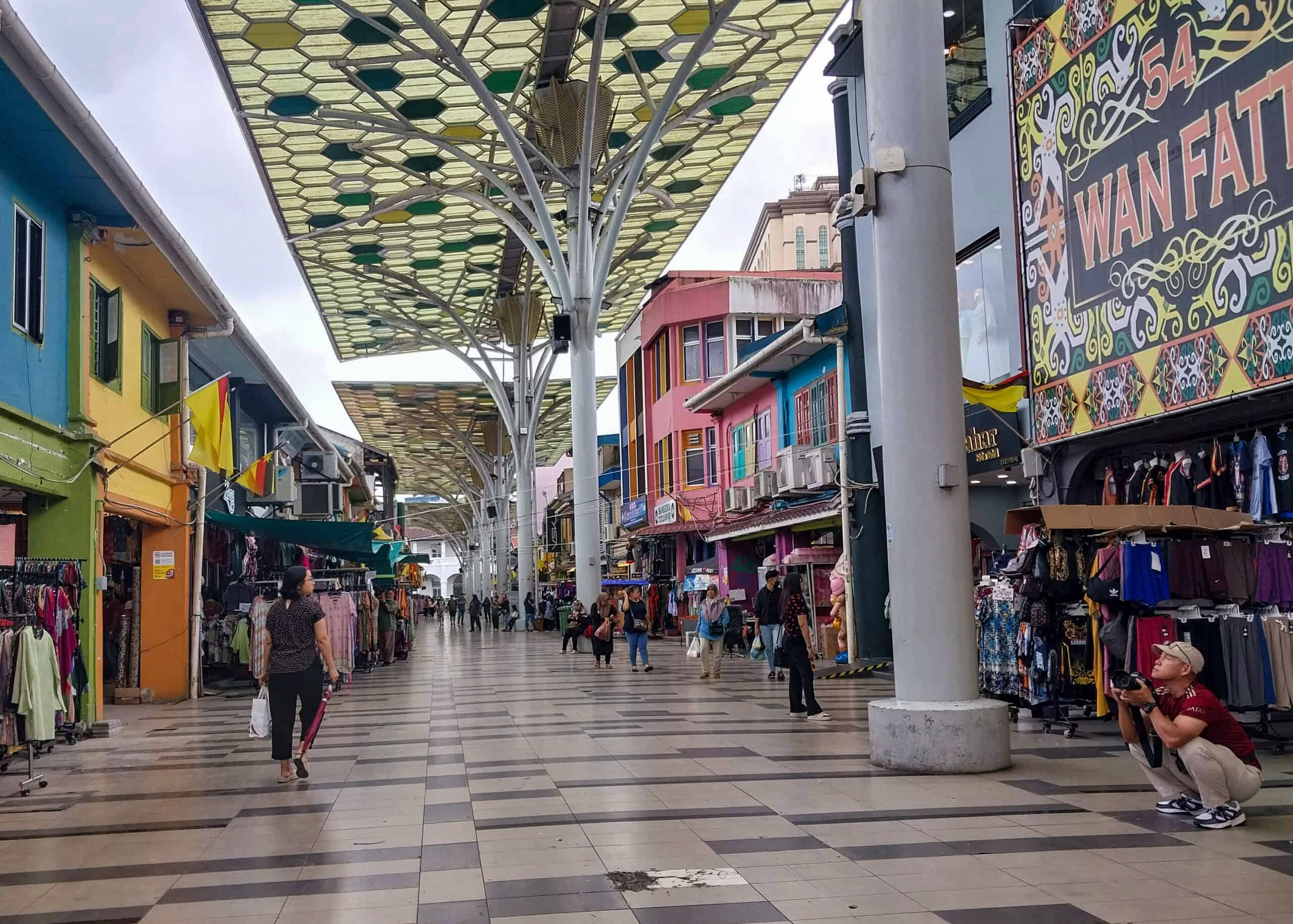
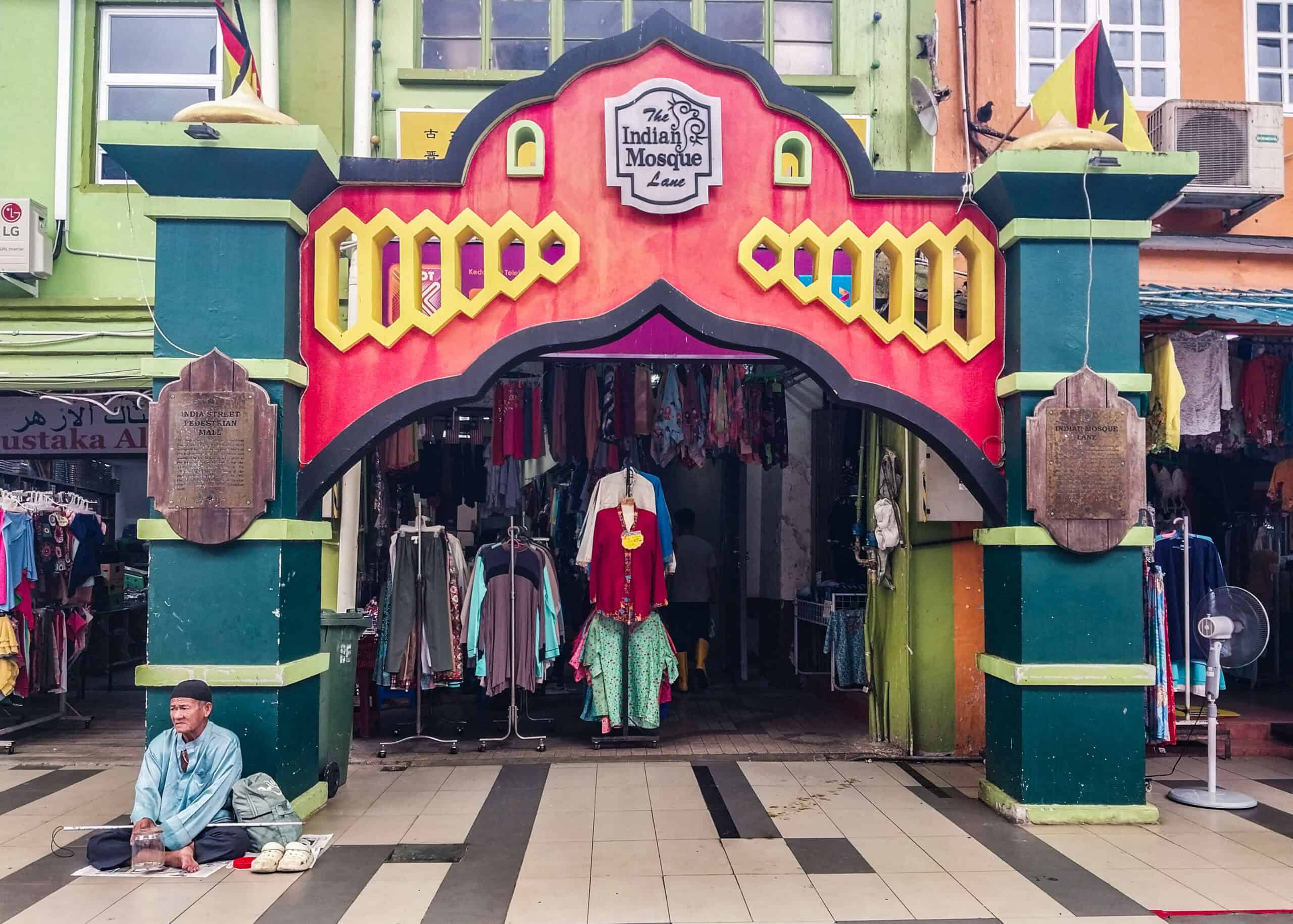
India Street Pedestrian Mall
India Street has been a shopping area in Kuching for generations. Once known for its textile and clothing businesses, the pedestrian mall continues to attract locals and visitors with its mix of shops and daily activity.
Open Air Market
The Open Air Market has long been part of everyday life in Kuching, with locals coming here for food, produce and household items. Unlike some heritage sites that are mainly visited for their history, this remains a working part of the city where people still come to shop.
Look beyond the buildings
This section shows how Kuching’s historic streets are still being used today. Look up at the shophouses, notice the old signs and architectural details, and pay attention to the businesses that continue operating within these older buildings.
A City that Remembers
From monuments to museums
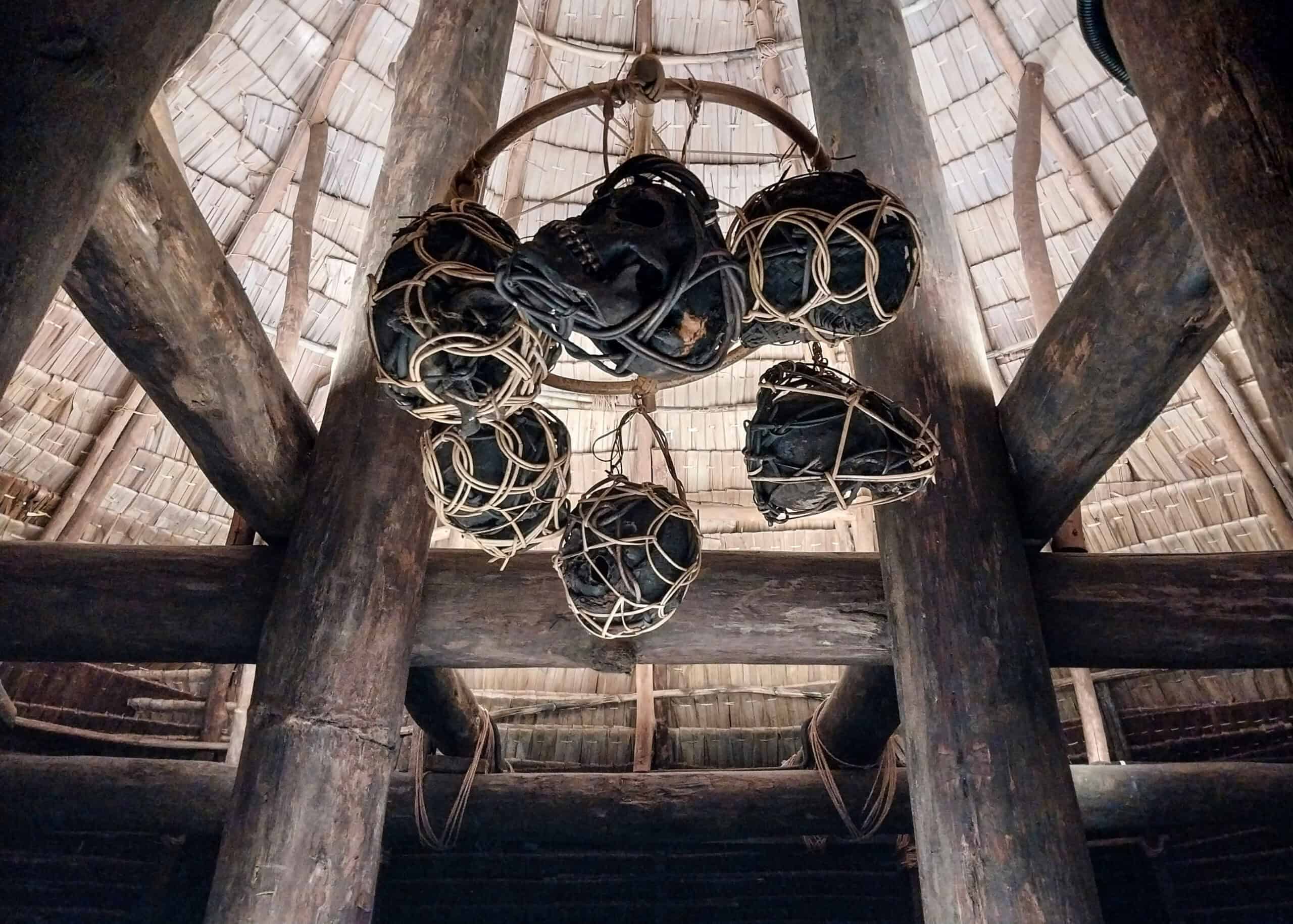
The final stretch of the trail moves from historic buildings and public spaces into Sarawak’s museums and cultural institutions. Landmarks like the Heroes Monument, Pavilion Building and Textile Museum cover different periods of Sarawak’s history before the walk finishes at the Borneo Cultures Museum and Sarawak Museum Complex. Together, these stops bring together the different stories found along the trail, from colonial administration and indigenous cultures to the traditions that continue today.
Worth spending time at:
Textile Museum
Housed inside the historic Pavilion Building, the Textile Museum focuses on Sarawak’s traditional fabrics, weaving methods and the skills passed down through generations. The displays show how different communities created and used textiles, giving visitors a better understanding of the cultural meaning behind Sarawak’s clothing and designs.
Pavilion Building
Built in 1907 during the Brooke era, the Pavilion Building was originally constructed as a medical center before later being used by the Education Department. Today, it houses the Textile Museum and remains one of Kuching’s important historic buildings.
Heroes Monument
This memorial honors those connected to Sarawak’s wartime history, including local warriors, police and soldiers who lost their lives defending the state. It provides a quiet pause along the route before reaching the museums nearby.
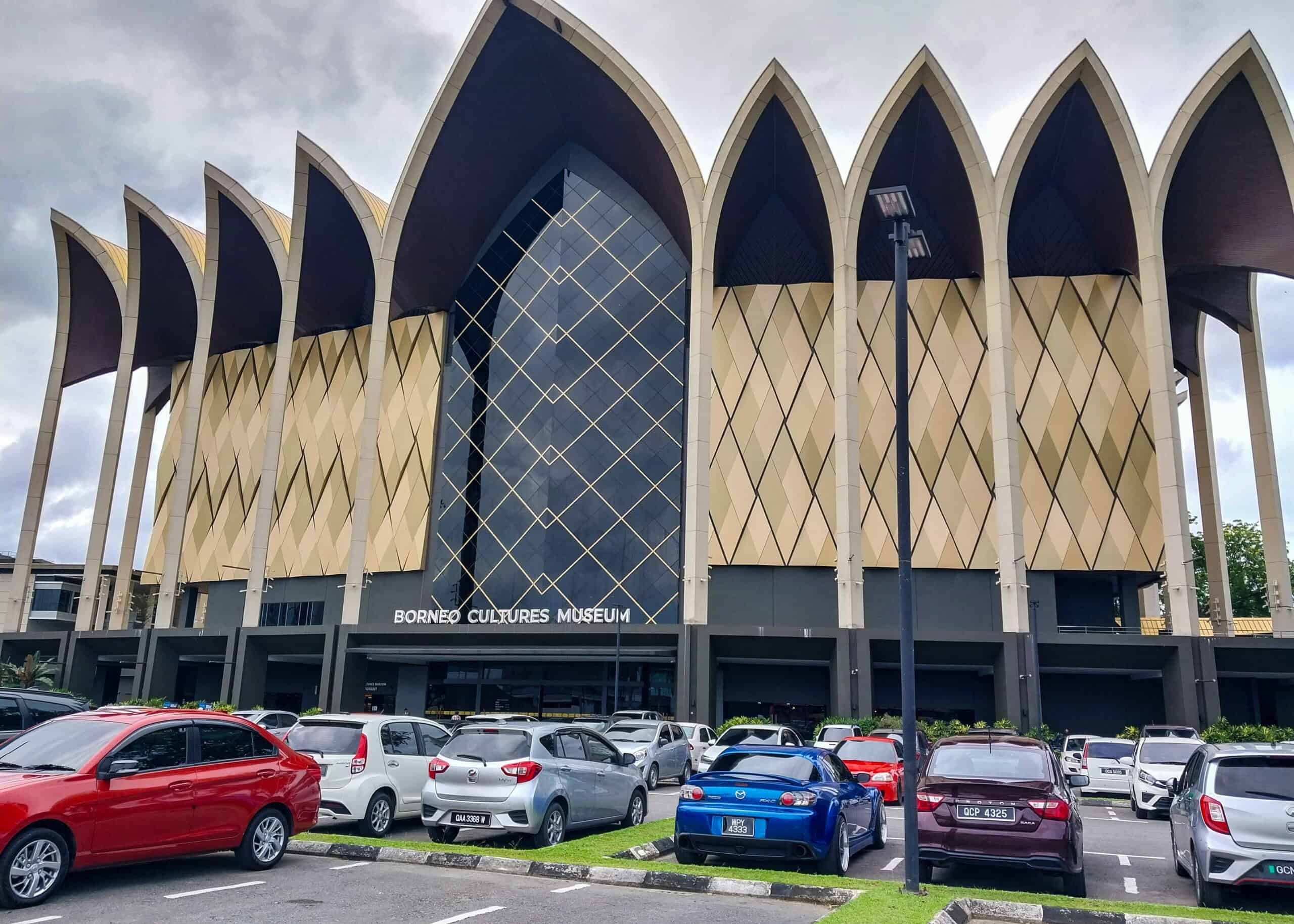
Borneo Cultures Museum
One of the trail’s major highlights, this modern museum explores Sarawak’s indigenous communities, natural environment and cultural traditions through large-scale exhibitions. It is worth allowing extra time here if you want to learn more about the places and communities you have encountered along the trail. You can read more about this fascinating museum here: Visiting Kuching’s Borneo Cultures Museum
Sarawak Museum Complex
The Sarawak Museum Complex brings together many aspects of Sarawak’s history, including archaeology, natural history and local cultures. After walking through Kuching’s historic center, the museum provides a broader understanding of the people, events and traditions that shaped the state.
The museums aren’t just the endpoint of the Heritage Trail. They help put the earlier stops into context. After seeing old government buildings, temples, markets and shophouses, these collections help connect the different pieces of Kuching’s history.
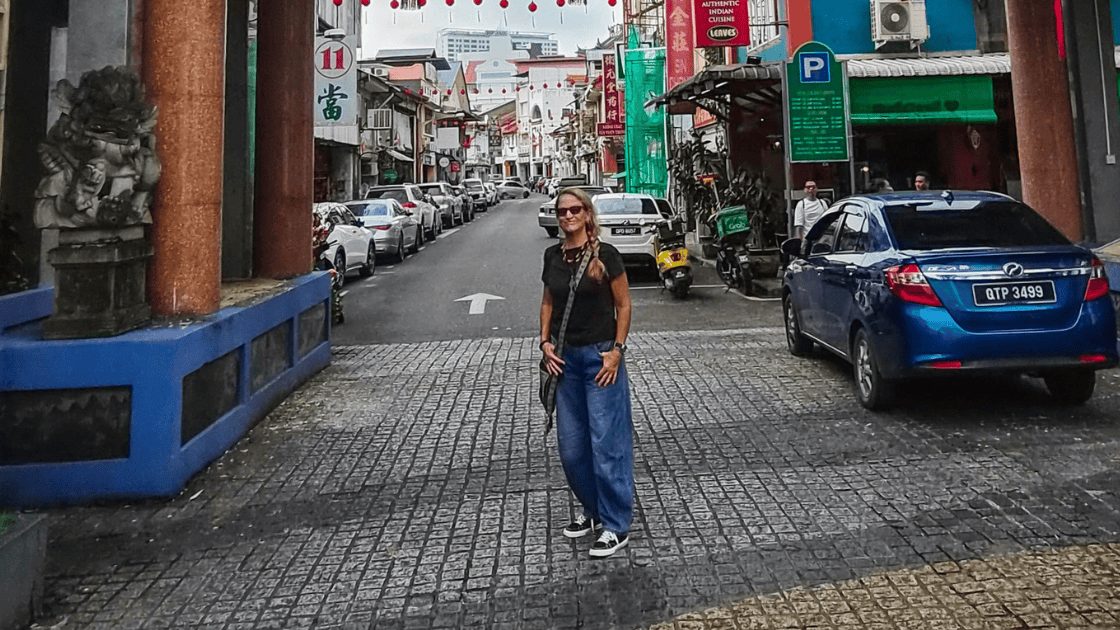
The Kuching Heritage Trail covers a lot of ground, and you don’t need to rush through every stop in one visit. The route takes you through different parts of the city, from Brooke-era buildings and riverside trade to temples, markets and the neighborhoods that continue to shape Kuching today. Choose the sections that interest you most, take your time, and allow yourself to wander a little. Some of the most memorable parts of the walk are found between the major landmarks.
For more information about Kuching and the rest of Sarawak, contact Sarawak Tourism Board.
Leave a Reply