
Haw Par Villa (previously known as Tiger Balm Garden) had been on my radar for years, so I was excited to finally see it for myself during a recent trip to Singapore. In fact, I found it so intriguing that I visited twice in one week! I had initially expected to learn all about Tiger Balm. Instead, I was greeted with a Hell’s Museum, the Ten Courts of Hell, and some very bizarre-looking (but fascinating) characters. This intrigued me even more, so I just had to go back for a second visit.
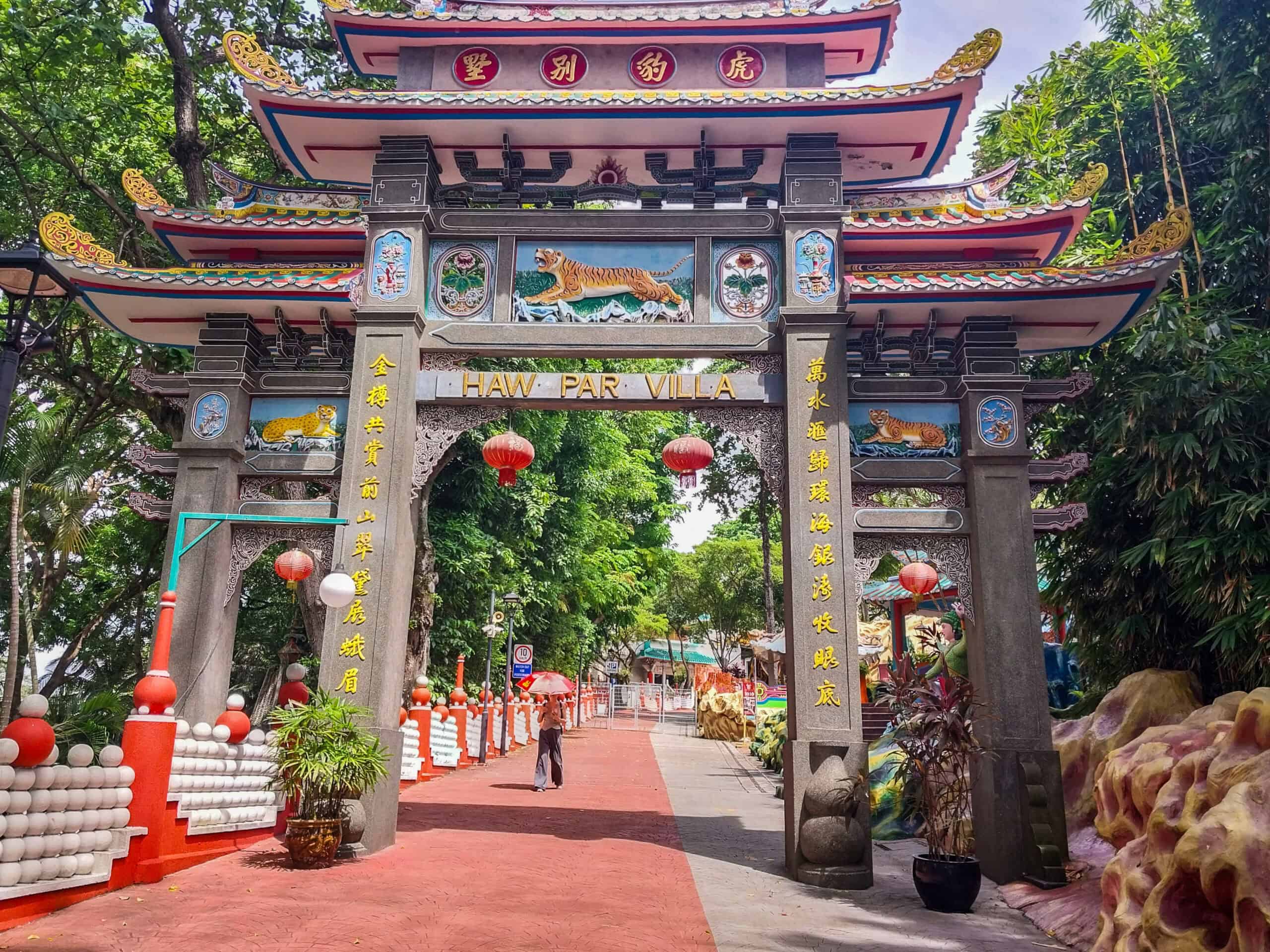
Located on Pasir Panjang Road in Singapore, Haw Par Villa may often be associated with death and punishment. But it was originally built in 1937 by the Aw Brothers, the creators of Tiger Balm, as a public cultural park. Their goal was to share Chinese folklore, history, and moral teachings with the public through visual storytelling. At the time, few people had access to books or formal education, so stories were often passed on through art.
Haw Par Villa
The name Haw Par came from the Chinese characters 虎 (hu), meaning tiger, and 豹 (bao), meaning leopard, animals that symbolize strength, courage, and protection in Chinese culture. It also served as a subtle reference to the Aw Brothers themselves, whose chosen names and branding reflected the same qualities they wanted associated with Tiger Balm and the legacy they hoped to leave behind.
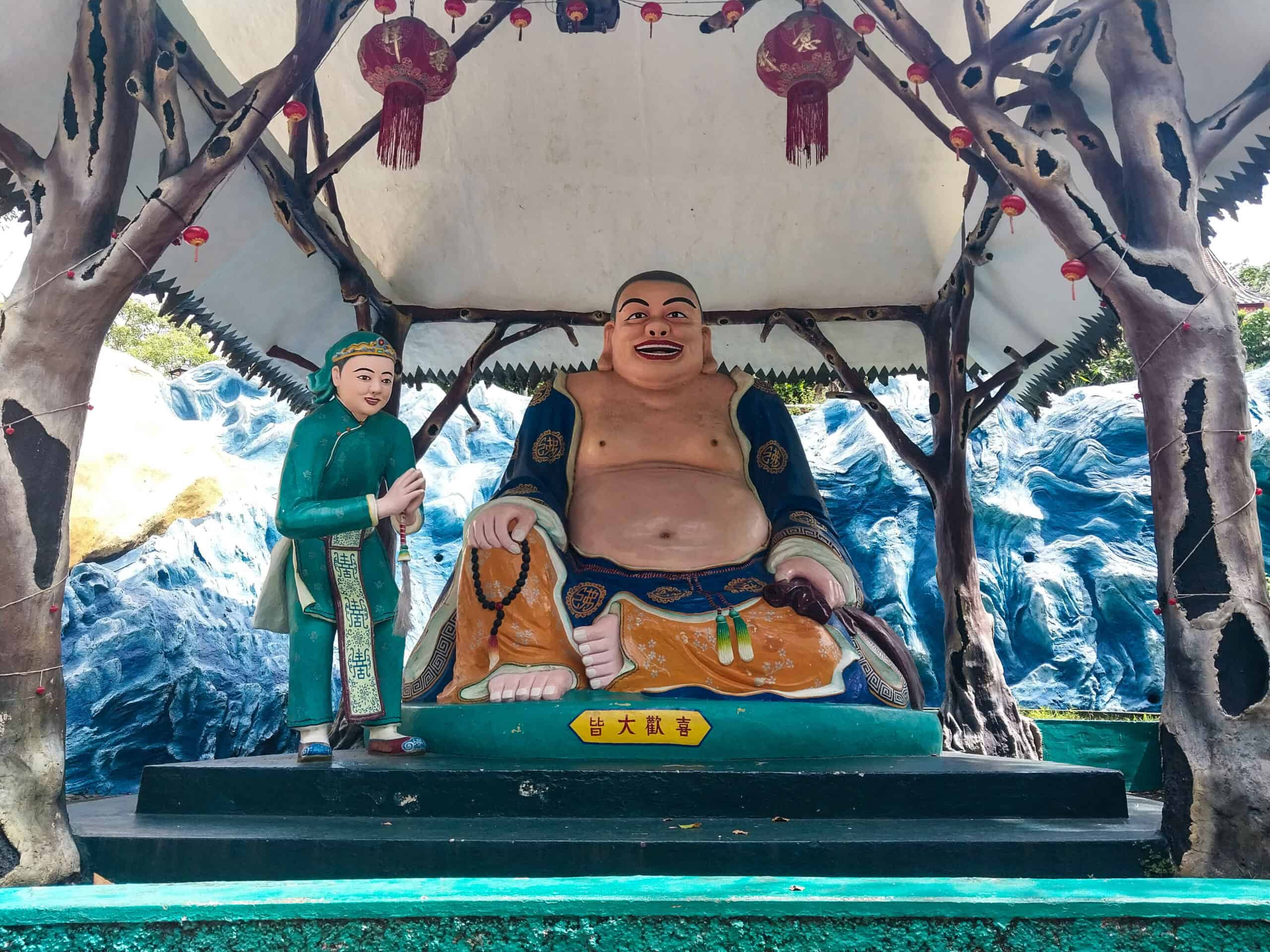
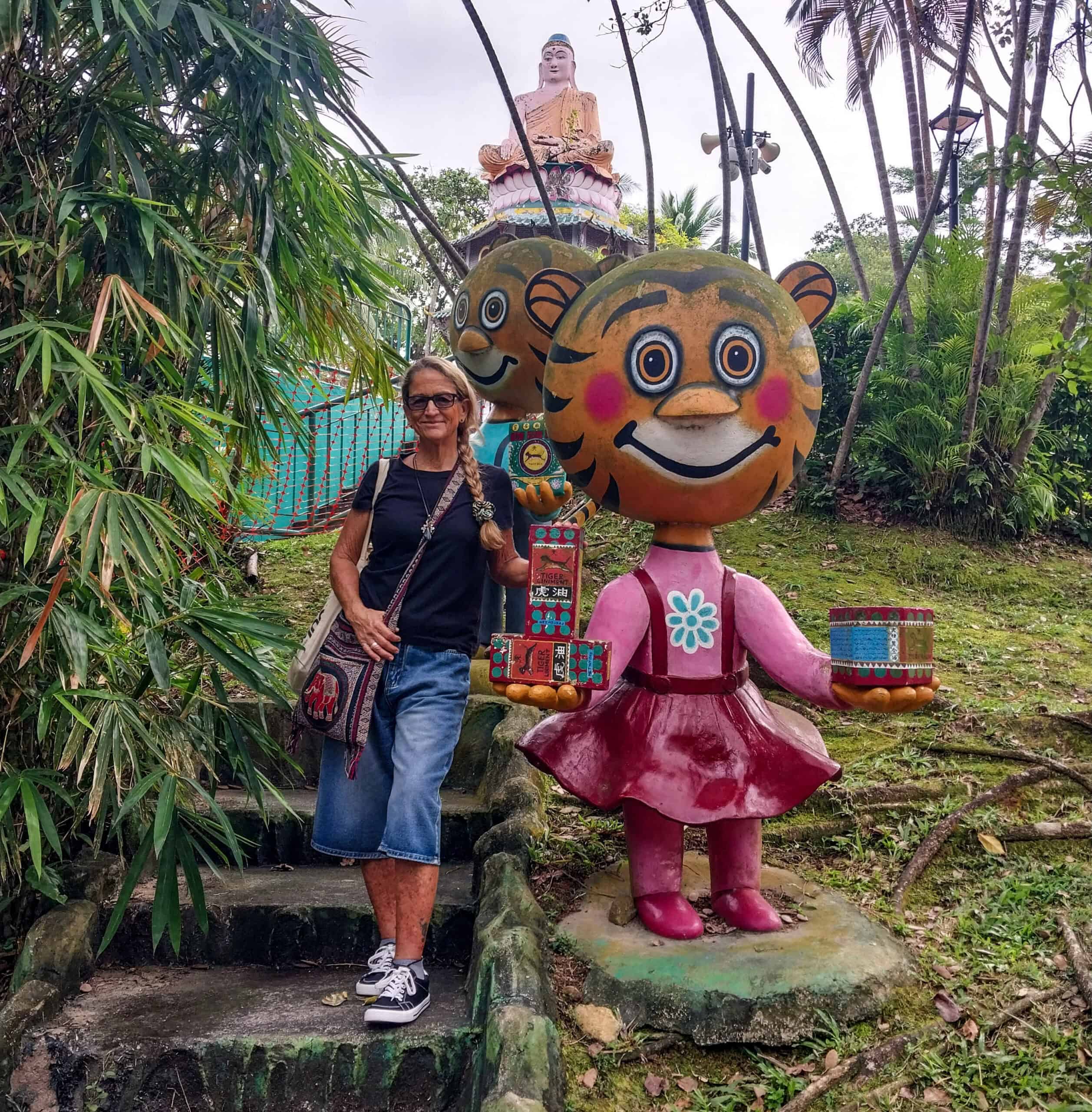
The park was designed to be family-friendly, using bright colors, expressive statues, and detailed scenes to interest visitors of all ages. Over 1,000 sculptures and dioramas depict well-known legends such as Journey to the West, the Legend of the White Snake, the Chinese zodiac, and historical figures. I, as a westerner, was not familiar with many of them.
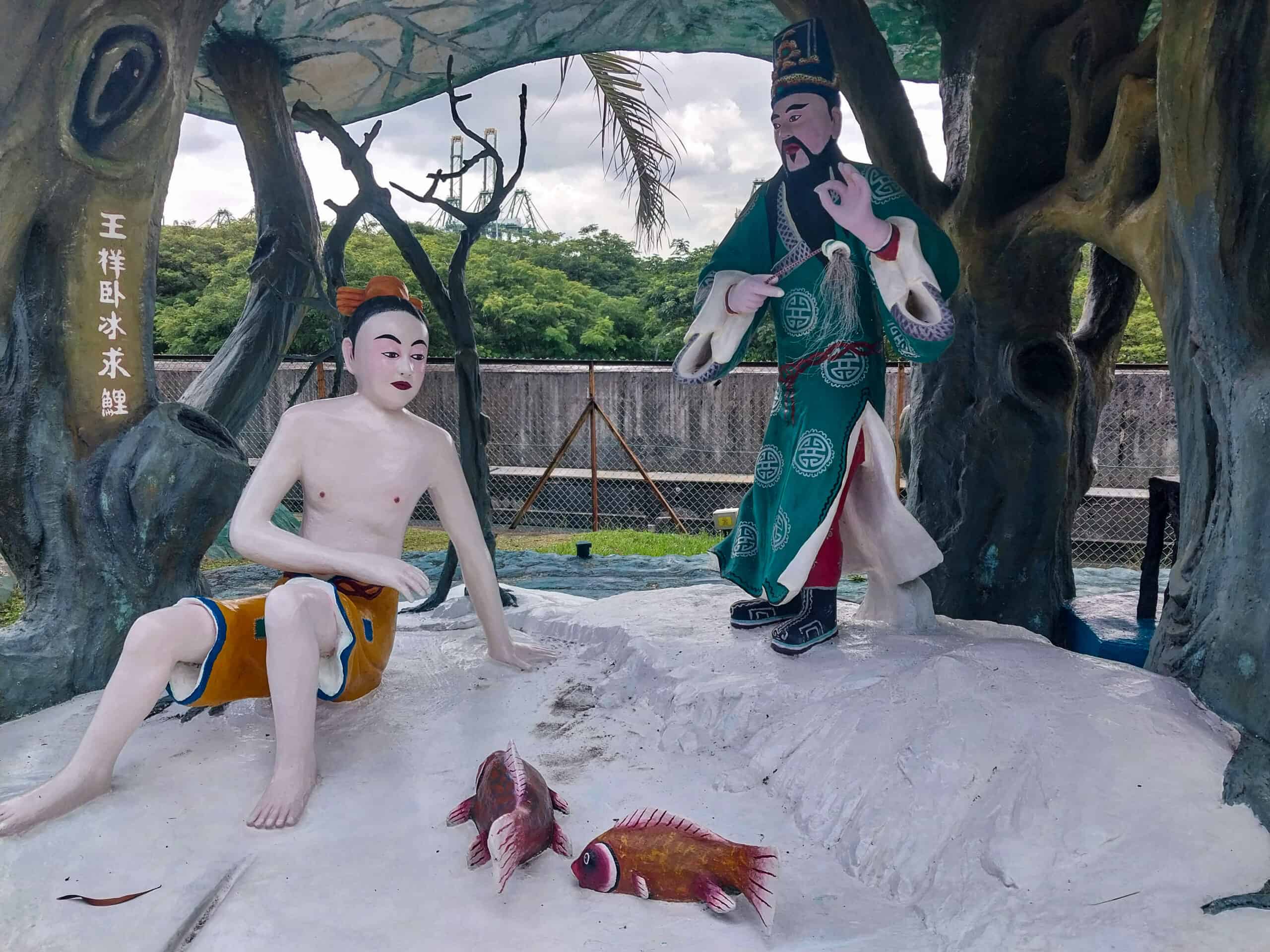
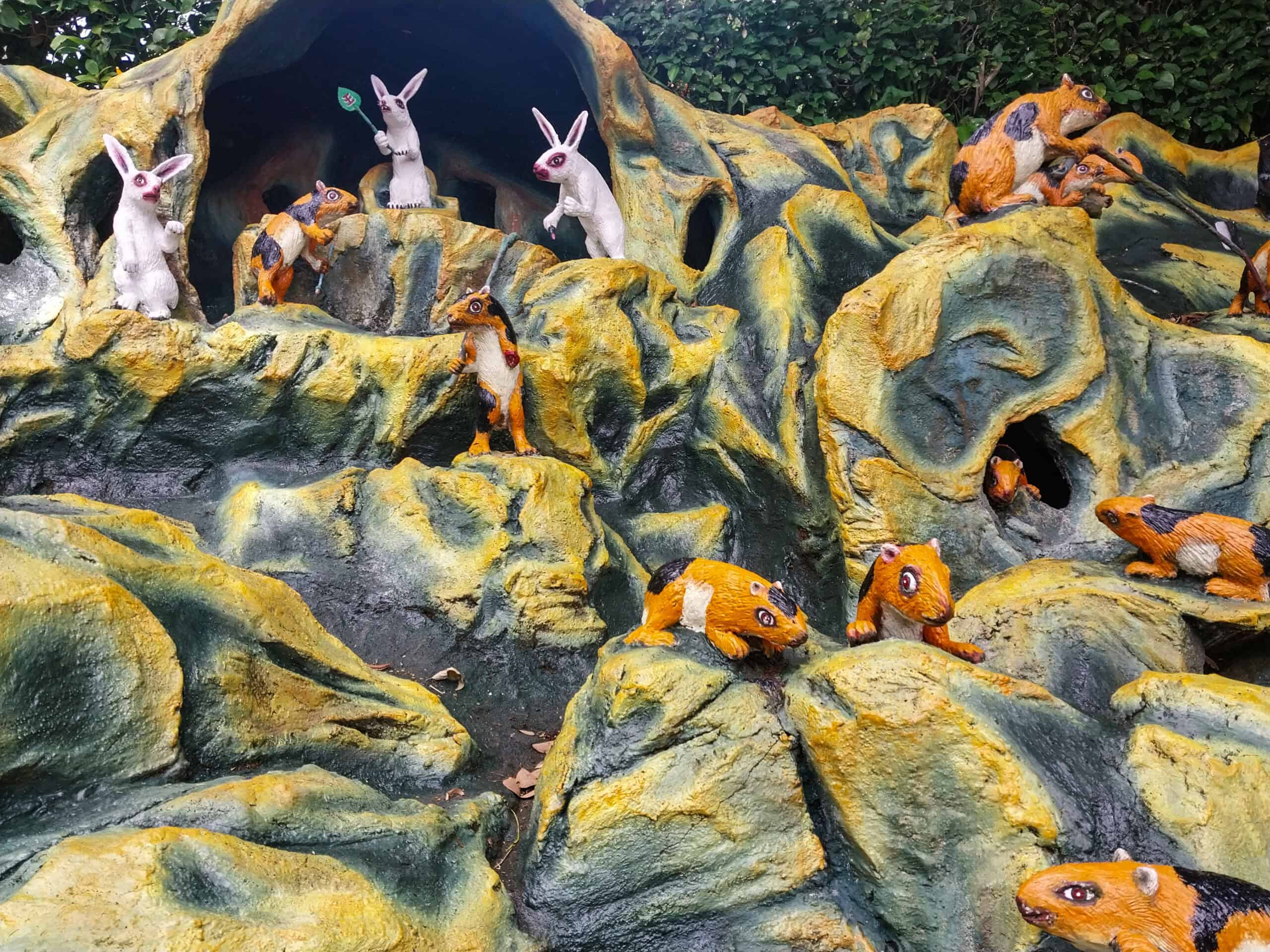
Each scene was meant to teach values like honesty, loyalty, respect, and filial piety (respect for one’s parents and ancestors), while giving families something to talk about. Unlike modern theme parks, Haw Par Villa focused on education rather than entertainment. While the park later became famous for darker attractions, its original purpose was built on traditional storytelling, akin to Aesop’s Fables.
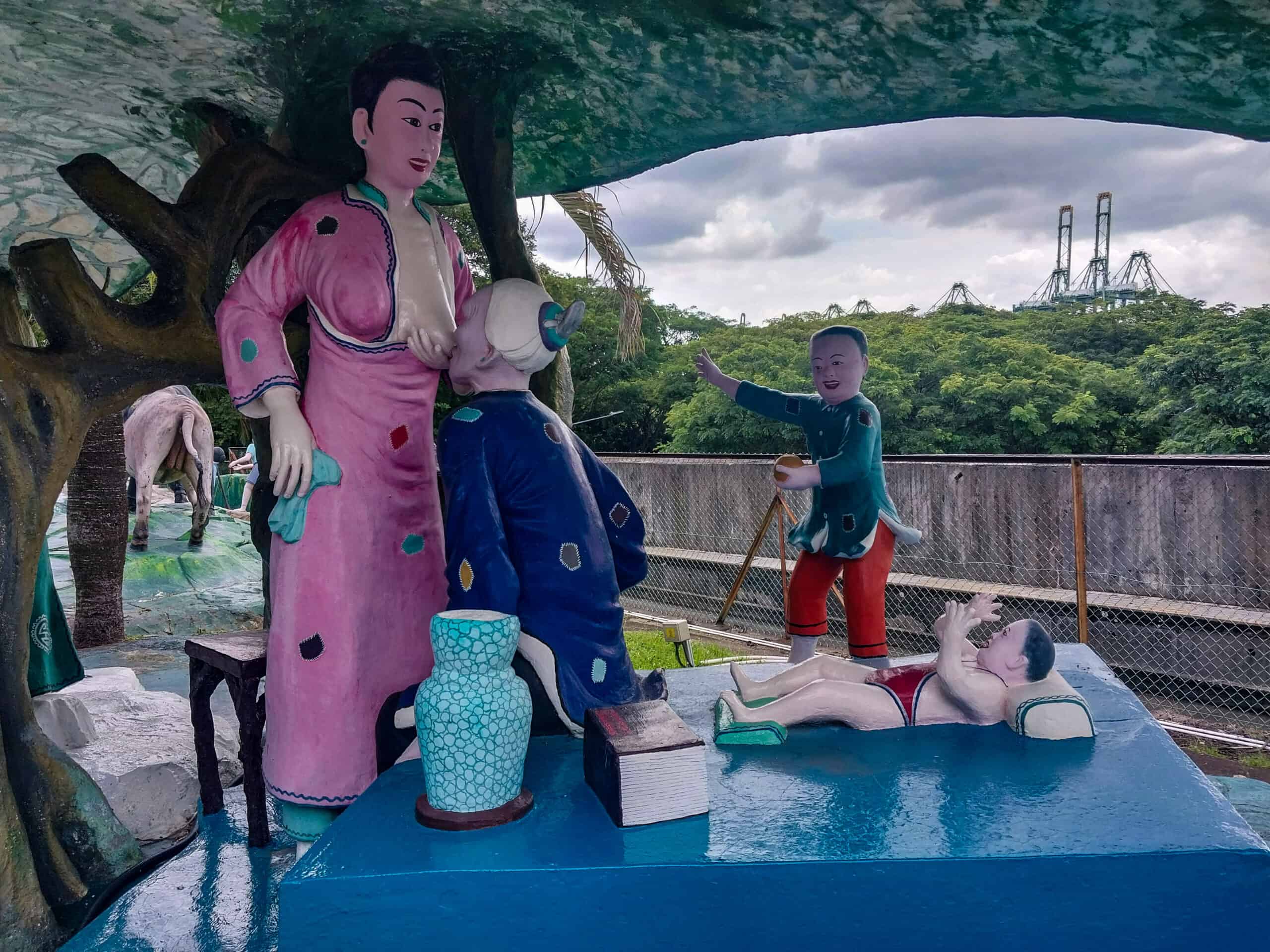
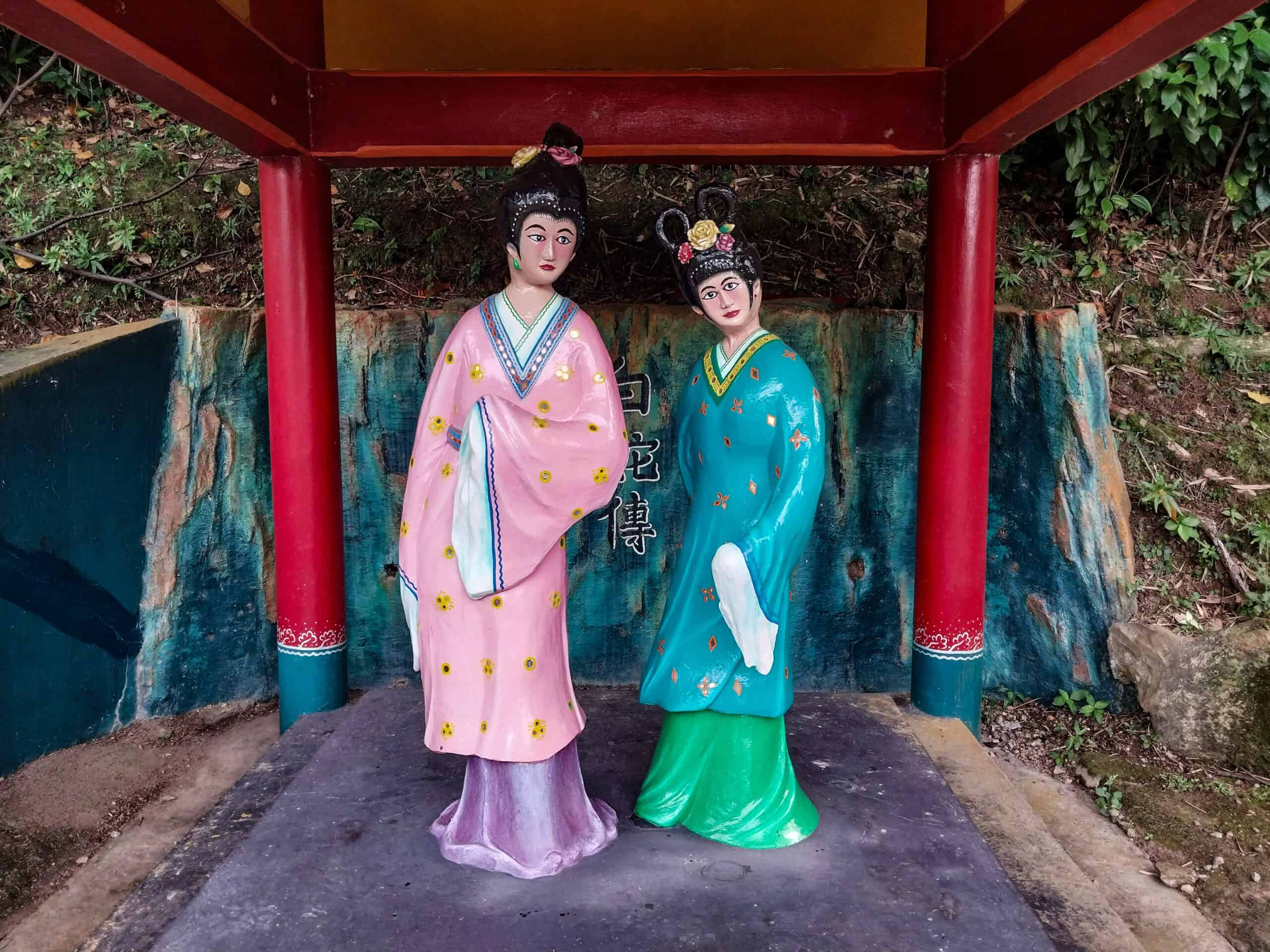
Hell’s Museum and Ten Courts of Hell
Haw Par Villa has two main indoor attractions: Hell’s Museum and the Ten Courts of Hell.
Hell’s Museum
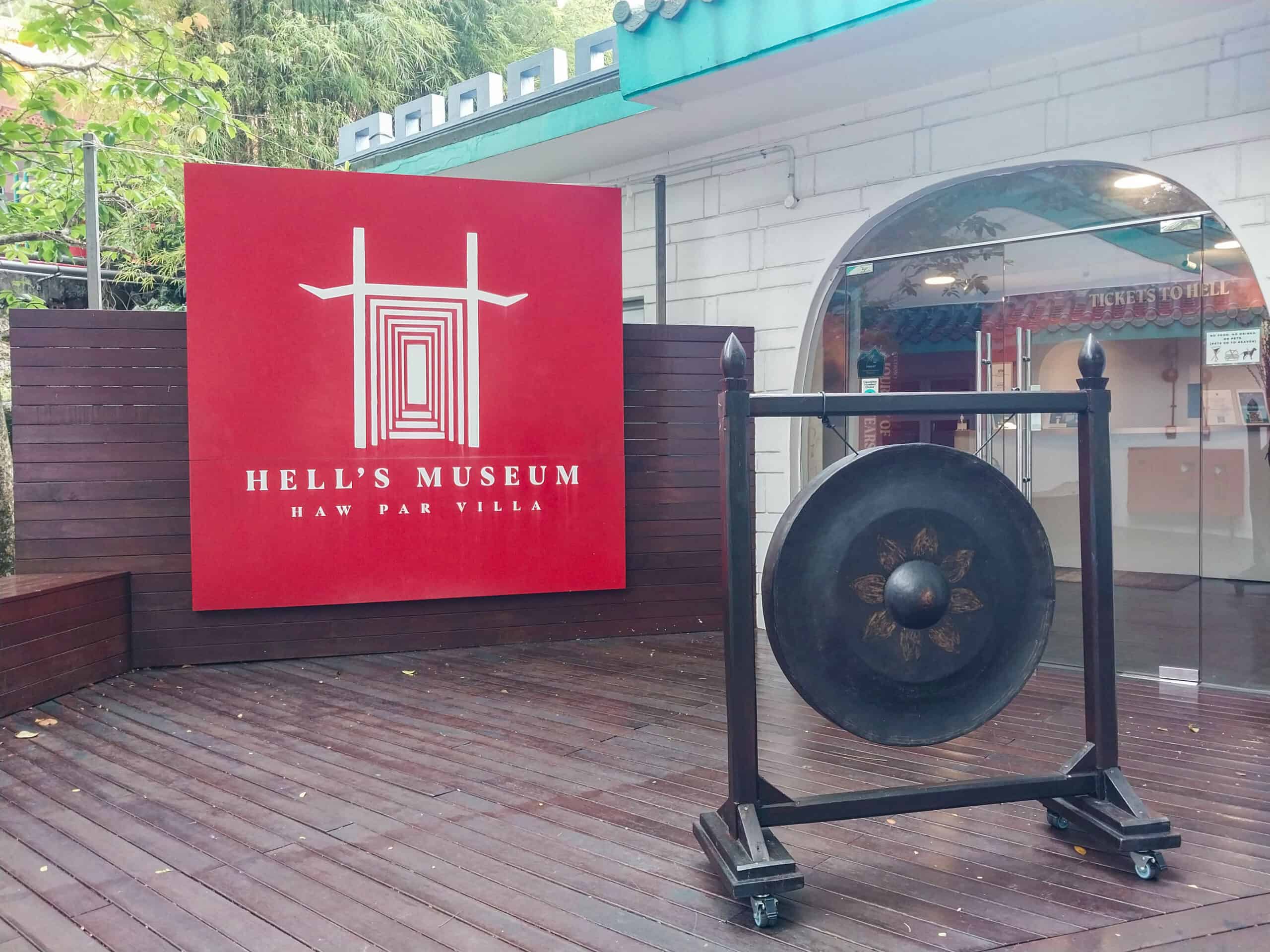
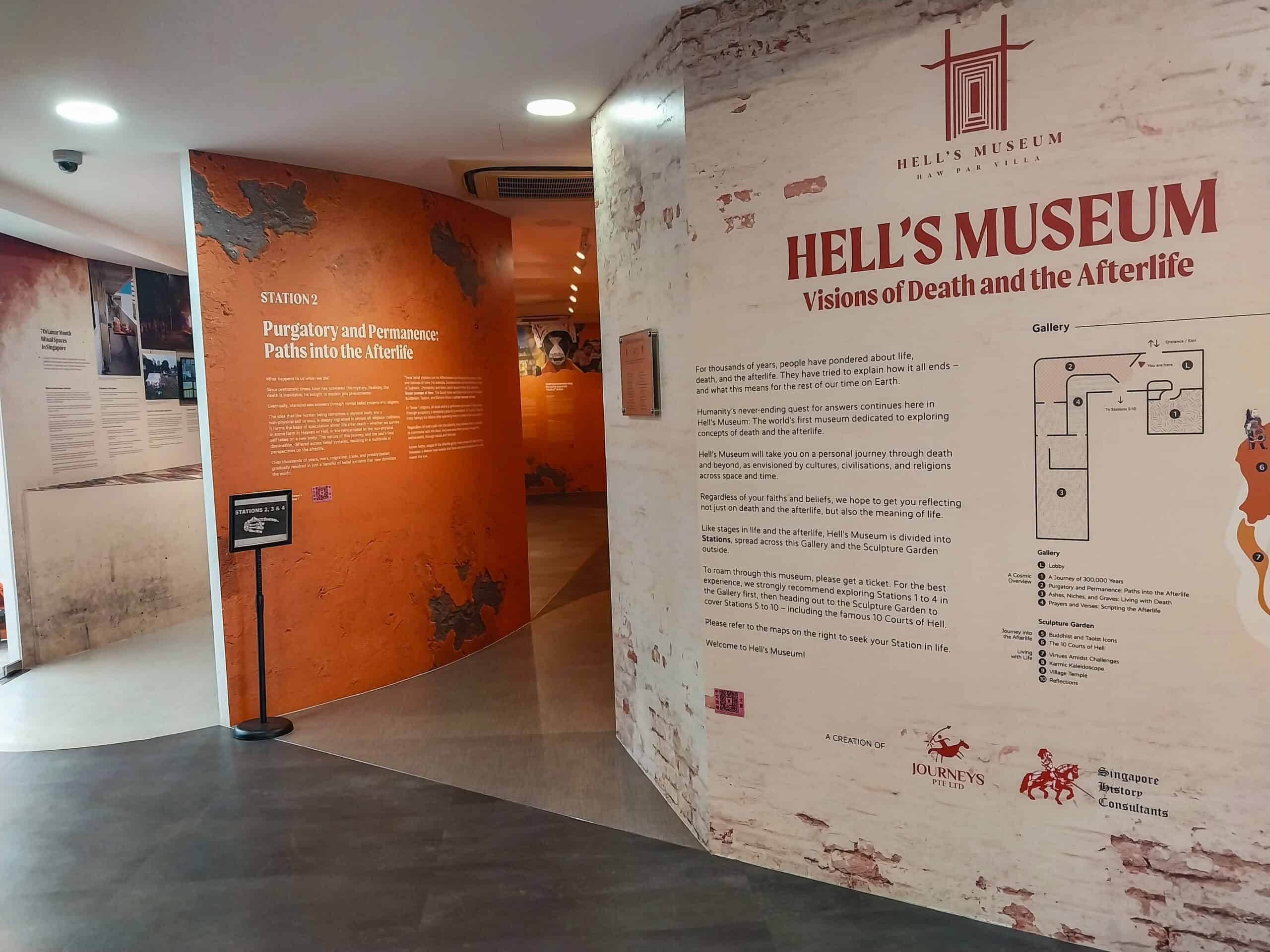
Opened in 2021, Hell’s Museum, is divided into sections. Each section explores how different cultures and religions around the world see and deal with death, dying, and the afterlife. You’ll get a look at funeral rites, burial practices, and moral lessons from traditions as varied as Taoism, Buddhism, Christianity, Islam, and even the Day of the Dead in Latin America. The exhibits give context for the Ten Courts of Hell, showing how ideas about right, wrong, and cosmic consequences shaped moral behavior over time.
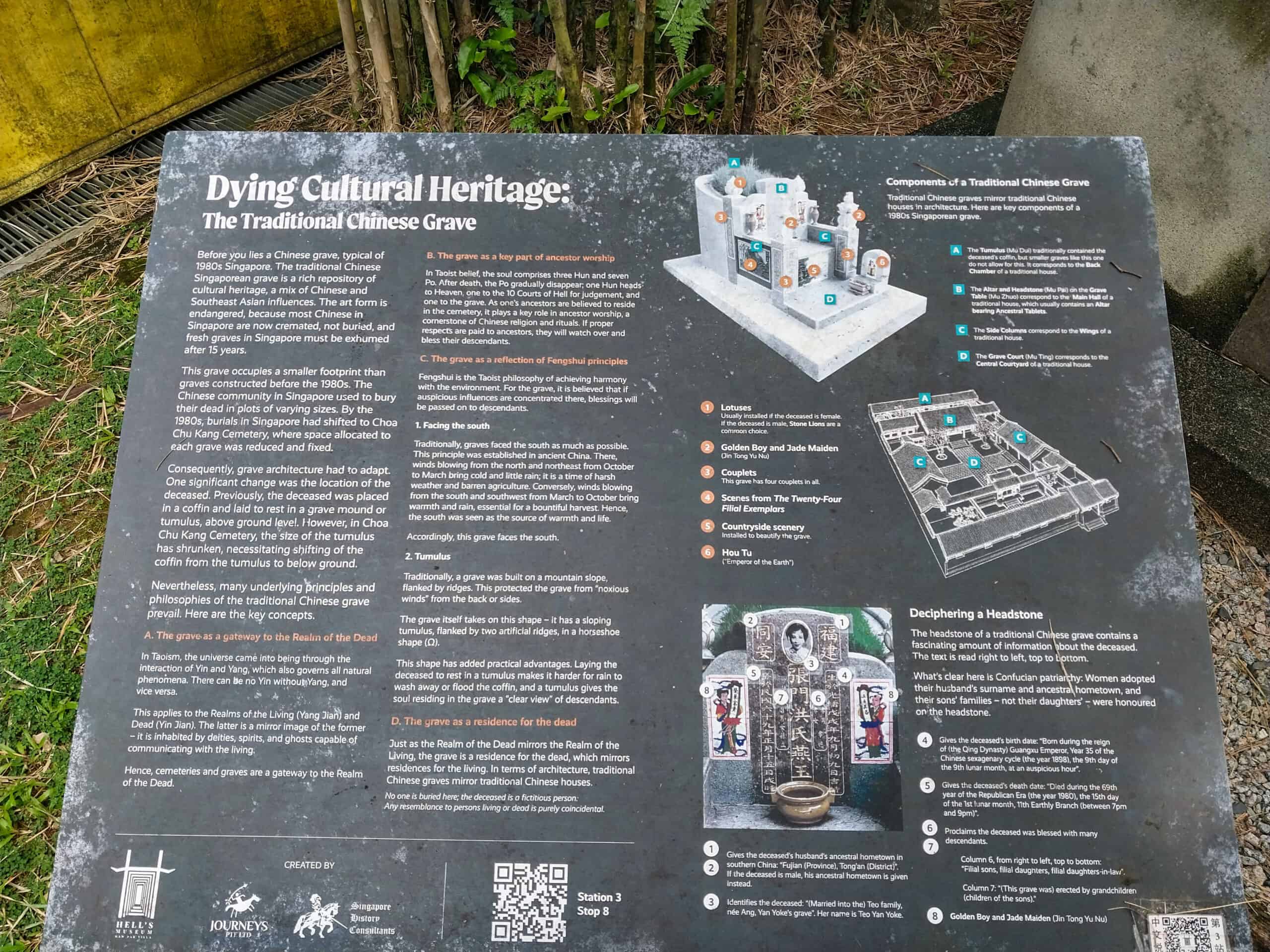
Visitors can see recreated funeral scenes, including a traditional Chinese setup with a coffin, altar, and offerings, showing how wakes were arranged. Another diorama explains how to read a Chinese headstone, including inscriptions, symbols, and tomb layout. It explains how various cultural practices honor ancestors and show respect for the dead.
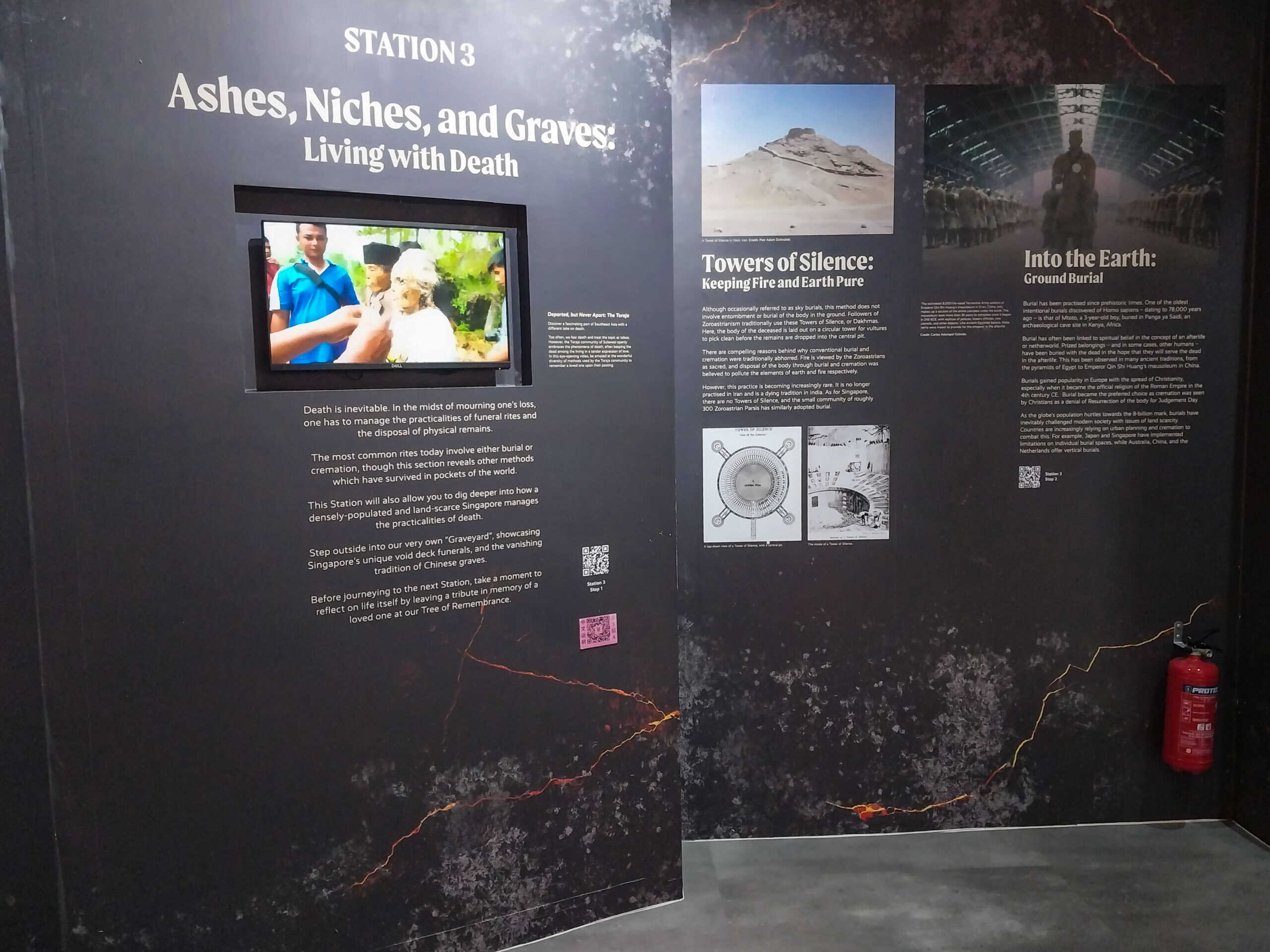

These visuals are designed to educate and provide some background, helping visitors understand cultural attitudes toward death, remembrance, and the afterlife rather than to shock or frighten.
Ten Courts of Hell
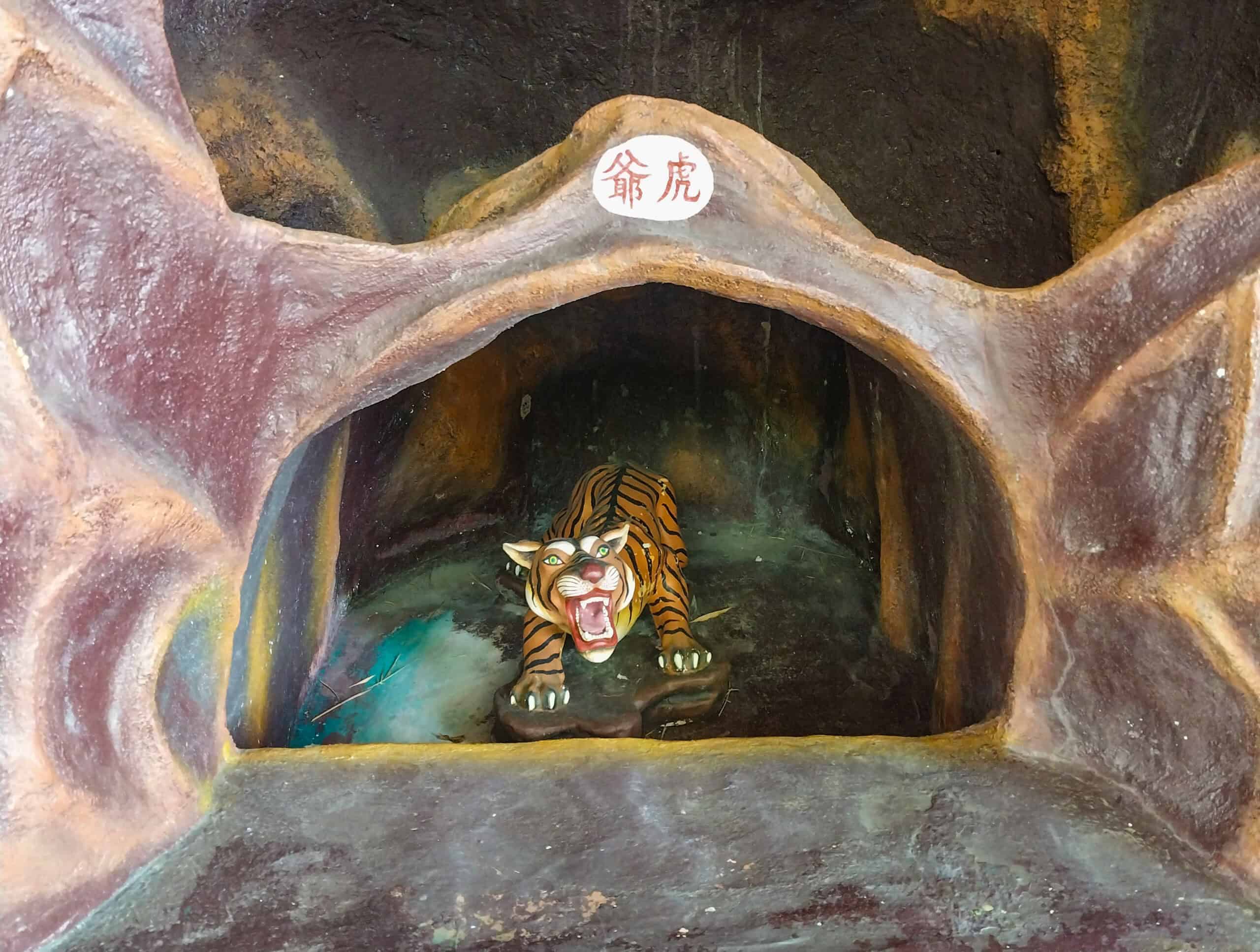
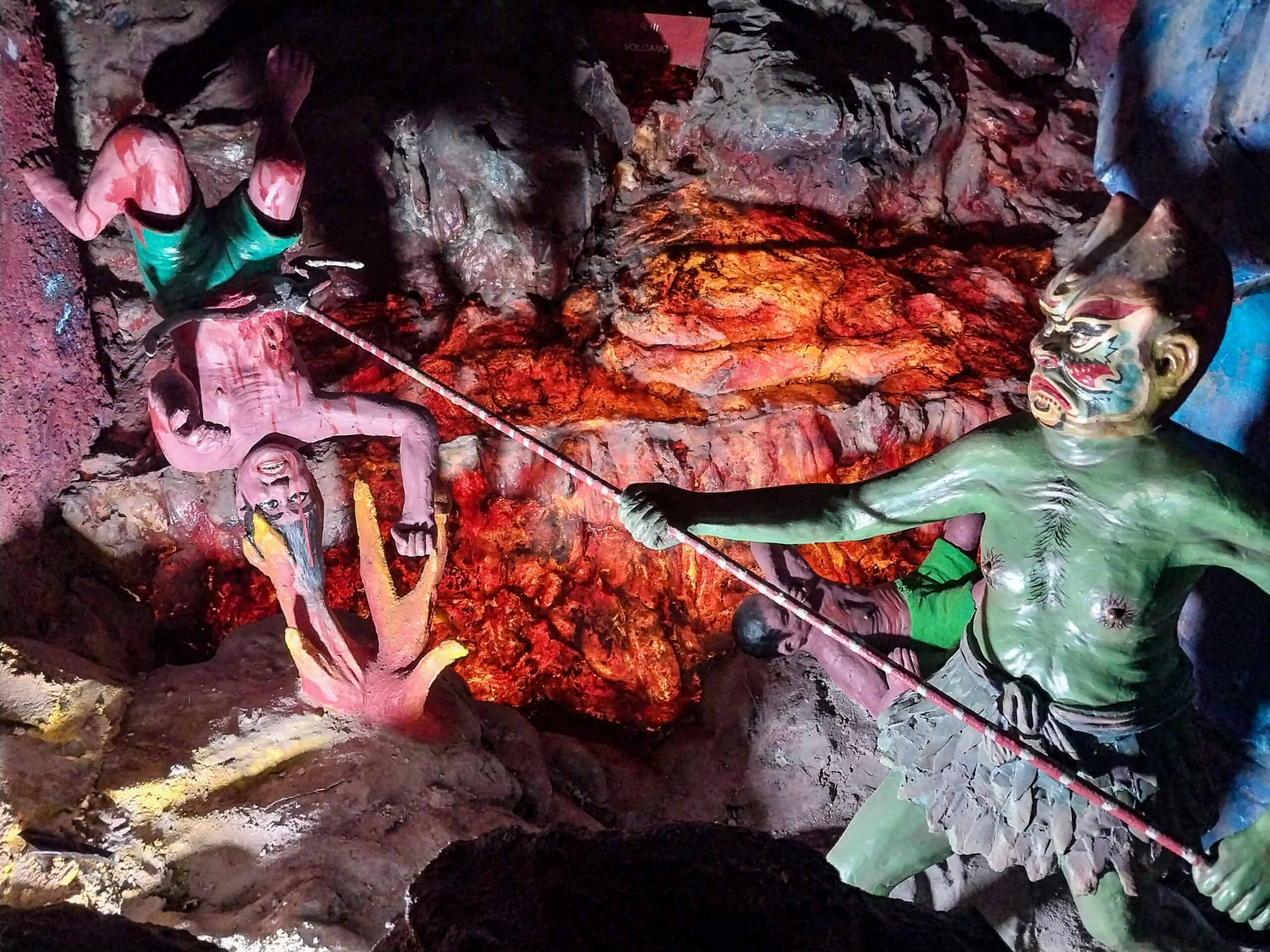
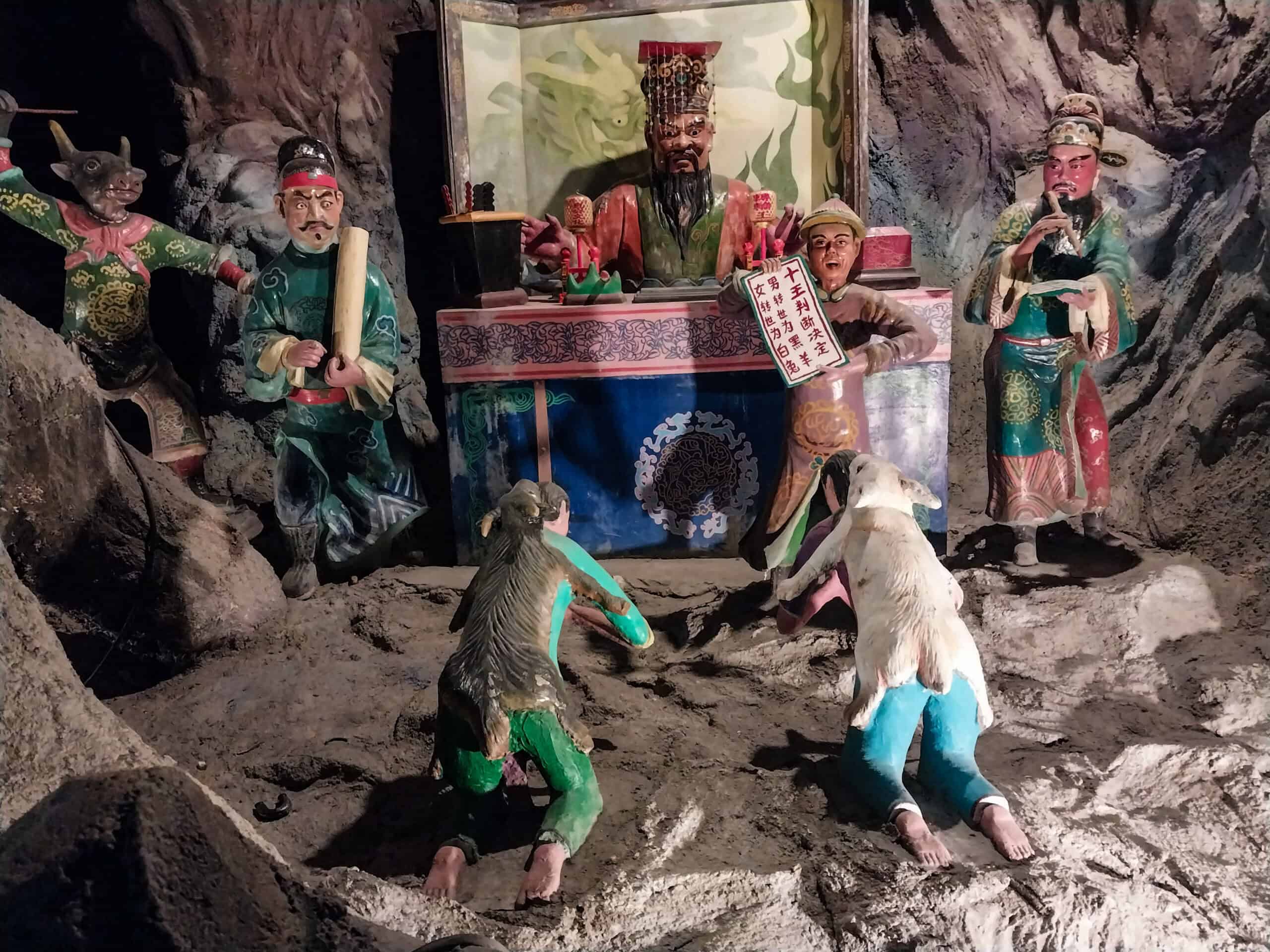
Separate from the museum, the Ten Courts of Hell is a dimly lit standalone structure within Haw Par Villa. Each court represents a stage of judgment in the afterlife, based on Chinese folk religion and Taoist beliefs. Visitors walk through the ten eclectic courts, where souls are judged and punished for sins like theft, betrayal, dishonesty, and other misdeeds.
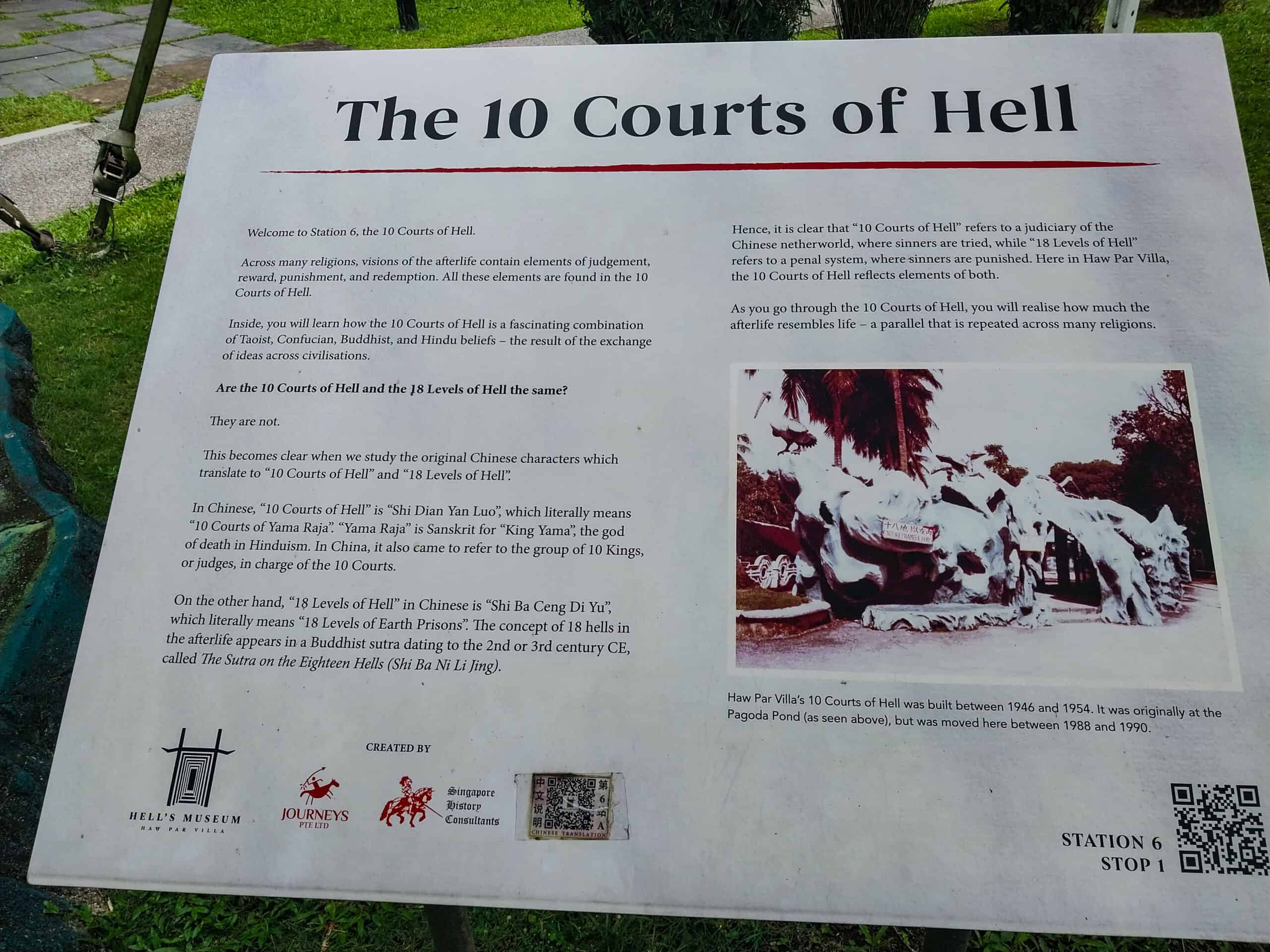
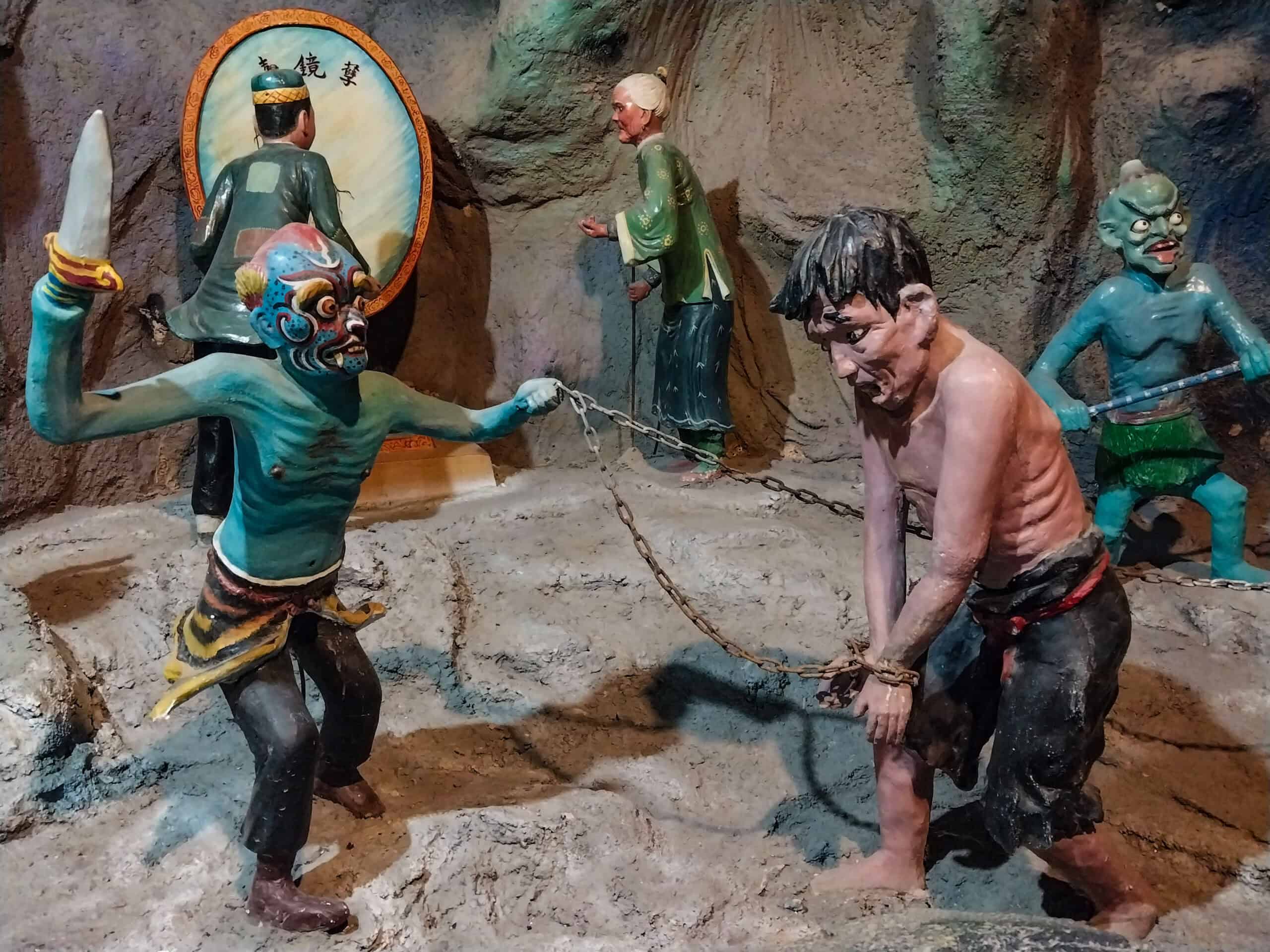
The life-sized dioramas and statues are somewhat roughly crafted, yet detailed and a bit horrifically graphic. Meaning it may be too scary for younger children. Thankfully, some redemption is eventually offered in the tenth court, reminding visitors that the afterlife isn’t all doom and gloom.
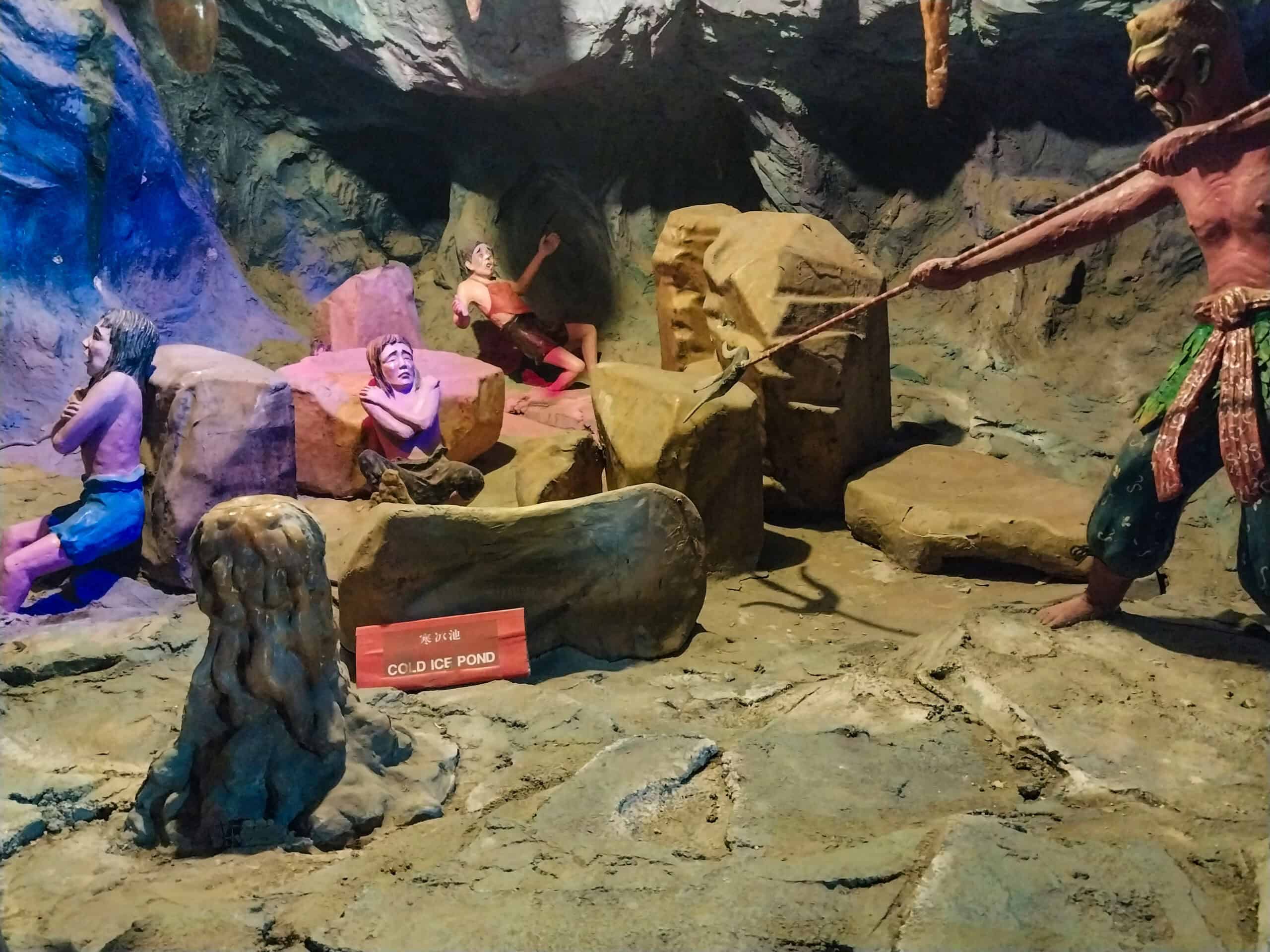
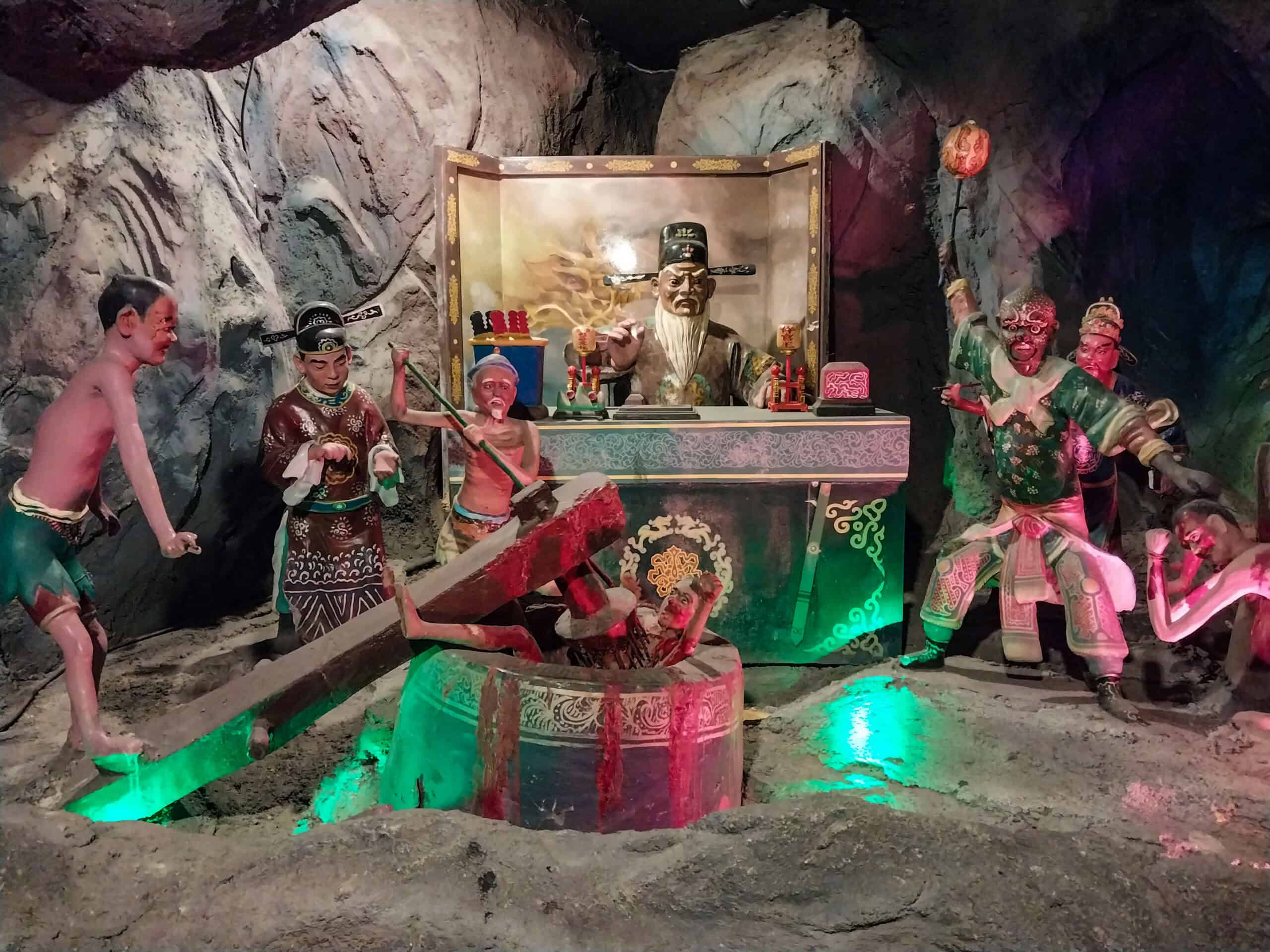
One could easily spend two hours or more exploring both the Hell’s Museum and the Ten Courts of Hell. So, be sure to allot yourself enough time. It’s definitely worth a visit, whether you’re spiritual or not, just for the visual smorgasbord alone.
Outdoor Sculpture Garden
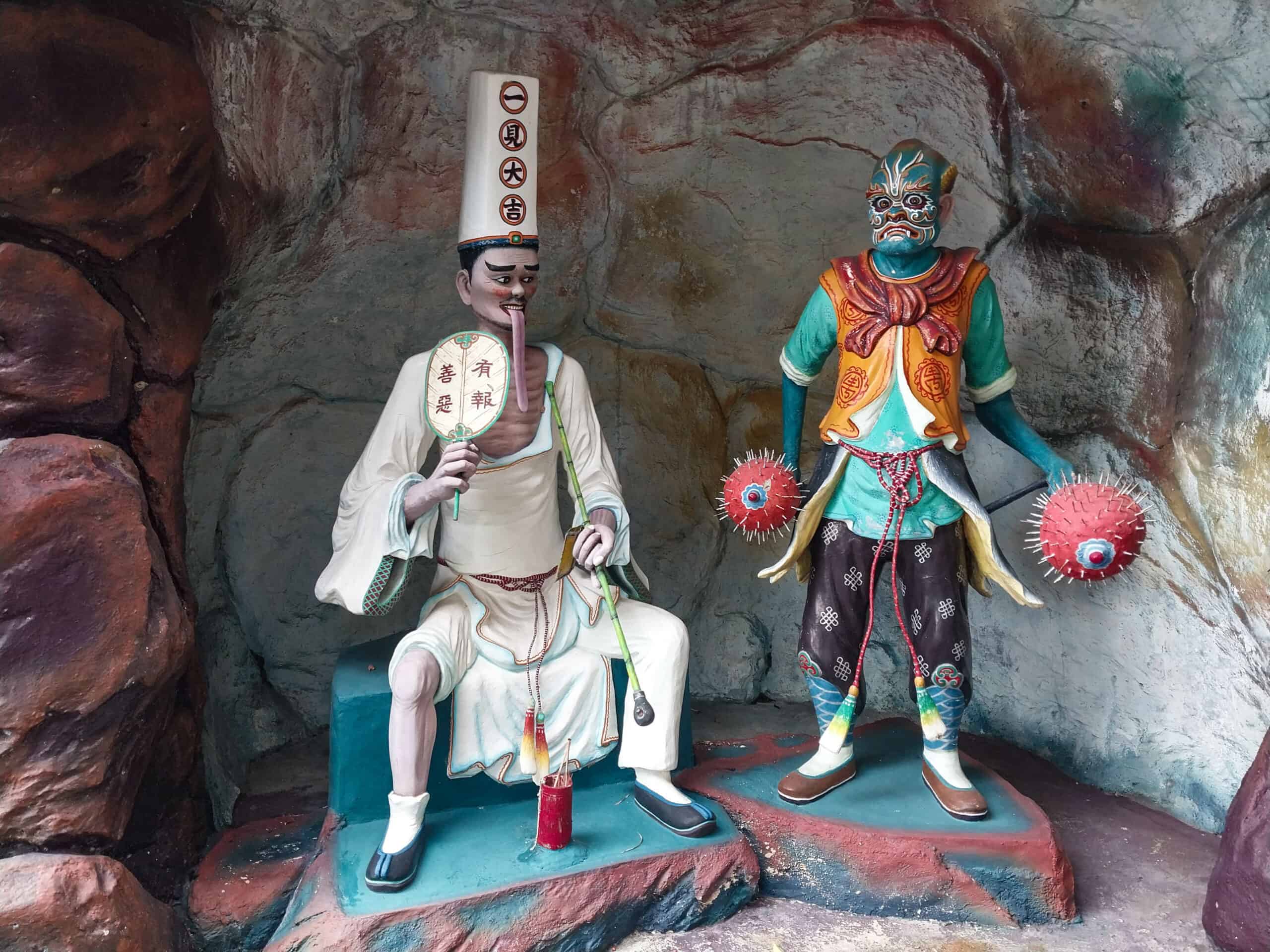
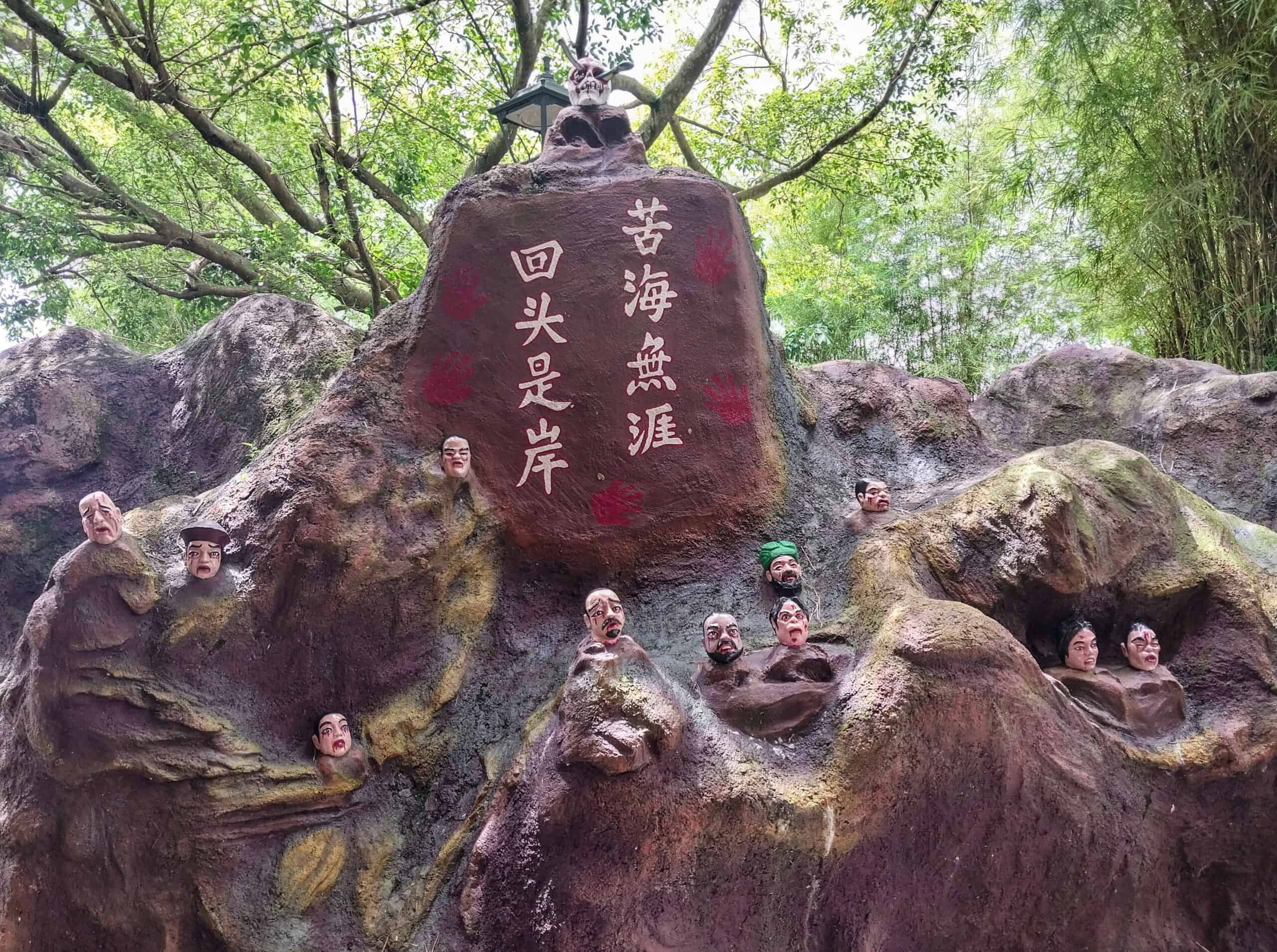
Beyond the indoor attractions, the outdoor sculpture garden offers pagodas, bridges, ponds, and plenty of quirky corners to wander through. Many of these are great for photography and casual exploration. Some of the outdoor statues are wonderfully bizarre to someone unfamiliar with Chinese folklore, though each one depicts an important story or character. The free-access garden allows visitors to linger as long as they like, so be sure to take lots of pictures!
Early morning or late afternoon visits are best for cooler temperatures and better lighting. Wearing comfortable shoes is a must, as the park is spread out over a large area. And if you need a drink, the visitor center sells water.
*As of December 2025, some sections of the outdoor park are under maintenance. However, the Hell’s Museum and Ten Courts of Hell remain fully accessible to visitors.
Visitor Tips and Getting to Haw Par Villa
Haw Par Villa is open daily from 9:00am to 8:00pm. It’s easy to reach by public transport, with the Circle Line 25 MRT station just a minute’s walk from the park entrance. Several bus routes also stop nearby on Pasir Panjang Road. Parking is available but limited, so public transport is usually the most convenient option.
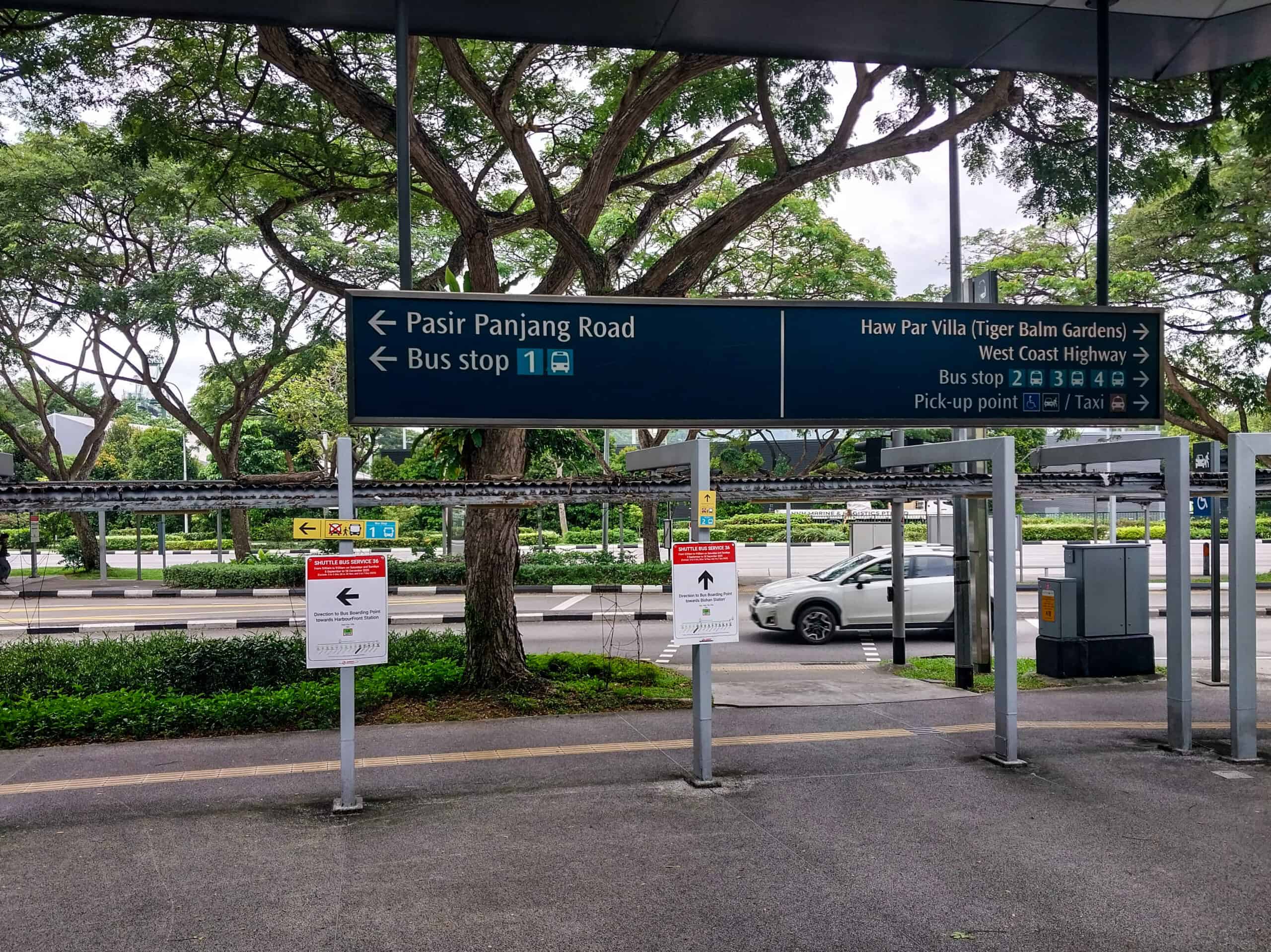
Haw Par Villa, 262 Pasir Panjang Rd, Singapore
Opening hours: Daily 9:00am-8:00pm, Hell’s Museum 10:00am-6:00pm
Admission: Park entry is free,
Hell’s Museum and Ten Courts of Hell; adults SGD 20, kids SGD 10
Phone: +65 6773 0103
Haw Par Villa is quirky, educational, unapologetically strange, and unlike anywhere else in Singapore. Which is exactly why it’s worth seeing.
For more interesting things to do in Singapore:
My Return Visit to Changi Chapel and Museum
Just discovered your blog while researching KL. I grew up right next to the Hong Kong Haw Par Villa, and would’ve run around it as a toddler. Kuch of it is gone now as it’s prime real estate.
Never been to the one in SG, even though I spent a fair few holidays there as a child. My sister lives in SG now, so I’ll definitely check it out when I visit her next!
Wow, I didn’t know that there was one in Hong Kong too. I’d love to visit that one as well. Local kids (adults now) have told me that the Singapore one was a bit scary for them, is the one in Hong Kong similar?